Season

Slow Cooker Asian Pulled Pork

Slow Cooker Asian Pulled Pork // Serious Crust by Annie Fassler

When I was getting ready to make this Asian pulled pork, I knew I wanted to write about it. I didn’t intend to write about it so soon – I knew I had a few posts to be written, the pictures sitting in their appropriate folders on my desktop – but things changed.

As I was putting all of these ingredients together on Monday, the kitchen already started to smell good. The fragrance of the lemongrass and ginger, combined with the rice vinegar and soy sauce, had begun to permeate the kitchen, and when my friend Elsa stopped by while I was making the pickles, she asked, “What smells so good?” as soon as she opened the door. When I left for work a few hours later, the slow cooker was on, the pickles were in the fridge, and mostly I just couldn’t wait to get home and eat the stuff.

After work, I had a message from my mom, asking me to call her. My phone was nearly dead (a morning on the phone with various auto insurance agents will do that to you), so I decided to wait till I could get home and plug my phone in to call. I opened the front door, and I was surrounded by this smell. The Asian flavors swirling around, making my stomach grumble. And then I looked at Jonah, sitting at the kitchen table, and he asked me, “Have you called your mom?” No. “Herby died,” he said.

I immediately called my mom, who was on the other line with my Nana, and said she’d call me back shortly. Herby, or Poppa Herb, is my grandfather. Herby had been sick for a long long time, and I had known for a while that his time was coming to a close. We all knew. And yet, as I said to Jonah moments after he told me, knowing it’s coming doesn’t seem to make it any less sad. Herby suffered for a long time, and so did Nana, really. He was unwell and hard to care for, and he was very ready to go. So after some tears, we couldn’t do much but continue to get dinner ready. The lid came off the slow cooker, and the scrumptious aroma wafted into the air, perfuming our meal. Before we actually sat down to eat, I got to talk to my mom, who let me know that one of the last meals Herb enjoyed was 5 (count them, 5) slices of her french toast. Thank goodness he ate well until the end. And then we ate.

As I started to think about writing this post, I haven’t been able to think about this dish without thinking of Poppa. And while the association could be sad, it really isn’t. It makes me a little more thoughtful, but mostly happy. Happy that I got to have this wonderful extra grandfather, who loved me like I was his own flesh and blood, who believed in me, who used to do little funny dances around the kitchen, who wore all those silly sweatshirts we made for him when we were little, and who made it possible for my family to see each other every year on the Oregon coast. And while I certainly don’t want this recipe to make you sad, I do hope that this post can make you think a little bit more about doing and eating the things we enjoy, and who we enjoy them with.

Slow Cooker Asian Pulled Pork Tacos

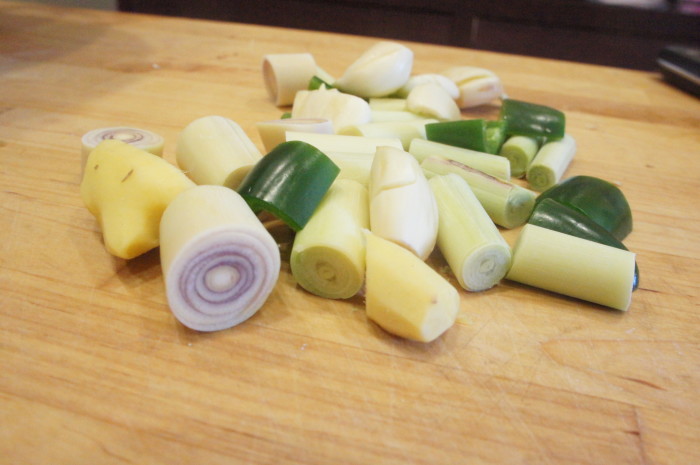
Note: You’ll see in my pictures that I minced up the lemongrass with the garlic, ginger, and jalapeño, as recommended in the Garden Betty recipe. I would suggest cutting it into coins or large chunks instead – the stalks were too hard for my food processor, and so I ended up with some sharp/pokey pieces of lemongrass amongst the meat.

Ingredients

Pulled Pork

2 inch piece of ginger
1 jalapeño
5 large cloves of garlic, or 6 smaller cloves
2 stalks of lemongrass
1/2 cup brown sugar
1/2 cup soy sauce
1/4 cup rice vinegar
1 1/2 Tbl fish sauce
2 1/2 lbs pork shoulder roast
4-5 large portobello mushrooms (optional, but recommended)

Quick Pickled Daikon and Carrots

2 large carrots
1-2 large daikon
1 tsp salt
2 tsp sugar plus 1/2 cup
3/4 cup rice vinegar
1/2 cup distilled white vinegar
1 cup lukewarm water

Tacos

Small corn tortillas
Lime wedges
Cilantro
Slices of jalapeño (if you like heat)
Sauces: sweet chili sauce, Sriracha, plum sauce…

Instructions

Pulled Pork

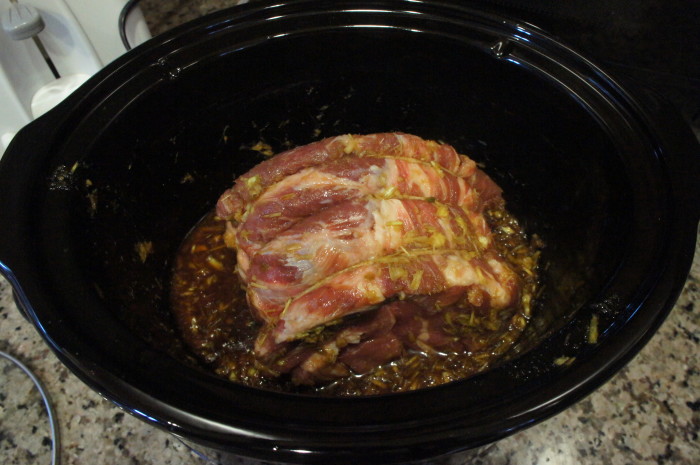
To prepare the meat, mince the garlic, ginger, jalapeño, and lemongrass (I did mine in the food processor; see note). Combine those four ingredients, as well as the brown sugar, soy sauce, rice vinegar, and fish sauce in a small pot over low heat. Cook until the brown sugar is dissolved, then pour into your slow cooker. Place the pork shoulder in the sauce, turning to coat, and then cook for 8-14 hours (I did mine for 8… but it definitely could’ve been softer and more fall-apart-tender, so I suggest going for longer). If you are opting to use the portobello mushrooms (which you really should), cut them into large slices and add them to the slow cooker 4 hours before the meat is done.

Quick Pickled Daikon and Carrots

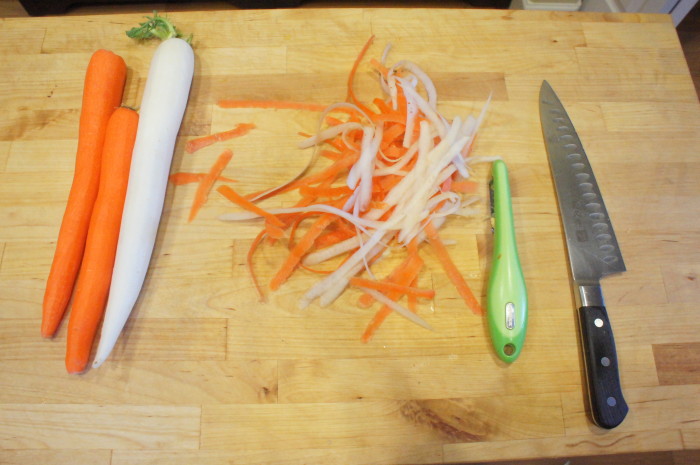
Once the meat is nestled in the slow cooker, ready for the long haul, you can prepare your pickles. Peel and julienne the daikon and carrots, and put them in a bowl. Sprinkle them with the salt and 2 tsp of sugar, and then gently massage/knead them for 3 minutes. When the daikon is very bendy, and a little pool of water has collected at the bottom of the bowl, rinse the vegetables in cold water, and pat or press them dry with paper towels. Put them into a jar (or jars, depending on how big your jars are and how big your carrots and daikon were). Now make the brine by combining the 1/2 cup sugar, rice vinegar, white vinegar, and lukewarm water in a bowl and stirring until the sugar is dissolved. Pour the brine over the vegetables in the jar, and allow to sit for at least 1 hour. In a jar, these will last for about 4 weeks in the fridge.

Tacos

When the meat is cooked, remove the strings, and pull it apart with two forks. Leave the slow cooker on warm while you warm you tortillas, slice your cucumbers and jalapeño, and pick your cilantro. Then, enjoy!

P.S. The meat and sauce and toppings make great leftovers when heaped atop a bowl of fresh rice or soba noodles.

Poppa Herb and I at the Oregon coast, many years ago.

Easy Year-Round Tomato Sauce

Easy Year-Round Tomato Sauce // Serious Crust by Annie FasslerEasy Year-Round Tomato Sauce // Serious Crust by Annie Fassler

Over Christmas, my sister Emily was raving about this tomato sauce on Smitten Kitchen that I’d seen several times. For some reason, it never really stuck out to me. It’s almost too easy.

But for New Year’s Eve we were having some friends over, and I decided to make fresh pasta with homemade sauce. Knowing full well that I wouldn’t be able to find incredible fresh tomatoes, I decided to give the recipe a shot. And you know what? It was awesome.

I did a few things differently. Firstly, I doubled the recipe. I probably could have still only used one onion, but I used two. Instead of just mashing the tomatoes against the side of the pan, after removing the onion I used an immersion blender to slightly puree the sauce. I’m not a huge fan of chunks in my tomato sauce, so it was a personal taste thing. I also added some chili flakes for a bit of heat.

Easy Year-Round Tomato Sauce

Ingredients

1 28-oz can of whole, peeled tomatoes, preferably San Marzano (yes, you can taste the difference)
5 Tbl unsalted butter
1 medium yellow onion, peeled and halved
Red chili flakes
Salt

Instructions

In a heavy bottomed saucepan, combine butter, tomatoes, onion, and a pinch of red chili flakes. Choose a pan bigger than you might think. The onions can be a little unwieldy while stirring as they’re in such big chunks. Over medium heat, bring the sauce to a simmer, then reduce heat to maintain that simmer. Cook for 45 minutes, stirring every once in a while, and smashing the tomatoes against the sides of the pot (be careful not to squirt all over yourself here). Remove onions from sauce, turn off heat, and, if you’d like, use an immersion blender to lightly purée the sauce. If not, that’s ok too. Season to taste. Use sauce to dress your favorite pasta (homemade or otherwise), or in a lasagna or on pizza.

The Perfect Equation (for Granola, anyway)

The perfect granola equations // Serious Crust by Annie Fassler

First, let me apologize for disappearing for a little while. I was laid up in bed with a really terrible cold for most of this week. There was lots of tea, cough drops, movies, tom kha soup, and knitting. But now that I’m back from the land of the ill, let’s talk about granola a little bit.

For a while now, I’ve been making the recipe from Orangette or another friend’s secret granola recipe. And every time I’ve tried to go rogue (aka not exactly following a recipe), my granola ends up too dry, or not sweet enough, or not as crispy as I like it. And I’m not the kind to make the same recipe a thousand times trying to add a teaspoon more of this or up the temperature 13 degrees. It’s not going to happen.

So when I happened upon a granola equation, on Buzzfeed of all places, I immediately wrote it down on a little notepad I’ve started carrying with me wherever I go (can’t recommend that enough). And I’ve used it many times. I’ve made a couple adjustments, and I have a couple of suggestions in terms of which way to lean on some of their more vague instructions, and I want to share it with you.

The Perfect Granola Equation

Ingredients

Dry Ingredients

3 1/2 cups grain This is where most people use oats. I use oats. I guess if you want to use barley or whatever, you can.

1 – 1 1/2 cups nuts I’ve been using mostly a mix of whatever I have around. I like half pecans, half sliced almonds, but I’ve also used walnuts.

1 tsp salt

1 – 2 cups seeds I would suggest leaning towards one cup instead of two. Otherwise it can quickly start to feel like you’re eating birdseed. I’ve been mostly using pumpkin seeds and sunflower seeds (old habits and all that), but I’m itching to try sesame seeds too.

1 cup coconut If you really dislike coconut, you can go without, but it adds a lovely nutty toasty flavor to the granola that I adore.

Spices You can really add as many as you like, but don’t get too crazy. A teaspoon of cinnamon is always a good place to start, and after that, maybe add a quarter teaspoon of one or two other things. I always use a quarter teaspoon of cardamom, and because it’s the holiday season and I associate nutmeg with the holidays, I’ve been adding a quarter teaspoon of that as well.

1 cup dried fruit I’m personally not a fan of dried fruit in my granola – I’d rather cut in a banana or peach or some berries – but if you are, you can add it after baking. If you’re adding something big like dried apricot or figs (as opposed to something small like dried cranberries or cherries), cut it into a rough dice before tossing it in with the granola.

Wet Ingredients

1/2 – 3/4 cup sweetener I like to do mostly maple syrup, though it can get a little pricy. Sometimes I’ll do half syrup and half honey. Agave is another good option.

1/4 – 1/2 cup oil I used to use solely olive oil – I liked the kind of savory-ness it brought to the granola – but I’ve started doing half olive oil and half coconut oil, and I am a big big fan.

1 tsp vanilla

Instructions

Preheat your oven to 300 degrees. Mix dry ingredients in a large mixing bowl. Add wet ingredients, stir until thoroughly combined and coated. Line a rimmed baking sheet with parchment paper, and spread the granola on the parchment. Bake for 45 minutes, stirring every 15 minutes (unless you like clumpier granola, in which case stir once halfway through). Remove from oven, allow to cool, and enjoy.

Roasted Winter Vegetables with Miso and Harissa

Roasted Winter Vegetables with Miso and Harissa // Serious Crust by Annie Fassler

Make this. Tonight. Now. I don’t care when. But make it. The sooner the better.

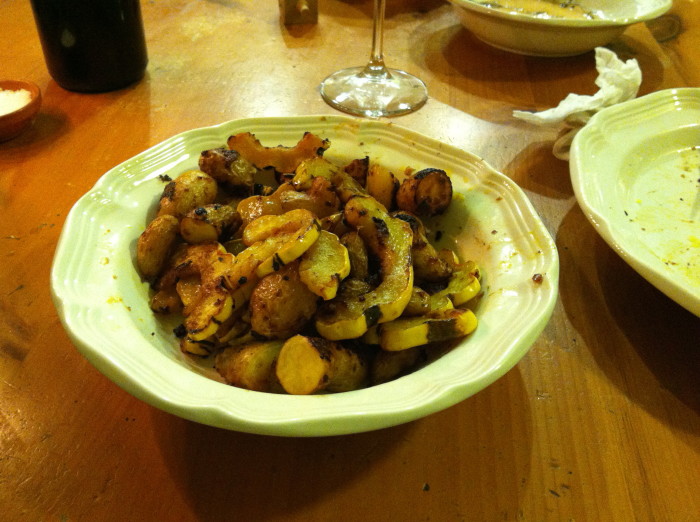
I’m not sure when I discovered this recipe on 101 Cookbooks, but it has quickly become a favorite. I imagine you could roast any winter vegetables with miso and harissa and they would be just as wonderful as the potatoes and squash I made. I haven’t tried the full on recipe with the kale yet, but I’m sure I will soon enough. Once I get over these vegetables. My goodness. This recipe is incredibly flavorful, the miso gets beautifully caramelized, and the harissa adds a perfect hint of spice. It’s so comforting but not boring or familiar at all. So make it.

Roasted Winter Vegetables with Miso and Harissa

Note: I bet this would work beautifully with lots of winter vegetables. Sweet potatoes? Turnips? Broccoli? Fennel? Parsnips? Winter squash? Let me know what you try.

Note 2: If you think miso and harissa are some of those ingredients that you’ll use once and never again, you couldn’t be more wrong. The other night Jonah made me this incredible clam miso soup from The Family Meal, and this squash and tofu with miso and molasses is one of my favorites. As for harissa, try adding it to anything for a little heat, especially shakshuka.

Ingredients

1/2 pound fingerling potatoes
3/4 pound delicata squash
1/4 cup olive oil
1/4 cup white miso paste
1 1/2 tsp harissa paste (more if you like spice)

Instructions

Preheat your oven to 400 degrees. If your potatoes are larger, quarter them, half them, or cut them as you choose. You want the pieces to be about the size of your thumb. Half and seed the squash, and slice into 1/2 inch half-moons. Set aside.

In a bowl, whisk together the olive oil, miso, and harissa. Add the vegetables and toss to coat evenly. Spread on a baking sheet, and roast for 25-30 minutes. You want everything to be nicely browned and tender – I recommend tossing the veggies halfway through.

Remove from oven, allow to cool for a few minutes. Good luck not devouring these within minutes.