Season

Rhubarb Poppy Seed Bread

Rhubarb Poppy Seed Bread | Serious Crust by Annie FasslerRhubarb Poppy Seed Bread | Serious Crust by Annie Fassler
Rhubarb Poppy Seed Bread | Serious Crust by Annie Fassler

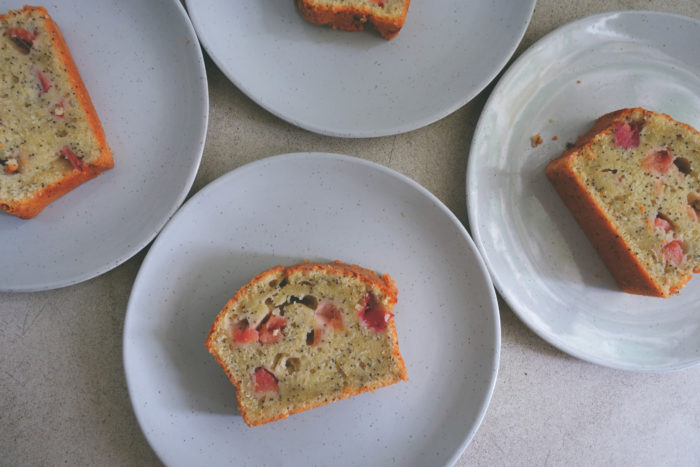
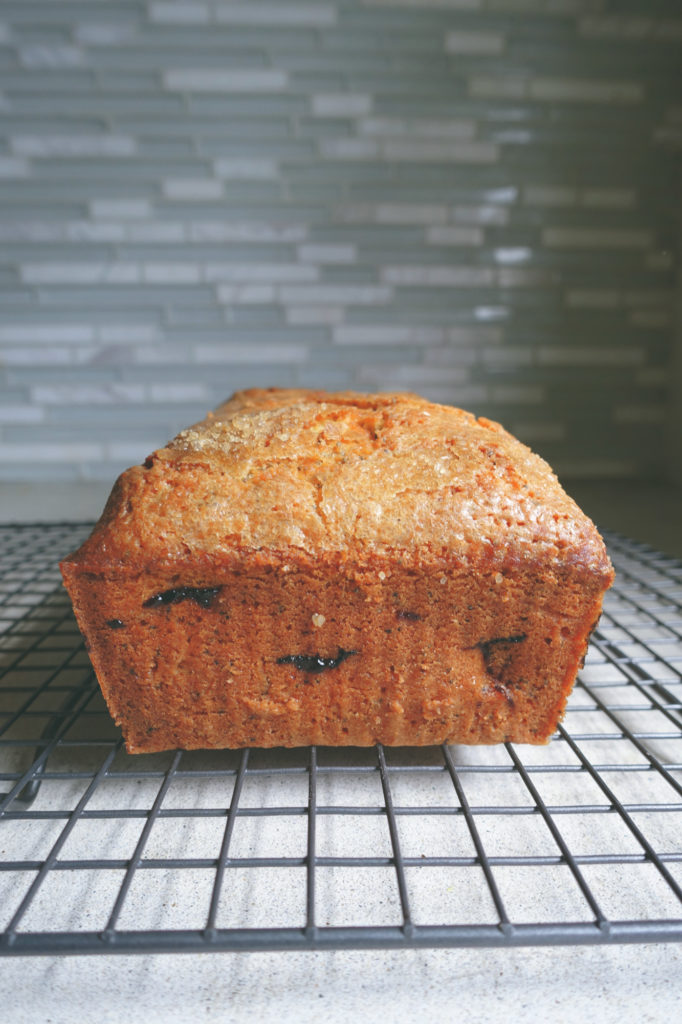
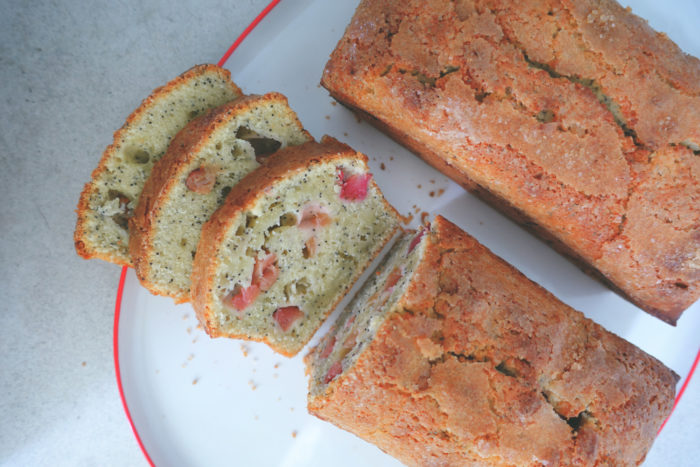
Update: It is spring (nearly summer, really) 2018, and I thought this recipe could use a little love. It is one of the recipes I most frequently make from this here blog, and I think perhaps that may go for some other folks too. You’ll find one new ingredient and some new instructions that help the rhubarb distribute more evenly throughout the loaf instead of floating to the top the way they used to do, but it’s still perfectly moist.

Hi, my name is Annie. I have a problem. The problem is rhubarb. I seemingly can’t stop thinking about it, can’t stop talking about, can’t stop cooking with it. Between the baked rhubarb at Passover, the rhubarb bourbon soursthe rhubarb themed weekend finds post, and now this poppy seed bread sprinkled with rhubarb, I’m starting to worry myself. But oh well. It tastes too good to stop.

A couple weeks ago, I was wanting to make some poppy seed bread, but I wanted it to be not just your normal old poppy seed bread. I prefer almond poppyseed to lemon poppy seed, so I knew I wanted to lean that way. I also knew I wanted to add fruit. And once I thought of the tartness of the rhubarb combined with the nuttiness of the almond and the poppy seeds, I knew I had to try it.

If you’re interested in a sweeter flavor combination, try subbing strawberries for the rhubarb. But really, you should try it at least once with rhubarb. I swear, it’s really really good.

I first made this recipe for a brunch with my roommates, and between the six of us we finished a whole loaf. In one sitting. It wasn’t even hard. The second loaf quickly disappeared over the next two days. The house smelled incredible, even up on the third floor, and even out on the second floor deck. This bread is a perfect quick bread for the spring (and summer) – it’s unique and dotted with fruit. I recommend bringing it to a friend’s house for brunch: it gets it out of your kitchen (yeah, it’s that dangerous), and they will think you are brilliant.

Poppy Seed Bread with Rhubarb

Makes 2 loaves

Ingredients

1/4 and 1 3/4 cups sugar, divided
2 1/2 cups rhubarb, cut into a half inch dice
1.5 cups AP flour
1.5 cups bread flour
1 1/2 tsp salt
1 1/2 tsp baking powder
3 eggs, lightly beaten
1 1/4 cups olive oil
1 1/2 cups milk, preferably 2% or whole
2 tsp almond extract
2 tsp vanilla extract
2 1/2 Tbl poppy seeds
2-3 Tbsp turbinado sugar (optional)

Instructions

Preheat your oven to 350 degrees. Grease and flour two bread pans. In a bowl, toss the rhubarb with 1/4 cup of sugar to coat. Set aside.

Combine the remaining sugar, flour, bread flour, salt, and baking powder in a mixing bowl, whisking to combine. Set aside.

In the bowl of a stand mixer, combine the eggs and olive oil. Mix on medium speed with the whisk until emulsified, 1-2 minutes. Add in the milk and two extracts and mix again until smooth. With the mixer running, add the poppy seeds to the bowl. When they look to be evenly distributed, stop the mixer and scrape down the sides of the bowl, reaching all the way to the bottom – you wouldn’t want any part of the batter to be missing poppy seeds! In two batches, mix in the dry ingredients, mixing until smooth and uniform.

You’re going to pour the batter into the 2 pans in 3 batches, so start by simply pouring enough to heavily cover the bottom of each pan. Leaving any juices in the bowl, split half of the rhubarb between the two pans (so 1/4 of the rhubarb in each pan). Pour more batter on top of this (but not all!), add more rhubarb, then finish by covering all the rhubarb with the rest of the batter. Scatter the turbinado sugar over the batter.

Bake for 60-75 minutes, or until the bread is golden brown on top, and a knife or skewer inserted comes out clean.

Allow to cool for 20 minutes in the pans, then run a knife around the edge of the pan, and gently turn the loaves out onto a cooling rack. Allow to cool completely, 20-30 more minutes. Slice and enjoy.

Thai Larb with Lettuce Wraps

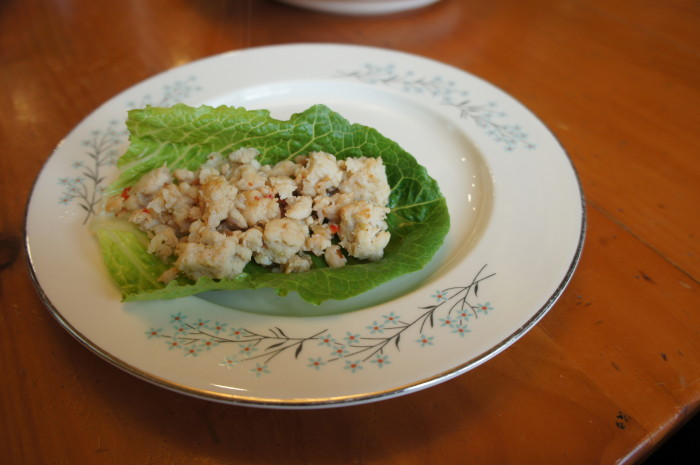
Thai Larb // Serious CrustThai Larb // Serious Crust

A couple of weeks ago, my roommates had a problem. I had gone with them to the climbing gym, and on our way home, we decided to stop at the store to get some food for lunch. We were thinking about what we already had in the house that we could use, and they started talking about how they had too much lettuce. See, they’re more spinach eaters (in salads and scrambles and such) than lettuce eaters, and so had a head of lettuce that they didn’t particularly want to eat or know what to do with. I had an idea: Thai larb.

This Thai larb, a chicken dish with lettuce wraps, immediately popped into my head. I quickly looked up a couple recipes on my phone, and grabbed the ingredients at the store. It was a warm day, and this bright, tart, crunchy dish was perfect. Plus, they were impressed that I made lettuce into something so delectable.

Today it was 85 degrees in Portland, and tomorrow is supposed to be even hotter. In fact, it’s supposed to be beautiful (and hot) until Saturday. My suggestion? Make this Thai larb: it’s so refreshing on a hot day. I’d serve it with maybe a green papaya salad and rice (sticky rice if you can swing it).

Thai Larb with Lettuce Wraps

Serves 4

Ingredients

Dressing

1/3 cup lime juice
1 Tbl fish sauce
2 Tbl light brown sugar
1/2 tsp Sriracha

Chicken

2 lbs skinless boneless chicken breasts, cut into roughly 1-inch pieces
1 large shallot, chopped
1 stalk lemongrass , thinly sliced (see this article for instructions on prepping your lemongrass)
1-2 cloves garlic, thinly sliced
1 red chile, jalapeño, or thai chile, depending on your desired spice level
2 tsp fish sauce
1 tsp kosher salt
3 Tbl vegetable oil
1 head romaine or iceberg lettuce, rinsed
Cilantro for garnish (optional)

Instructions

To make the dressing, stir all of the ingredients in a bowl until well combined. Set aside.

In a food processor, combine the chicken, shallot, lemongrass, garlic, chile pepper, fish sauce, and salt. Add 1 Tbl of oil, and pulse until the chicken is finely chopped, or how you would imagine ground chicken would look. In a large nonstick pan, heat the remaining 2 Tbl of oil over medium-high heat. Once the pan and oil is hot, add the chicken mixture and cook, breaking up into smaller pieces with your wooden spoon, until the chicken starts to turn golden brown and is cooked through.

To eat your larb, spoon some chicken onto a lettuce leaf, and top with the dressing and a little cilantro if you like. Be sure to eat over a plate – I can guarantee there will be dripping.

Meyer & Black Lemon Sorbet

Meyer & Black Lemon Sorbet // Serious Crust by Annie Fassler

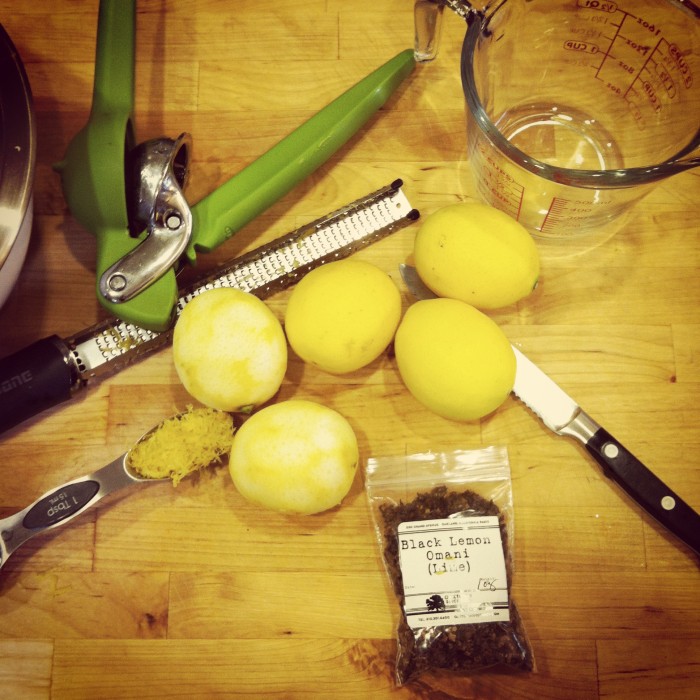
My mother gave me some spices for Christmas. Three little bags from Oaktown Spice Shop: cinnamon, juniper berries, and ground black lemon (also known as Omani). I was able to find recipes using the cinnamon and juniper berries (still working on making some of my own gin…), but the black lemon was trickier. It’s a traditionally Persian ingredient, and I don’t know a whole lot of Persian cooking resources.

I wrote in to a few places, asked some intelligent minds what I should do with it, and I mostly came away with meat and fish. Rub it on meat and fish, put it in a stew with meat or fish. And even with those suggestions, I couldn’t really find any jumping off points, or recipes to start from or be inspired by. So the ground black lemon had been sitting sadly on my pantry shelf. Until last week, that is.

Last week, Portland had a little heat wave. Like, 93 degrees kind of heat wave. Yeah. I was itching to make ice cream. I have a flavor I’d been brainstorming, but decided, in the end, that instead of buying a bunch of heavy cream I would just buy Meyer lemons instead. So that’s what I did. And I decided to finally try using that lonely looking black lemon. And so today I give you Meyer lemon sorbet with black lemon.

Now, if you don’t have black lemon, don’t worry. You can still make a lovely Meyer lemon sorbet and it will be delicious. But if you are feeling curious, or you magically somehow do have black lemon sitting around, use it. It brings a nice, dare I say it, depth of flavor to this sorbet – something unique and hard to describe. The best words I can think of are that it’s a kind of dark citrus flavor… not necessarily sweet, but more complex than that. It lent a lovely je ne sais quoi to the sorbet. And I love that.

Meyer & Black Lemon Sorbet

Ingredients

1 1/2 cups water
1 1/4 cups granulated sugar
1 1/2 tsp ground black lemon (optional)
1 tsp Meyer lemon zest
1 cup Meyer lemon juice (from about 5 Meyer lemons)

Instructions

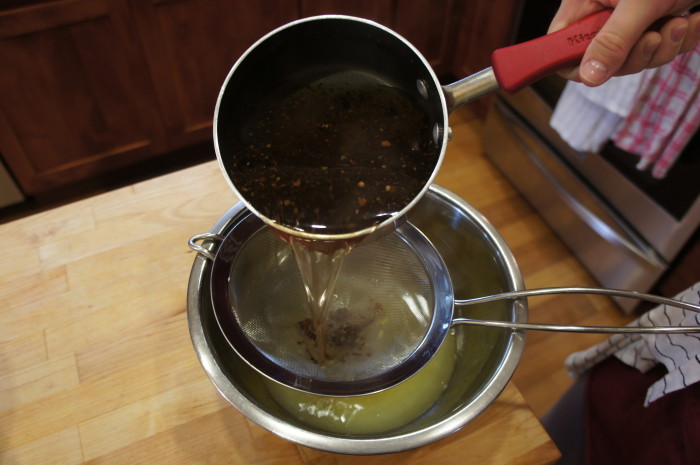
In a small saucepan, combine sugar, water, and black lemon if you’re using it. Bring to a boil over medium heat, allowing the sugar to dissolve and the black lemon to steep. While that is cooking, in a heat-proof bowl combine the lemon juice and zest. Place a sieve over the bowl. Once the sugar is dissolved and syrup has become amber in color from the black lemon (again, if you’re using it), pour through the sieve into the lemon juice. Stir to combine, and place over ice bath to cool. Once cool, churn in your ice cream machine according to instructions. I churned mine for about 20-25 minutes. Pour into a container to freeze. Enjoy while sitting in the sunshine. Or with a bunch of friends, in your living room, playing Cards Against Humanity, like I did.

Kale Stem Pesto

Kale Stem Pesto // Serious Crust by Annie FasslerKale Stem Pesto // Serious Crust by Annie Fassler

I often find myself frustrated with how much stuff I put in my compost. I guess I should stop right there and say, at least I have a compost, right? The beautiful city of Portland has roadside pickup every week, making it so wonderfully easy to make more environmentally conscious choices. There aren’t a lot of cities that do that. Anyway, I know I could save some bones and carrot tops and onion tops and parsley stems for stock… But I just don’t do it. I mean, I do sometimes… But not as often as I should. And there’s one thing lately that I have always felt guilty after putting it in the compost: kale stems. Jonah and I eat a fair amount of kale – usually sautéed with butter and garlic or something like that, sometimes in a salad. But I always am frustrated at the toughness of the stems, and wish I could do more with them.

After a little research and looking around, I mostly found that people who do use their kale stems either sauté them with their kale, simply adding the stems first so they cook for longer, or put them in smoothies. I wasn’t really into either of these options, so I made myself a third one. With the all-in pesto in mind, and a container of pine nuts whining from my pantry, I got to work making some kale stem pesto. I wasn’t planning on sharing this pesto here, since the recipe is really improvised, but I got so many comments and questions about what it was when I posted pictures on my Instagram and Facebook, that I thought, why not? This pesto is certainly a product of whatever you’ve got around, which is generally my theory about pesto. Herbs are good, parmesan is good, and other than that, you can kind of go crazy. Nearly any kind of nut will work, any greens, and you can really play until you find some flavors that you like. I didn’t do any measuring here – mostly just throwing in handfuls of this or that – but below is an approximation of what I used.

The beautiful thing about pesto is that it can be a complete reflection of your kitchen: if you just went to the market and have some radish greens, use them. If you don’t have any pine nuts but plenty of pistachios or walnuts, use them. If it’s raining and you want something heartier, add more cheese.

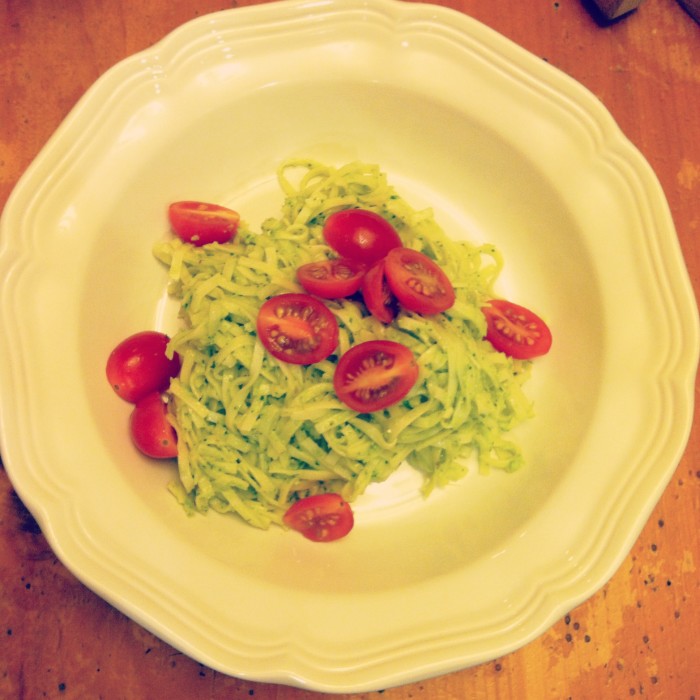
We tossed our kale stem pesto with fresh spaghetti (you can find a recipe here) and topped it with sliced grape tomatoes, which added a really nice juicy brightness. I also like to make a thick piece of toast and slather it with fresh pesto.

Kale Stem Pesto

Ingredients

1 bunch of kale stems, plus probably the equivalent of 1 leaf of kale
1 cup spinach
1/4 cup parsley
~ 3/4 cup pine nuts
Parmesan cheese
Garlic
Olive oil
Salt

Instructions

Fill a small pot halfway with water, salt well, and bring to a boil. Roughly chop kale stems into about 1/2 – 1 inch pieces. Add to boiling water, and cook until stems are easily pierced with a knife. Drain and cool.

In the bowl of a food processor (or blender), combine kale stems, a few small chunks of parmesan, about half the pine nuts, 2 cloves of peeled garlic, and a few glugs of olive oil. Pulse to combine. Add spinach, some parsley, and a hefty sprinkling of salt. The key here is to taste and add. If you want a little more spice, add another clove or two of garlic. If you want it creamier, more nuts, and olive oil. If you want it greener, add more spinach and parsley, or some fresh basil or chard if you’ve got some around.