Season

Rhubarb Bourbon Sour

Rhubarb Bourbon Sour // Serious Crust by Annie Fassler

Sometimes you have a week that is hard, but also totally reviving. The beginning of last week was tough, but things quickly got better: good food was made and fun was had and cocktails were made. And an old friend from college came to visit, which always is exciting and soothing at the same time. Isn’t it nice when people who knew you when (“when” being just a few years ago in this case, but still) can kind of ground you and make everything seem ok? That happened. It was nice.

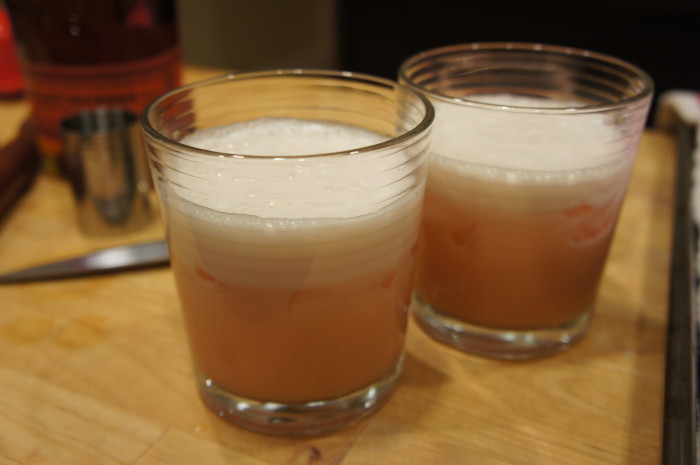
But before she came to visit, and before there was weekend and all that, there was this cocktail. I had finished the actual rhubarb from the dessert I made for Passover, but I had a bunch of this sour syrup left over. And I had bought a bottle of Bulleit bourbon. So, you know, rhubarb bourbon sour time it is. With a little research and a little improv, Jonah and I whipped up this drink. If you don’t have sour rhubarb syrup laying around, you can make it pretty easily by following a rhubarb simple syrup recipe like this one or this one, but I would cut the sugar so that the tang of the rhubarb can really shine.

Rhubarb Bourbon Sour

Makes 1 cocktail

Ingredients

1 shot (1.5 oz) bourbon
juice from 1/2 lemon
1 tsp powdered sugar (or half a shot of simple syrup) – Note: if you are making rhubarb simple syrup from one of the recipes above, you can nix this sweetener part, or add it to taste.
1/2 shot rhubarb syrup
1 egg white

Instructions

Combine all ingredients in a shaker without ice, shake for about 10 seconds. Add ice, shake thoroughly. Pour into glass. Sip and enjoy. Yeah, it’s that easy.

Cinnamon Raisin Bread

Cinnamon Raisin Bread // Serious Crust by Annie Fassler

I like being home. Traveling the world is awesome, don’t get me wrong. I will happily go on adventures like the one to Vietnam any time. But there is something about coming home to your own bed, your own shower, and your own kitchen. I feel like I need to give all my kitchen tools little hugs and tell them I’ve missed them. Which, at this point, I’ve basically done, because I’ve been cooking up a storm this week.

Portland, however, is being slightly less welcoming than my kitchen. Mostly just in its weather-related mood swings. Seriously, this whole week has been days of sporadically alternating sunshine and rain. Sometimes each lasts 5 minutes, sometimes an hour. But it’s making it awfully hard to cook. What I’m going to make is always determined by my mood, which is often influenced by the weather. Between the rain and sun breaks, I can’t decide if I should be making spring recipes or winter recipes.

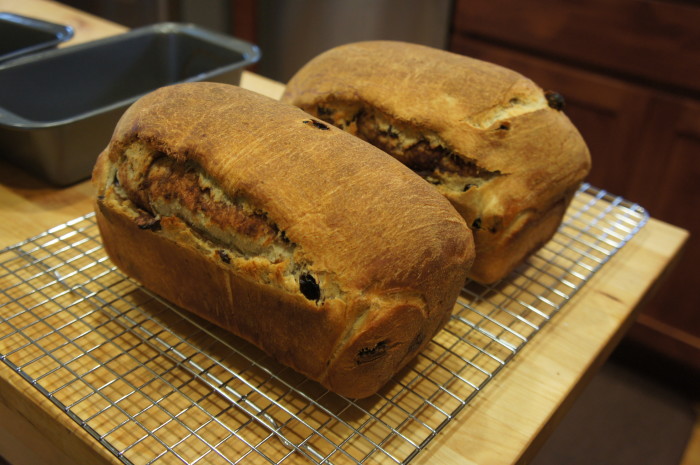
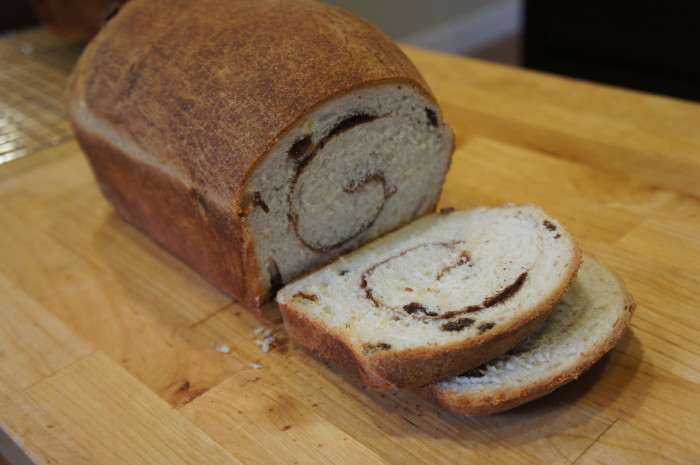
This cinnamon raisin bread is the perfect balance between spring and winter, though I already know I’ll be making it year round. It’s homey and warming thanks to the springy crumb and the way it fills your kitchen with the most comforting smell. But the raisins and cinnamon bring a little fruitiness and fun to the mix, a little surprise if you will. This isn’t just plain ol’ bread, you know. This has a beautiful swirl of cinnamon sugar and beautifully juicy pops of fruit throughout it.

This recipe made two loaves, and I thought for certain I’d freeze one loaf, because my roommates just don’t usually eat that much bread (unless it’s beer bread). But I was wrong. In two days, we are down to half a loaf left. Everyone has been enjoying this bread, toasted, slathered with butter, or raspberry rhubarb jam, or nutella for breakfast and dessert and a snack here and there.

Point is, make this bread and your house will smell like heaven, your friends will love you, and you’ll be perfectly toeing the line between the seasons.

Cinnamon Raisin Bread

Makes 2 loaves

Ingredients

2 1/4 tsps (1 package) dry instant yeast
2 1/4+ cups warm water
3 Tbl and 1/4 cup granulated sugar, divided
1 Tbl salt
3 Tbl butter
6 -7 cups all-purpose flour
1 cup raisins
canola/vegetable oil
1 Tbl cinnamon

Instructions

In the bowl of an electric mixer (or not. If you don’t have one, this can easily be made with the strength of your own two arms.) combine 1/2 cup warm water, the yeast, and 1 Tbl of sugar. Set aside and let sit until it’s foamy. In another bowl, cover the raisins with warm-hot water, at least 2 cups. This step is optional, but it will plump the raisins, making them a bit juicier in the bread. After about 3 minutes, pour 1 3/4 cups of the raisin water off into a measuring cup and discard the rest. Pour the raisin water into the mixing bowl with the yeast, in addition to 2 Tbl sugar, the salt, 2 Tbl melted butter, 3 1/2 cups of flour, and all of the raisins. Mix with the paddle attachment until thoroughly combined, adding up to 3 more cups of flour until the dough is smooth enough to handle, but still moist. Switch from the paddle attachment to the dough hook, and knead for about 7 minutes (10 minutes if you’re kneading by hand). Dump the dough out onto a floured surface, coat the mixing bowl with canola or vegetable oil, and put the dough back into the bowl, turning it to coat, and cover the bowl with a clean dishtowel. Set the bowl in a warm spot (I like to turn on the light over my stove and set it under that) and let it rise for about an hour, or until it’s doubled.

In a small bowl, combine the remaining 1/4 cup sugar and 1 Tbl of cinnamon and mix well. Butter two bread pans. When the dough has doubled, remove it from the bowl onto a floured surface and punch it down, then divide it in half. Roll out one half of the dough into a rectangle that measures roughly 16 by 8 inches. Once rolled out, sprinkle the dough with 1 Tbl of water, and half of the cinnamon sugar mixture. Roll the dough up starting from the short end, and pinch the seam shut. Drop the roll of dough into one of the greased loaf pans. Repeat with the second half of dough. Brush the top of both loaves with the remaining 1 Tbl of melted butter, and cover them again with a clean dishtowel to let them rise for another hour in a warm spot.

About 15 minutes before your bread is done rising, preheat your oven to 425 degrees. Bake the bread for 30 minutes, or until the loaves look beautiful dark brown on top. Remove the loaves from the pans (beware, as cinnamon sugar may have oozed and become rather sticky – aprons are your friend) and set on a cooling rack. I recommend slicing into one of these bad boys when it’s still pretty warm. You can toast it and put a nice layer of cream cheese on top, like I did with my cinnamon raisin bread when I was younger, but a little butter will do nicely as well. Enjoy.
Baked Rhubarb with Lemon and Cardamom

Baked Rhubarb with Lemon and Cardamom // Serious Crust by Annie Fassler

Baked Rhubarb with Lemon and Cardamom // Serious Crust by Annie Fassler

It’s raining in Portland. I know, surprise, surprise. But it wasn’t that long ago that the sun was shining and I even got a sunburn. Seriously! Last weekend, Jonah’s mom and Grandma were in town for the day, and we took them to the PSU Farmer’s Market, which has got to be one of my favorite things about Portland. The sun was shining, I wasn’t even wearing a jacket, and there was beautiful crimson rhubarb everywhere! Rhubarb has got to be one of my favorite ingredients of all time, so I was excited, to say the least.

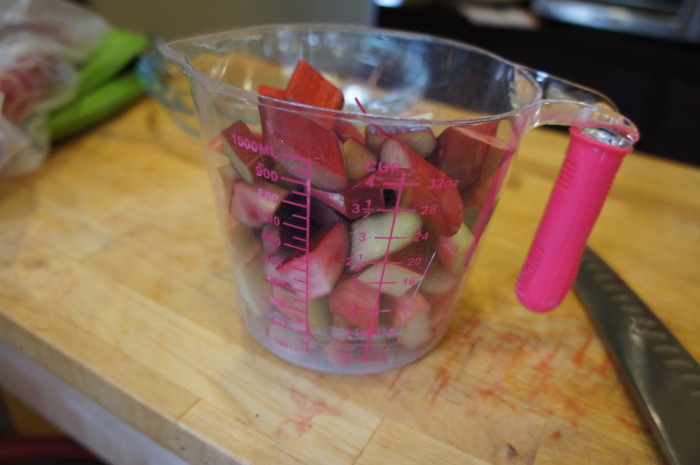
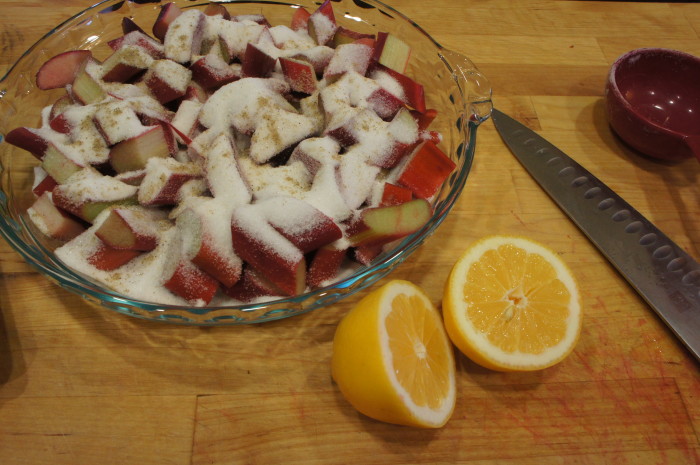
As I was getting ready for Passover dinner on Tuesday, I decided to nix the matzo crunch in favor of something a little more reminiscent of springtime: some baked rhubarb. After doing a little recipe hunting and finding this recipe on Food52 and this recipe on Orangette, I decided to do a little adapting. This recipe is so easy and delicious – I love the slightly sour flavor of the rhubarb and the hint of lemon, cardamom, and earl grey. I balanced the tartness with some fresh whipped cream, but ice cream, fresh ricotta, or yogurt are also great options.

Baked Rhubarb with Lemon and Cardamom

Ingredients

6 cups rhubarb, cut into 1-inch pieces
1 cup granulated sugar
1 meyer lemon, juiced
1/8 tsp cardamom
3/4 cup steeped and cooled earl grey tea

optional: fresh whipped cream, ice cream, fresh ricotta, or yogurt for serving

Instructions

Preheat your oven to 350 degrees. In a baking dish, combine rhubarb, sugar, lemon juice, cardamom, and tea. Stir to combine. Bake for 15 minutes, stir, and bake for another 15 minutes. Remove from oven, and allow to cool. You can serve the rhubarb warm, room temperature, or chilled, all are wonderful. Yes, that’s it. Can you believe how easy this is?

P.S. The leftovers, if there are any, taste delicious stirred into your yogurt and granola the next morning. Or on top of pancakes. Just saying.

Simple Meringues from Leftover Egg Whites

Simple Meringues // Serious Crust by Annie Fassler

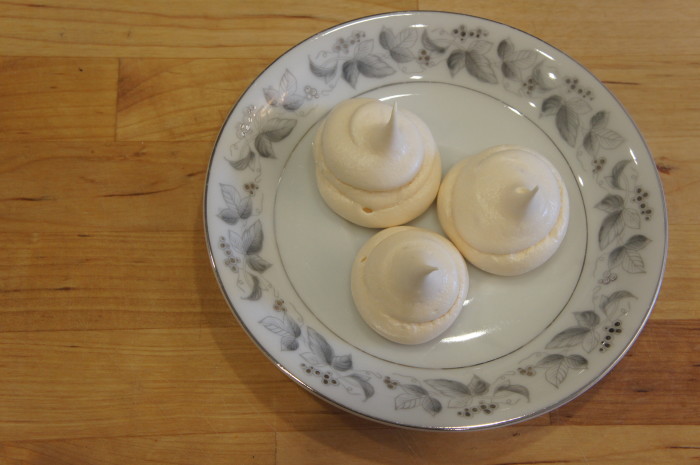
I loved meringues when I was a kid – the incredible sweetness, the way they just melt in your mouth, the way they sound kind of like styrofoam (a weird thing to like, I know), and the delicate poofy shapes they came in. I remembered making them once when I was in middle school, and getting the sticky batter all over my shirt and fingers and face.

While I don’t feel as passionately about meringues as I did when I was younger, I still enjoy them. I still love how as soon as you get a crumb on your tongue, it seems to be gone almost as quickly as it came. I love the intense sweet taste, and how it lingers in your mouth. I love the slight nuttiness that comes from the slow caramelization of the sugar.

After I made the mint matcha ice cream, I had a bunch of leftover egg whites. I thought about making macarons, but I simply wasn’t in the mood for something so potentially intense where so much could go wrong. Plus, all my egg whites were in a jar together, so measuring out 3 or however many was going to be tricky. That’s the tough thing about leftover egg whites or yolks – you so often have to find a recipe that uses the exact amount you have leftover. I had seen an article recently on Food 52 about making meringue without a recipe, so I read it, and went ahead. I wouldn’t normally choose to make this much meringue, but it turns out 6 large egg whites yeilds…a lot.

Simple Meringues

Ingredients

1 part egg whites to 2 parts sugar. For example, 1 cup egg whites, 2 cups sugar. To stabilize, you’ll need 1/2 tsp cream of tartar or 2 tsp white vinegar per 1 cup of egg whites. An easy way to remember this, if you’re using vinegar, is that it’s the same amount as the sugar but in teaspoons. So, what I used: 1 cup egg whites (from 6 large eggs), 2 cups sugar, and 2 tsp white vinegar.

Instructions

Bring your egg whites to room temperature, if not a little warmer. You can do this by simply leaving them out in the kitchen for a while, or putting them in a bowl and putting that bowl in another bowl full of hot water.

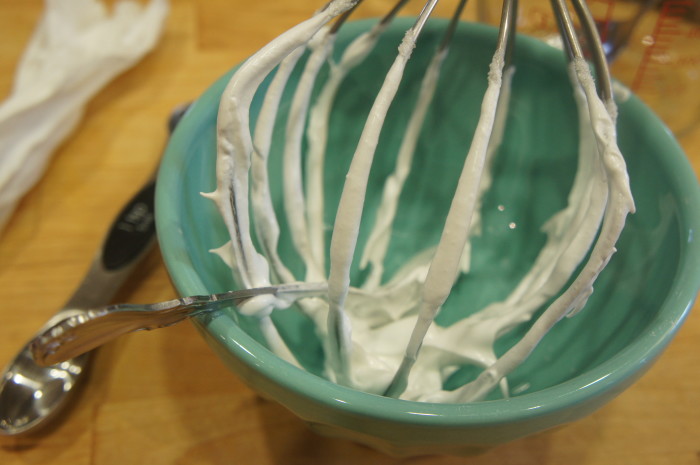
Preheat your oven to 225 degrees.  Line two pans with parchment paper. In a bowl, combine egg whites and vinegar or cream of tartar. Whip on medium speed with an electric beater or in the bowl of an electric mixer until there are soft peaks when the beater is lifted from the bowl.

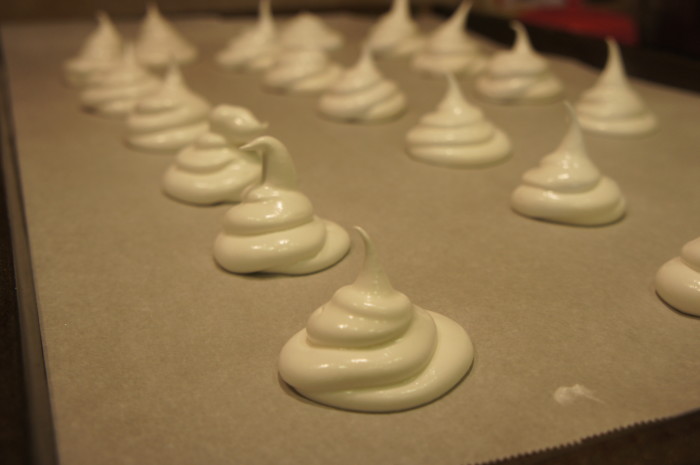
Once soft peaks can form, turn the mixer speed to high, and add the sugar by heaping teaspoons. This will take a few minutes (certainly if you’re making as much meringue as I was). Be patient. Once the sugar is mixed in, either pipe the meringue onto the prepared baking sheets, or drop by spoonful. I used a large ziploc, used a spatula to scoop all of the meringue in, and then cut off the tip of one of the corners, and used that for piping. It worked really well.

Bake the meringues for 1 1/2 hours, rotating front to back and top rack to bottom half way through. When time is up, turn off the oven and allow them to cool in the oven. If you have SO MUCH MERINGUE, like I did, you can turn off the oven and allow them to cool partway, remove from oven, and then preheat the oven for the next batch. I left my meringue on the counter while the first batch baked, and while it was noticeably not as fully whipped, it still worked just fine. I recommend crunching into one when it’s still warm, because how often do you get to try a warm meringue? Store the rest in an airtight container, and enjoy whenever you’re in need of a sweet, light treat.