Course

Risotto with Fava Beans and Corn

Fresh corn and fava beans ready to go into the risotto // Serious Crust by Annie FasslerRisotto with Fava Beans and Corn // Serious Crust by Annie Fassler

Wowee! What a whirlwind it has been lately. A few weeks ago, Jonah and I were in Chicago for the 4th of July holiday, and it seems like from there, things got crazy. The night we left for Chicago, we applied to rent a house, and the night we got back we found out we got it! We are now living in NE Portland, within walking distance to Porque No?, Tasty n’ Sons, and countless other places. Mississippi and Alberta neighborhoods are a stone’s throw away, and I’m discovering a part of the city of which I had only scratched the surface. It’s pretty sweet. Be on the lookout for reviews of some spots in our new hood.

It has been a while since I gave you guys a recipe. This is one I made a while back, but it is just as perfect for right now. This past weekend, we went out to Sauvie Island to go berry picking – we have blueberries coming out of our ears! As well as raspberries, peaches, and a few ears of corn. The corn reminded me that I STILL hadn’t posted this risotto recipe! I’ve discovered that risotto is such an easy meal to make and you can really throw in anything you have around. Saffron? Sure. Squash? Yup. Mushrooms? Why not. But this was a great spring & summer risotto with fava beans and fresh corn.

Risotto with Fava Beans and Corn

Ingredients

1 1/2 lbs of fava beans, shelled and shelled again (to learn more about shelling favas, go here)
2-3 ears of sweet corn, the kernels cut from the cob
~4 cups of chicken broth (can easily be replaced with vegetable broth to be made a vegetarian dish)
1/2 cup white wine (Alice Waters told me (in her book) that if you don’t have any white wine, you can also use a light beer – I didn’t have any wine or nice beer around, so I used PBR… it worked just fine)
2 Tbl olive oil
1 small white onion, diced
3 cloves garlic, diced
1/2 tsp salt
1 cup arborio rice
1/2 cup shredded parmesan cheese
salt and pepper

Instructions

In a saucepan over medium-high heat, bring the broth to a simmer. Reduce heat to medium-low.

In a separate saucepan over medium-high heat, heat the olive oil, then add the onion, garlic, and salt. Cook them until the onions are soft but not browned, about three minutes. Add the arborio rice and stir to coat it in olive oil. Add the wine (or in my case, beer, because I’m classy like that) and cook until the liquid has been absorbed and evaporated, stirring constantly.

Now add the broth, one cup at a time (or one ladle full at a time). Stir the rice frequently after each addition, and only add more broth when the previous broth has been absorbed. When you have added half the broth (after about 15 minutes), add the fava beans and corn. Continue adding broth and letting the rice cook and absorb, until the rice is tender but still has some bite to it. You may not need all of the broth. When the texture seems good to you, add about 1/4 cup of broth, remove the pot from the heat, and stir in the parmesan, and salt and pepper to taste. Enjoy!

Honeyed Broiled Apricots

Honeyed Broiled Apricots // Serious Crust by Annie Fassler

Dear friends, I would like to share with you perhaps my favorite recipe of the summer season (thus far, anyways). I don’t know about you, but I am a big fan of apricots.

I love them in pies, tarts, crisps, and fresh as a perfect afternoon snack. I love how little and manageable they are, I love the color, and I love the tangy flavor. Most other summer fruits are incredibly juicy (peaches, nectarines, melons, berries), but I kind of like that, even at their ripest, apricots have a funny little dryness to them.

Anyway, I had this bag of apricots in the fridge a few weeks ago, and decided, after a little searching here and there for a quick apricot dessert, to make one of the world’s easiest and most delicious desserts. I kid you not.

You could eat them with a fork, but I recommend getting your fingers a little sticky and just picking them up. These are a few bites of heavenly goodness. The warm fruit with the cold creamy yogurt is a dream, sweetened by the broiled honey. Enjoy!

Honeyed Broiled Apricots

Ingredients

Apricots (think 1 per person)
Honey
Greek yogurt (sour cream, whipped cream, or regular plain yogurt will also work, but I like greek yogurt the best)
Pistachios (shelled and chopped)

Instructions

Heat your broiler. Cut each apricot in half along the seam, and remove the pit. Put the apricots, cut side up, in a baking dish (a brownie pan or a pie dish will work well), and fill each cavity with honey. You don’t want the honey to overflow, but you want the cavity to be full. Put the apricots under the broiler for about 5 minutes, rotating halfway through. You want the honey to be bubbling and the apricots to show some good color.

Allow the apricots to cool a bit (not all the way), then move them to little plates or saucers. Top with a dollop of yogurt and a sprinkle of pistachios.

Stale Bread Soup (Ribollita)

Stale Bread Soup // Serious Crust by Annie FasslerStale Bread Soup // Serious Crust by Annie Fassler

I realize that at this point you might be sick and tired of hearing us harp about how great Tamar Adler’s An Everlasting Meal is. But hear me out one more time. Everyone has stale bread. Or at least everyone who has bread at some point and does not eat it all eventually has stale bread lying around. And most of the time it gets thrown away, or responsibly composted. If you are culinarily educated, dear reader, you may already have known of stale bread soup; but as I read Tamar’s book, I was astounded to find out that not only does such a thing exist, but there is a long and ancient tradition of creating soup from leftover bread (Ribollita in Italian).

There are a few things that should be said about stale bread soup. First, it is not a soup in the same way that chicken noodle is a soup; stale bread soup is usually much thicker and feels more like a hearty chili. Second, stale bread soup is more of a general idea and a starting point than a recipe. It is meant to be made with whatever is around, provided you have some stale bread (otherwise, you will be making whatever-is-around soup – which could turn out to be vegetables-in-water “soup” if you don’t have any broth lying around).

The recipe below is adapted slightly from Tamar’s recipe for Ribollita in An Everlasting Meal. In usual Tamar fashion, you will use A LOT of olive oil in this recipe. We have made stale bread soup twice now, so I’ve noted the different things we used.

Stale Bread Soup (Ribollita)

Ingredients

Olive oil
1 onion, diced
2 cloves garlic
Celery, if you have it (I did not)
salt
1/2 cup chopped fresh herbs like parsley or rosemary or thyme (if you don’t have fresh, maybe do 1/4 cup dried?)
1/2 teaspoon chile flakes
Tomatoes in some form, if you want (3 peeled fresh tomatoes, or I used 1 can diced. Made it once without tomatoes as well)
1 bunch leafy greens (I used kale once and cauliflower greens once; other ideas are swiss chard, collard greens, radish greens, etc)
1/4 cup water
2 cups cooked beans (I used a can of black beans both times, Tamar suggests chickpeas or cannellini beans)
2 cups broth from beans or chicken/veggie stock or cans of tomatoes (I used a combo of all three, and you can make up any shortfall with water)
1 piece of Parmesan rind (Do this if you can, because it makes the soup soooo tasty and rich. Also, what else are you going to do with your Parmesan rind?)
2 cups stale bread, crusts removed, torn/cut into 1/2-inch pieces

Instructions

Heat 1/4 inch olive oil (this is just the beginning) in a big-ish soup pot. Cook the onion and garlic (and celery if you have it) until they soften. Add the herbs and chile flakes and a little bit of salt. Add the tomatoes and cook for a few minutes over medium heat.

Chop the greens (and remove from the stems) then add to the pot, and add the water. Cover and cook over low heat until the greens are wilted. Put in all your broths/waters/juices and the beans, plus the Parmesan rind.

(If you have a bunch of Parmesan left, make sure to cut the rind from the rest of the Parmesan. Otherwise, just save the Parmesan rind for when you will next make bread soup. Make sure your Parmesan is big enough that you can keep track of it, because you’re going to take it out later.)

Bring to a simmer, then add the bread and more olive oil (Tamar says to add 1/2 cup, but I was not brave enough and probably added about a 1/4 cup at this point). Cover and cook for 1/2 hour on low, stirring occasionally to make sure the bottom doesn’t burn. The bread will soak up the soup and then liquify into it.  Taste it, add more broth or salt or whatever you want, and then take it off the heat.

Add in another 1/2 cup olive oil (Tamar, are you crazy!?!? I probably added 3 tablespoons here) and take out the Parmesan rind. You can grate Parmesan on top and add some pepper to serve.

This soup is perfect for a windy, rainy, cold, or dark winter/fall night.

Fresh Pasta with Pancetta, Leeks, & Breadcrumbs with Porcini Powder

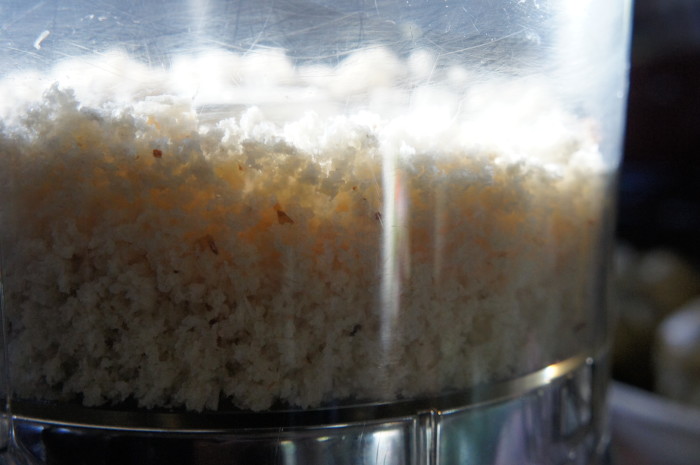
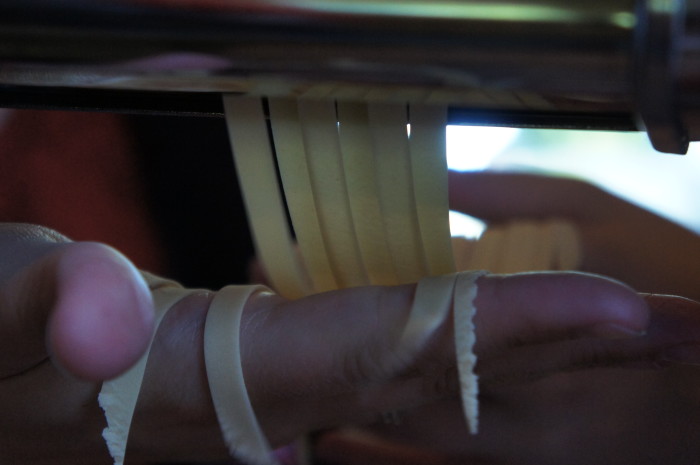
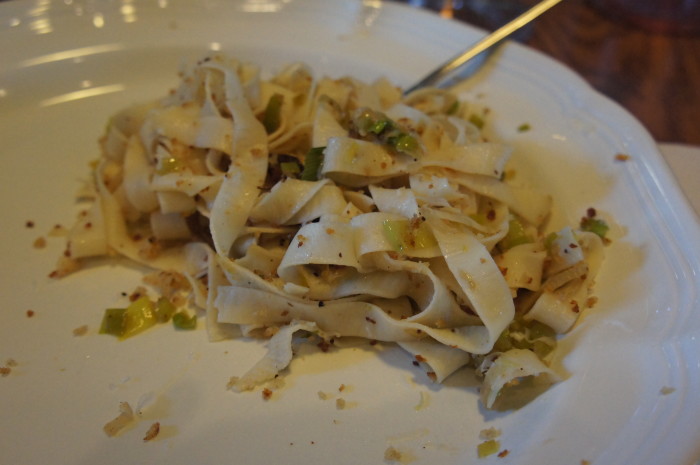
Fresh Pasta with Breadcrumbs, Leeks, and Pancetta // Serious Crust by Annie Fassler

Fresh Pasta with Breadcrumbs, Leeks, and Pancetta // Serious Crust by Annie Fassler

Fresh Pasta with Breadcrumbs, Leeks, and Pancetta // Serious Crust by Annie Fassler

Porcini powder. Porcini powder? Yes. From the farmers market. I was told it was wonderful, and was given a little bag as a gift. But what to do with the stuff, that’s the question. I’m not sure I made the right choice… This pasta dish had so much going on in it that the porcini flavor was hiding. It was hiding behind the sourdough breadcrumbs and butter it had been sprinkled into, and under the pancetta it had been tossed with, and between the fresh pasta noodles it had been swirled around with.

All that being said, this dish was dang good, if I do say so myself. There were a few elements, and it took a few pans to get it all prepped. So no, this is not one of those magical one pot meals. Certainly not.

My dear friend Elsa was staying with us, and my friend Dylan came over for dinner, as well as Elsa’s friend Sarah, so we had help in manning all the pans. Tamar Adler said in The Everlasting Meal that there is value in, when a guest asks “is there anything I can do to help?” being able to say, “yes.” I have found that to be very true.

Think of this recipe as a guideline. Or a lightly painted upon canvas. You can remove, add, flavor, sprinkle, drizzle anything you like. I must say, though, that I used a different pasta recipe this time, and I liked it much better than the one I had been using. There’s something to be said for trying something new.

Fresh Pasta with Pancetta, Leeks, & Breadcrumbs with Porcini Powder

Ingredients

Fresh Pasta

2 cups all-purpose flour
3 eggs

Toppings

Olive oil
1 large or 2 small leek(s), sliced and rinsed
1 small white onion, chopped
2-3 cloves garlic, minced
Pancetta – the amount is up to you. I like the pancetta that is thin, almost like prosciutto, though that isn’t what we used here. I think if we’d used the thinner kind, it would’ve clung to the noodles better.
Fresh breadcrumbs
Butter
Porcini powder
Salt and pepper

Instructions

Fresh Pasta

To make the pasta, pulse the flour alone in a food processor a few times. In a bowl, beat the eggs and then add them to flour, and process until the dough forms a ball. If your dough is dry and looks like little pea sized pieces of dough, you can add water 1/2 tsp at a time. If it sticks to the bowl of the processor, add flour 1 Tbl at a time. When the dough has formed a ball, turn it out onto a floured work surface and knead for 1-2 minutes. Wrap the dough in saran wrap and set it aside for up to 2 hours to relax (at least 15 minutes). Then roll out the pasta as you usually do and cut it as you normally would.

Toppings

In a pan over medium (or medium low), cook your pancetta, then set aside on a plate with a paper towel on it. Once the pancetta is removed, you can use that same pan to sautée the leeks, onion, and garlic, seasoning lightly with salt and pepper. You may want to add a drizzle of olive oil to the pan to help keep things from sticking. But then again, maybe you won’t.

In another pan, melt some butter, then add the breadcrumbs and as much porcini powder as you feel like adding. Toast the breadcrumbs on low heat, stirring frequently to prevent burning.

As things are moving along, get out a big pot, fill it with water and a healthy serving of salt, and bring to a boil. Add the pasta (I like to cook fresh pasta in batches, as it makes it less likely to stick together). If you’re cooking fresh pasta, it really only needs to cook for a few minutes. I like to remove it when all the noodles are floating. Do you have a better method? I’d like to know it. If you’re cooking your pasta in batches, you can remove it with tongs into a colander to keep the water boiling on your stovetop.

Strain the pasta, put it in a bowl, and toss with all the various bits and pieces. Enjoy with a glass of buttery, nutty white wine and friends, around a table, on a sunny evening.