Fall

Fresh Pasta with Breadcrumbs, Leeks, and Pancetta // Serious Crust by Annie Fassler

Fresh Pasta with Pancetta, Leeks, & Breadcrumbs with Porcini Powder

Fresh Pasta with Breadcrumbs, Leeks, and Pancetta // Serious Crust by Annie Fassler

Fresh Pasta with Breadcrumbs, Leeks, and Pancetta // Serious Crust by Annie Fassler

Fresh Pasta with Breadcrumbs, Leeks, and Pancetta // Serious Crust by Annie Fassler

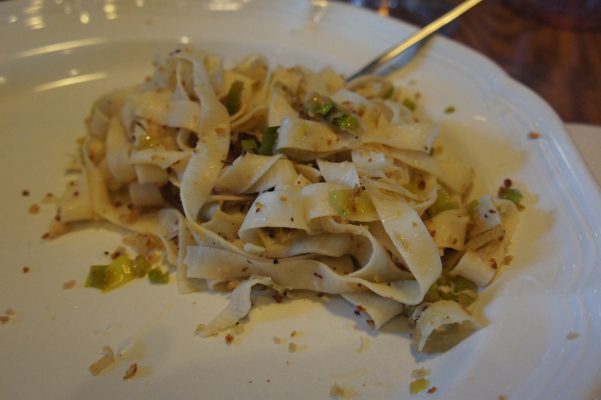
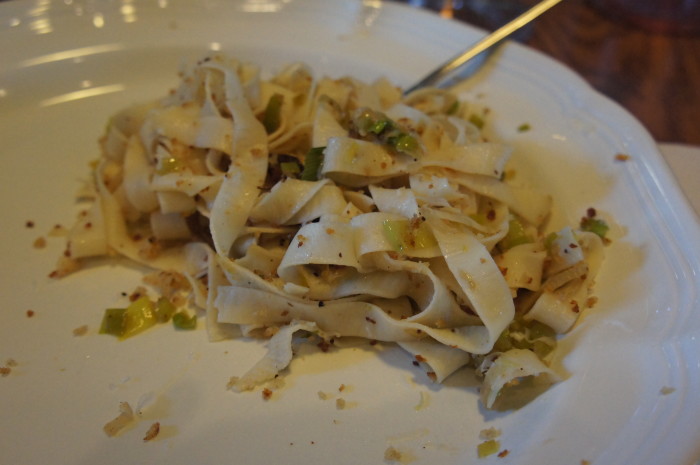
Porcini powder. Porcini powder? Yes. From the farmers market. I was told it was wonderful, and was given a little bag as a gift. But what to do with the stuff, that’s the question. I’m not sure I made the right choice… This pasta dish had so much going on in it that the porcini flavor was hiding. It was hiding behind the sourdough breadcrumbs and butter it had been sprinkled into, and under the pancetta it had been tossed with, and between the fresh pasta noodles it had been swirled around with.

All that being said, this dish was dang good, if I do say so myself. There were a few elements, and it took a few pans to get it all prepped. So no, this is not one of those magical one pot meals. Certainly not.

My dear friend Elsa was staying with us, and my friend Dylan came over for dinner, as well as Elsa’s friend Sarah, so we had help in manning all the pans. Tamar Adler said in The Everlasting Meal that there is value in, when a guest asks “is there anything I can do to help?” being able to say, “yes.” I have found that to be very true.

Think of this recipe as a guideline. Or a lightly painted upon canvas. You can remove, add, flavor, sprinkle, drizzle anything you like. I must say, though, that I used a different pasta recipe this time, and I liked it much better than the one I had been using. There’s something to be said for trying something new.

Fresh Pasta with Pancetta, Leeks, & Breadcrumbs with Porcini Powder

Ingredients

Fresh Pasta

2 cups all-purpose flour
3 eggs

Toppings

Olive oil
1 large or 2 small leek(s), sliced and rinsed
1 small white onion, chopped
2-3 cloves garlic, minced
Pancetta – the amount is up to you. I like the pancetta that is thin, almost like prosciutto, though that isn’t what we used here. I think if we’d used the thinner kind, it would’ve clung to the noodles better.
Fresh breadcrumbs
Butter
Porcini powder
Salt and pepper

Instructions
Fresh Pasta

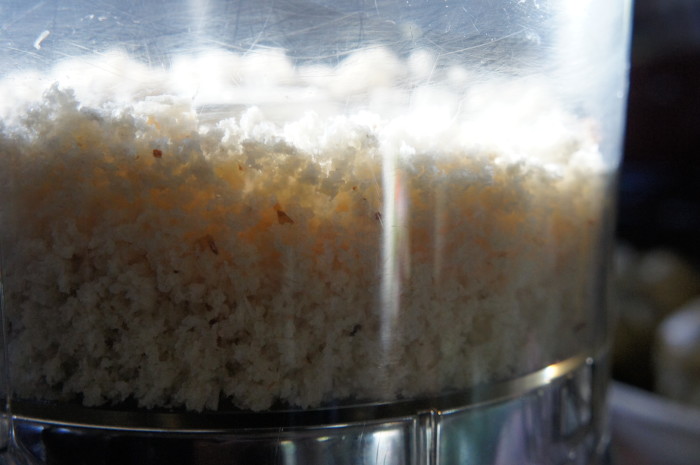
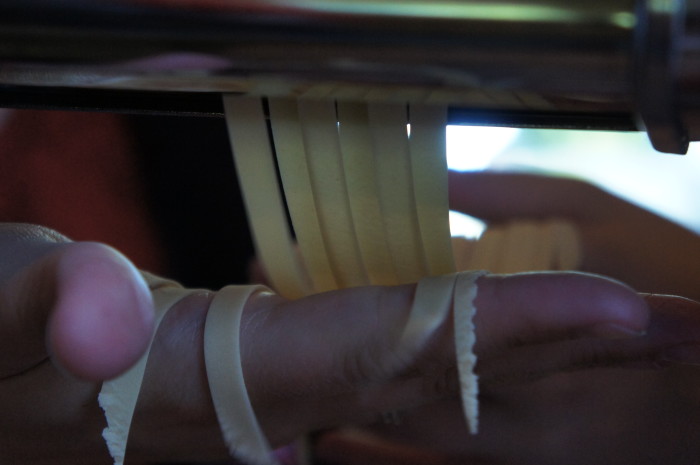
To make the pasta, pulse the flour alone in a food processor a few times. In a bowl, beat the eggs and then add them to flour, and process until the dough forms a ball. If your dough is dry and looks like little pea sized pieces of dough, you can add water 1/2 tsp at a time. If it sticks to the bowl of the processor, add flour 1 Tbl at a time. When the dough has formed a ball, turn it out onto a floured work surface and knead for 1-2 minutes. Wrap the dough in saran wrap and set it aside for up to 2 hours to relax (at least 15 minutes). Then roll out the pasta as you usually do and cut it as you normally would.

Toppings

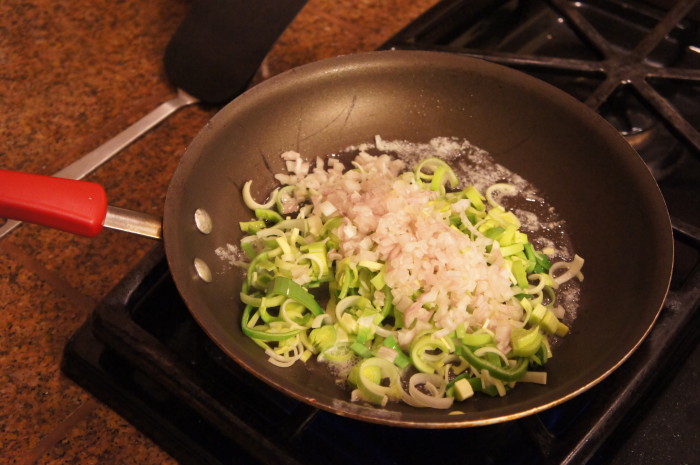
In a pan over medium (or medium low), cook your pancetta, then set aside on a plate with a paper towel on it. Once the pancetta is removed, you can use that same pan to sautée the leeks, onion, and garlic, seasoning lightly with salt and pepper. You may want to add a drizzle of olive oil to the pan to help keep things from sticking. But then again, maybe you won’t.

In another pan, melt some butter, then add the breadcrumbs and as much porcini powder as you feel like adding. Toast the breadcrumbs on low heat, stirring frequently to prevent burning.

As things are moving along, get out a big pot, fill it with water and a healthy serving of salt, and bring to a boil. Add the pasta (I like to cook fresh pasta in batches, as it makes it less likely to stick together). If you’re cooking fresh pasta, it really only needs to cook for a few minutes. I like to remove it when all the noodles are floating. Do you have a better method? I’d like to know it. If you’re cooking your pasta in batches, you can remove it with tongs into a colander to keep the water boiling on your stovetop.

Strain the pasta, put it in a bowl, and toss with all the various bits and pieces. Enjoy with a glass of buttery, nutty white wine and friends, around a table, on a sunny evening.

Saffron Risotto with Mushrooms // Serious Crust by Annie Fassler

Saffron Risotto with Mushrooms

Saffron Risotto with Mushrooms // Serious Crust by Annie Fassler

I mentioned a couple of weeks ago that Jonah and I recently purchased The Family Meal by Ferran Adria. As soon as we got it in the mail, Jonah proceeded to look at the whole book, page by page, cover to cover. Which was really adorable. He was pretty excited. Anyway, a couple days later, I finally got it out and flipped through it, and I too got really excited. There are so many awesome recipes in this book, and the layout is great. It tells you the timeline of your meal (2 hours before, you can start doing task #1, 1 hour before, you can start doing tasks #2 and 3, 40 minutes before… you get the idea), it tells you how much of each ingredient you will need to make the meal for 2 people, 6 people, 20 people, and 75 people. So we can perfectly cook for just the two of us, or we can cook for us and a bunch of friends. Lastly, the recipe itself is in photograph form, so you know exactly what each step looks like, which is such a big thing for a lot of people. And it has super specific instructions, i.e. instead of saying “cook until lightly browned” it says “cook for 16 minutes.” Which is so nice.

Anyway, while flipping through it for the first time, we marked a bunch of the recipes we wanted to try first, and then went to the store to pick up ingredients for a couple meals this week. The coolest thing was that because we had bought a chicken at the farmers market a couple weeks ago, cut it into pieces, frozen the pieces, and made broth out of the carcass, we had almost all of the ingredients we needed for these meals. First up was saffron risotto with mushrooms. I have never made risotto before, and was a bit nervous about it, because it’s one of those things that seems like it might be easy to mess up – overcook, undercook, underseason, overseason… etc. But because the instructions for these recipes are so specific, I had no fear!
Saffron Risotto with Mushrooms

Serves 2

Ingredients

2 1/2 cups chicken stock (can be replaced with vegetable stock)
1 pinch saffron strands
1 1/2 Tbl olive oil
1/4 white onion, finely chopped
2 Tbl white wine
1 cup risotto rice, also called arborio rice
2-6 white mushrooms (it all depends on how big your mushrooms are and how many you want on your risotto)
1 tsp butter
1/4 cup grated parmesan cheese
1 tsp (maybe more) fresh lemon juice

Instructions

Put all of the stock into a sauce pan, cover, and bring to a simmer.

This is the weird part, where I wish you could see the cookbook so you could see the photos. Make a little envelope out of tinfoil, put the saffron threads in it, and toast them in a pan over medium heat for one minute. Don’t le it burn! Remove from the pan and let it cool.

In a large pan or pot, heat the oil over medium heat, then add the onions. Once they’re soft, but not browned, add the wine and scrape up any browned bits from the bottom of the pan. When most of the wine has cooked off, add the rice and let it cook for 3 minutes, stirring all the while. Add one ladle-full of stock, and cook for 2-3 minutes, stirring often to keep it from sticking. Pour the rest of the stock into the pot. Quickly chop the saffron and add it to the pot. Cook the rice for 16 minutes (what precision!), stirring frequently.

While the rice is cooking away, wipe the mushrooms clean with a paper towel, and slice them as thin as you can. You can use a mandolin if you’ve got one, or just a sharp knife. Put them in a bowl and set aside.

When the rice has absorbed the majority of the liquid and is a little al dente, add the butter, and then the parmesan. Stir until the rice is nice and creamy, and season it with salt, pepper, and lemon juice. Spoon the risotto onto plates and top with mushroom slices, and enjoy!

All-in Pesto by Serious Crust

All-In Pesto

All-in Pesto by Serious Crust

A few weeks ago, my dad and Darla came down to Portland for my cousin Lia’s oral thesis defense. I really wanted to go to the farmer’s market before brunch, and Dad came along. My dad is a lover of produce. I cannot tell you how excited he got about the range of items available at our market (and how decently priced everything was compared to his fancy Seattle market). I’ve never seen someone so excited over nettles before.

Anyway, between the two of us, we bought 3 bunches of radishes. My dad, needing to drive back to Seattle with a large dog in the car, was trying to minimize his load as much as possible, ripped the radishes from the greens, and left the greens to me. A la Tamar, I knew I could use them, I just had to figure out how. And then it hit me: pesto.

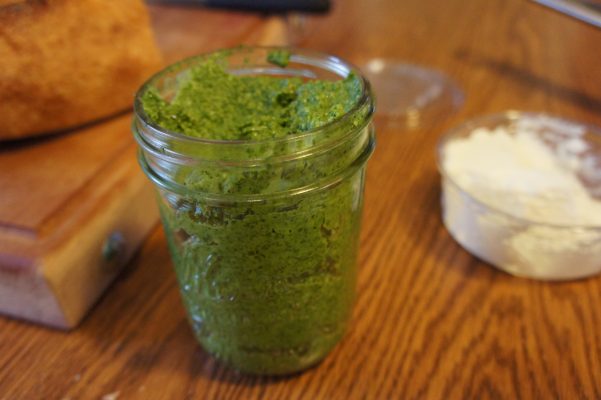
I have since made 2 batches of the stuff, and people LOVE it. And you can use greens other than radish tops: kale, kohlrabi greens… anything green and leafy. The other beautiful thing about this recipe is that it’s not really a recipe – it’s more like guidelines. Use whatever you’ve got around (ergo the all-in title: you can put it all in), and put it on anything and everything. We started with pasta and went from there: we used it as a rub for a whole chicken and potatoes that we roasted, ate it with cheese and crackers and charcuterie, and (my favorite) topped some crusty bread with fromage blanc, the pesto, and a soft boiled egg.

All-In Pesto

Ingredients

Radish tops, stems picked off, and rinsed
Basil, rinsed
A hard salty cheese, like pecorino romano or parmesan
Pine nuts or shelled pistachios (or any combination of the two)
Garlic, peeled and roughly chopped
Olive oil
Salt

Instructions
In a food processor combine all ingredients. It’s best to start with all of your greens, but about half of everything else, so that you can adjust flavor and texture to your liking. Pulse until smooth, and enjoy!

Kale, squash, and a runny yolk

Kale, Squash, and a Runny Yolk

Kale, squash, and a runny yolk

Sometimes you just need an easy dinner. You need to comb through your fridge, scrounge what ingredients you can, and stand there, for a minute, gazing at your collection, trying to figure out what you can make with all of this. It doesn’t have to be fancy, or even graceful, but tasting good and mildly cohesive would be nice. You’ve got a bunch of kale that you really should use soon, a small, friendly looking butternut squash, and a jalapeño. And eggs. Luckily, the roommates always keep lots of eggs around. And do you know what brings a dish together with ease? A runny yolk.

So you slice up the butternut squash, drizzle with olive oil and salt, mix in some chopped garlic, and lay it out on a baking sheet, laying a couple rosemary springs atop it all, sliding it into the oven to roast. You sautée up the kale with more oil, salt, and garlic, and even some jalapeño. And then, to finish it all off, you soft boil a couple of eggs (one for you and one for the tall fellow you eat dinner with). Simple as that, you have dinner.

Kale, Squash, and a Soft Boiled Egg

Ingredients

A small butternut squash, olive oil, and salt (and anything you’d like to roast with it)
1 bunch of kale, garlic, olive oil, and salt
Eggs

Instructions

Peel and cube or slice the butternut squash into whatever shapes you like to eat. Slide into the oven at about 375 and roast until easily pierced with a fork. Sautée kale with a tsp of olive oil, chopped garlic, and a sprinkling of salt. If you want the kale to steam and wilt a little more, you can add some water to the pan (no more than 1/4 cup) and cover with a lid. After letting the kale steam for a bit, remove the lid and let the water cook off.

To soft boil the eggs, bring a pot of water to a boil. Drop the eggs in, allow to cook for 6 minutes (this can be adjusted depending on how you like your eggs). After 6 minutes, remove the eggs with a slotted spoon, run under cold water, and peel.

Put your egg on top of your kale and squash to let the yolk run over the veggies a bit. It adds a nice rich creaminess. Enjoy.

Simple Brownies

Simple Brownies with Almond

Simple Brownies

Simple Brownies

My co-worker Kelly, who I’ve written about before, has a commune dinner every Monday night. He lives near a bunch of his friends and all of them and their kids (and their pets) all convene for dinner every week. A few weeks ago, Jonah and started joining in. It’s really nice to have that sense of community, which I think can be hard to find when you’re in your 20s and you don’t live near your family.

Going over to Kelly’s on Mondays is so calming. Every member of this group is so kind and funny. They have been having these meals for I’m not sure how many years, but they weren’t even phased when Jonah and I started showing up every week, and have been so incredibly welcoming, pulling up chairs to the table and always making sure we have a drink in our hand. It immediately feels like we’re a part of this family, with the two little boys running around the house and the dogs barking outside. And they feed us delicious food, so I can’t complain.

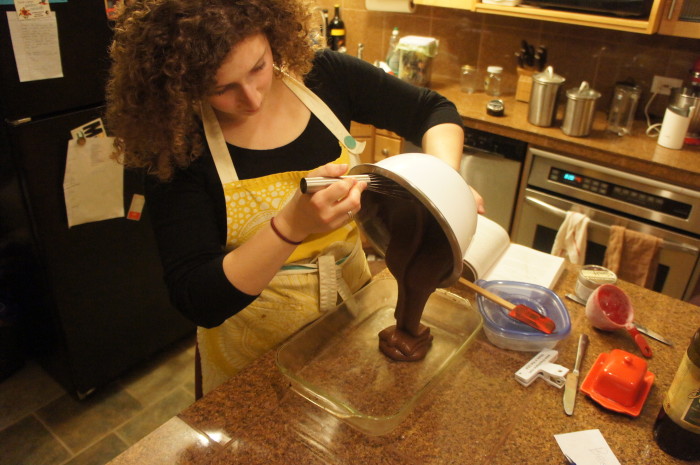
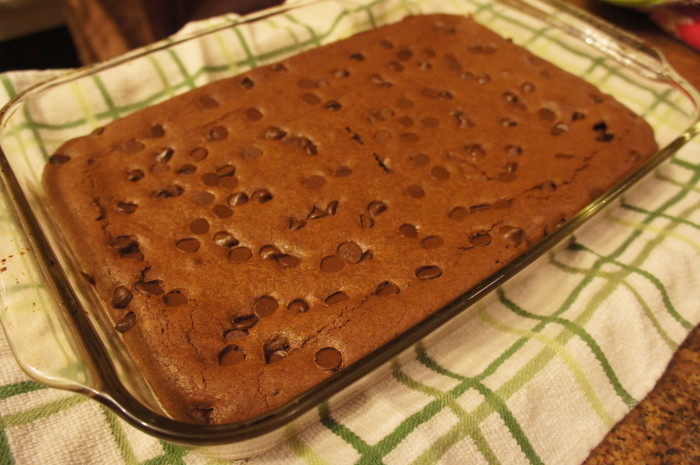
The first night we went, instead of just grabbing a bottle of wine and heading over (which I was later scolded for not doing), I decided to whip up a batch of brownies. There’s a relatively quick recipe in An Everlasting Meal, so I pulled it out and made a couple of adjustments (mainly replacing half a teaspoon of the vanilla extract with almond extract), and they turned out to be a huge hit. The almond was a really nice and unique flavor with the chocolate.

Simple Almond Brownies

Ingredients

4 oz unsweetened chocolate
2 sticks butter
3 eggs
2 cups sugar
1 1/2 tsp vanilla extract
1/2 tsp almond extract
1 cup flour
a handful (or 2) of chocolate chips, or walnuts

Instructions

Preheat your oven to 350 degrees and grease a 13×9 inch baking dish or pan. In a double boiler on the stove (or a heat proof bowl or a pot over a pot of simmering water), melt the chocolate and butter together, stirring so it’s all nice and smooth. Remove the bowl or pot from heat and let it cool. Once it is cool, add the eggs, beating after each addition. Add the sugar, vanilla, and almond, stir, and then add the flouring, stirring until combined. Pour the batter into the pan and sprinkle the chocolate chips (or walnuts, if you’re using them) on top. You can put on as many as you like or as few. Bake for about 30 minutes, but do the clean knife/toothpick check at 20. Mine took roughly 35 minutes. Enjoy!

Rice Cakes

Rice Cakes (using rice gone wrong)

Rice Cakes
Rice Cakes

Rice Cakes

Sometimes you’re in the kitchen and you have a lot going on and you miss something going wrong. Maybe you accidentally over-salt your pasta or you burn your veggies. There’s a whole (albeit little) chapter in Tamar Adler’s book all about how to save your mistakes. For example, turn those burned veggies into a smoky veggie salad. Or take that over-salted pasta, mix it with some herbs and butter, and make a frittata. The possibilities are endless.

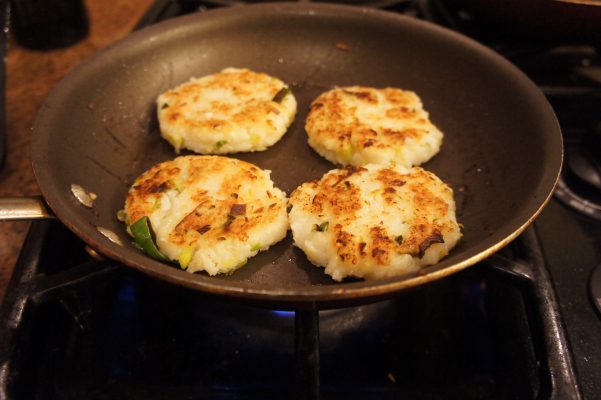
A while ago, Jonah and I made these rice bowls. We doubled the rice recipe, and I must’ve done some math wrong and put in way too much liquid. So, while the rice tasted good, it was definitely a little mushy. After sitting in the fridge sadly for a week, I was thinking of using it to make rice cakes. Jonah reminded me about the “Further Fixes” chapter in An Everlasting Meal, so to the book I went. It kind of told me what I was already thinking of doing, so on I went.

Rice Cakes

Ingredients

roughly 3 cups of overcooked rice
1 large shallot, finely chopped
1/2 leek (if I’d had a whole one, I’d have used it), thinly sliced
salt, pepper
garlic powder
parmesan cheese
olive oil for cooking

Instructions

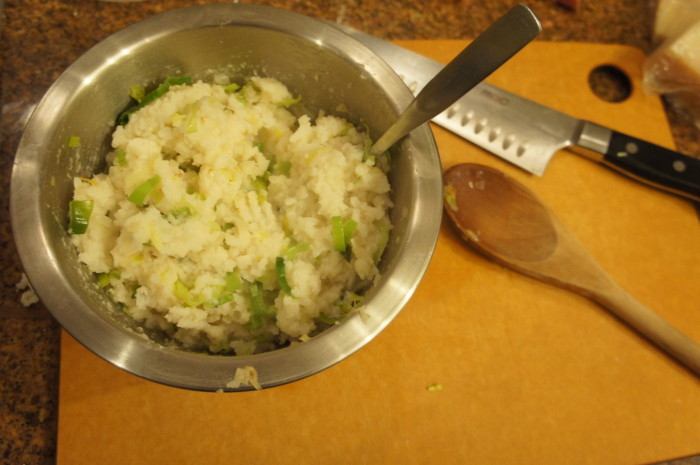
I heated up the rice in the microwave, drizzling it with water to kind of re-steam it. If your rice won’t stick together (perhaps it’s not quite as mushy as mine was), feel free to stir an egg into the mix. Stir together the rice, shallot, and leek, and add any seasoning you like. I added a few shakes of garlic powder, probably 1/2-1 tsp salt, and probably 1/4 cup grated parmesan. But none of this has to be exact. Put a bunch of stuff you like in there. I bet chopped sage would’ve been good, as would onion and garlic.

Heat some olive oil in a nonstick pan over medium heat, form the rice mixture into patties, and cook on each side until golden brown, roughly 3-5 minutes. Add more oil as you need it. You want them to have a nice crispiness on the outside to add some texture.

We ate them alongside some delicious panko-crusted tilapia and roasted broccoli. They would make a great appetizer for a fancier dinner. Also, they would make a delicious breakfast had I put a fried egg on top. Or melted a slice of cheddar. With some breakfast sausage on the side. See, there are so many uses for botched food! Now go mess up some rice.

Chicken Liver Pâté

Chicken Liver Pâté

Chicken Liver Pâté

Chicken Liver Pâté

Chicken Liver Pâté
Chicken Liver Pâté

Recently I have discovered my love of liver in pâté form. When I was younger and my parents would eat liver, I would screw up my face and impolitely decline a taste. Now I wonder why I was so against the stuff. It’s rich and creamy and makes a delicious spread for a snack or appetizer.

After seeing a recipe in An Everlasting Meal for chicken liver pâté, I had been wanting to try it. But, like anything I’ve never cooked before, I was a little nervous about it. I didn’t know if it could go wrong, and if it could, how badly. I had been checking the meat counter at my grocery store for a few weeks and hadn’t seen any chicken livers until one day, there they were, slimy and maroon, in all their glory. So I grabbed a pound of them. How much did a pound of chicken livers cost me? $2.73. This stuff is cheap AND delicious? I’m so in.

I got home, pulled out my book, and started cooking.

Chicken Liver Pâté

Ingredients

1 lb chicken livers
salt and pepper
roughly 12 Tbl butter (1 1/2 sticks)
2 Tbl white wine (sherry, bourbon, scotch, cognac, or brandy will also do)
1 shallot, finely chopped
1/2 leek, finely sliced
1 small clove garlic, minced
2 Tbl water
a pinch of cloves
a pinch of cinnamon
1/8 bay leaf, crumbled
1/4 cup fresh thyme leaves, chopped (I didn’t do quite a quarter of a cup)

Instructions

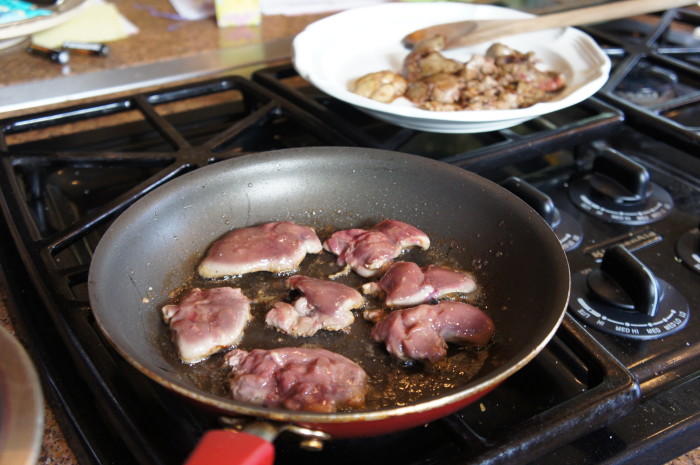
Trim any connective membrane type stuff from the livers and season them with some salt and pepper. Melt 1 Tbl of butter in a nonstick pan. When it’s starting to sizzle, add a batch of livers (depending on how big your pan is, you’ll need to cook the livers in 2-3 batches). Don’t crowd them in the pan; leave some space around each liver. Let each liver brown on one side, then flip and brown on the other side. Put the livers on a plate or in a shallow bowl – they will release some juices. Add 1 Tbl of wine to the pan and scrape the brown bits from the pan. Pour the wine over the cooked livers. Add more butter to the pan, and cook the rest of the livers as you did above, skipping the wine step.

After you’ve cooked all the livers, add the shallot, leek, and garlic to the pan with the remaining 1 Tbl of wine and 2 Tbl of water. This will help the veggies become tender. Cook the veggies over medium heat until they’re tender.

When the veggies are done, add them, the livers and their juice, the cinnamon, clove, thyme, and bay leave to the blender. Don’t blend yet! Cube one stick of butter and add the cubes to the blender too. Blend it up and taste. Season as you see fit (I found myself adding more salt…). When it’s seasoned to your liking, put the pâté in a bowl and allow to cool for 30 minutes before serving. It may seem liquidy, but it will solidify as it cools. If you’ve got leftovers (like we did), melt some butter and spread it over the top of the pate, and allow to cool. You can store it like this (according to Adler) for up to 2 weeks.

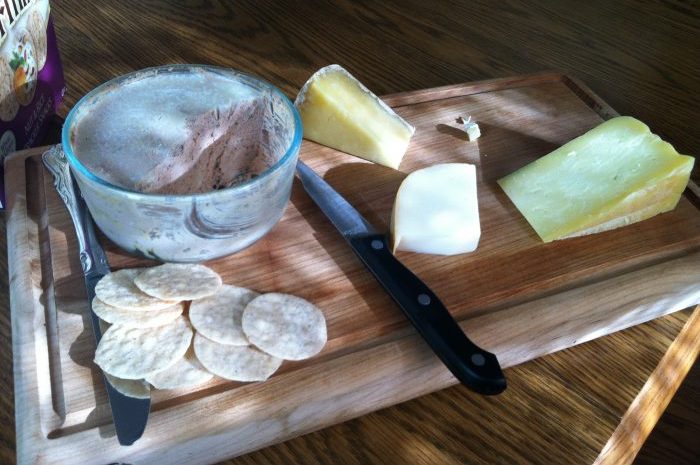
We liked our pate with crostini and herbed goat cheese, or nut thins and various cheeses from our grocery store’s scrap bin as well as one from the PSU Farmers Market.

beet tart

Beet Tart

beet tart

OK people – I know we read a lot of food books and talk about them all the time, but if there is ONE book you are going to read from our suggestions, let it be An Everlasting Meal by Tamar Adler.  It is amazing book that changed my life, and is sure to make you think and act differently around food.  If you have not read it yet, go read our blog post on her book, and then continue below.

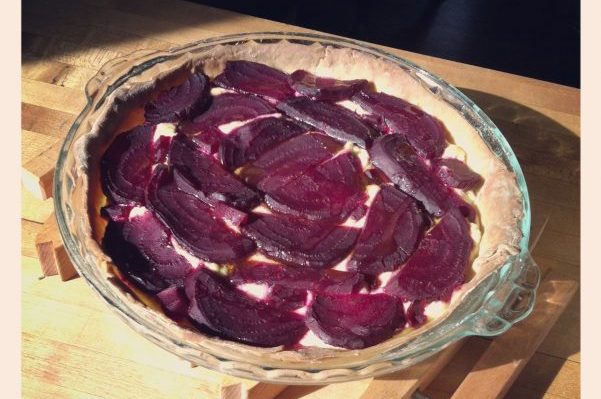
This beet tart is a perfect example of Tamar’s philosophy and grace: if you attacked this beet tart recipe from start to finish in one cooking session alone – it would take most of your day; first you would have to roast the beets (which takes a long time anyway), then make tart dough and chill it for an hour, then bake the tart dough, then put together the filling, bake some more, add the sliced beets, and bake once again.  Sounds daunting! I would never have done this recipe if it wasn’t spread out over many days and incorporated in the general meal preparations for the week.  However, the manner in which it was made made it feel like I was just throwing leftovers together in a very creative way, rather than a labor intensive ordeal.

Here’s what happened: A few days before, Annie and I roasted a whole bunch of veggies for dinner (or was it lunch?).  We filled the whole oven and roasted lots of different veggies with olive oil and salt.  I fit the beets in a small pan with a 1/2 inch of water in the bottom, covered them with foil, and let them roast for a long time (probably too long, I may have forgotten about them).  We ate the other roasted veggies as part of our dinner that night, but we had no intention of eating the beets that day, so we didn’t have to wait around for them to roast.  We let them cool and then peeled them and put them in the fridge before bed.  Now we had roasted beets peeled beets in the fridge.  We had no plan but we had ideas: beet salad, beet pasta, or beet anything; they were simply a nice starting point.

A few days before roasting the veggies, we had made a different veggie tart using the Olive Oil Tart dough recipe that can be found in Tamar’s book, so we had some leftover in the fridge.  A few days later, I looked in the fridge and saw that a perfect storm had brewed for a beet tart.  There, sitting in the fridge waiting to be used, were roasted peeled beets, tart dough, and some leftover ricotta cheese.

If you want to make this recipe from start to finish, more power to you.  However, I would suggest at least making the tart dough a day ahead, and then looking through your fridge to find any vegetables that would work, roast them, and put them on top of the tart in place of beets.

Beet Tart

Note: You’ll want to roast your beets or other vegetables before you make the tart dough.

Ingredients

Olive Oil Tart Dough

2 1/2 cups all-purpose flour
1/3 cup olive oil
1/2 cup ice water
1 teaspoon salt

Beet Tart Filling

1 1/2 cups ricotta (fresh)
1/4 cup olive oil
2 Tb. cream (I think I just used leftover creme fraiche)
1/2 t. salt
2 egg yolks
a pinch of fresh thym or rosemary

Instructions

Olive Oil Tart Dough

Mix all ingredients together in a bowl. If its too dry, add more water, a tablespoon at a time. Divide the dough in half and roll into balls, then put them in the fridge to chill.

Take out one dough ball (you get to save the rest for another day!) and roll it out on a floured counter until its about 1/4 inch thick. Heat the oven to 400 degrees.  Grease the bottom of a 9-inch pie pan and dust with a bit of flour. Lay the crust in the pan and trim the edges. Prick the bottom a few times (this dissuades bubbles from appearing in your tart dough). Cover the crust in aluminum foil and put some dried beans or pie weights in to fill the tart and hold down the dough. Bake for 20 minutes.

Beet Tart Filling

Whisk together filling ingredients. Pour into the pre-baked tart dough (remember to take out the dried beans and aluminum foil!) and bake at 400 degrees for 15 minutes.  Now lay your beet slices (I cut mine into half-moons) on top of the ricotta filling in a single layer and bake for another 10 minutes.  Let it cool and eat at room temperature.

It is very filling and great for lunch the next day and many days after!

Soba Noodles with Mango and Eggplant

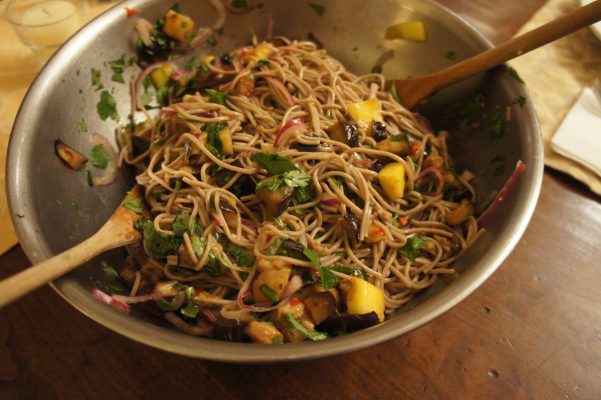
Soba noodles, eggplant, onion, mango, cilantro, basil, and dressing all tossed into a bowl.

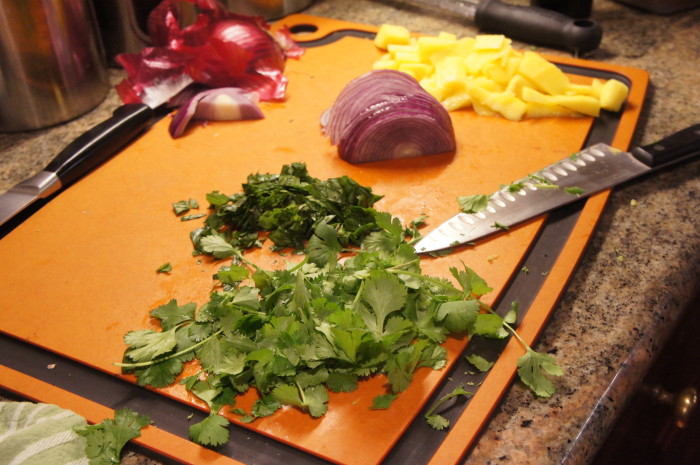
Jonah slices and dices all the colorful ingredients for the soba noodles.
It feels very weird to spread a pile of noodles on a dish towel to dry... But I'll do pretty much anything Ottolenghi tell me to.

As I mentioned in an earlier post, Jonah and I made dinner for my mom and her boyfriend back in December. Now I believe I have told you of my love for Yotam Ottolenghi’s cookbook “Plenty,” yes? This meal was no exception. The meal was all vegetarian, and 2/3 dishes were from that cookbook. The meal was light, refreshing, and packed with flavor. Not to mention the great company.

I fear that I am reaching a point where I cannot keep posting variations of these recipes, I just need to tell you to please, please, please go buy this cookbook. Even if vegetarian food isn’t your thing, even if the photos don’t make your stomach growl, even if the lists of ingredients leave you with questions swirling around in your hear. I beg you. Just go buy it. And then, please proceed to make everything in it, even if it doesn’t jump off the page. Every single dish I have made from this book (as well as his other book, “Jerusalem”) has been so lovely and flavorful that I wish I had tripled them all so I could enjoy the leftovers or share with a bunch of my friends.

Back to the dinner. These room temperature soba noodles are one of the few recipes in the book that did jump off the page for me. But somehow, I still hadn’t made it. While it’s a little prep-heavy, trust me, it’s worth it. Packing a lot of flavor and lots of little bites with different tastes (onion, eggplant, peppers, mango, the list goes on…), this recipe is bound to be a crowd pleaser. I can see it being especially good for kids. What kids don’t love noodles and mango? That’s what I thought: none.

Soba Noodles with Mango and Eggplant

Ingredients

1/2 cup rice vinegar
3 Tbl sugar
1/2 tsp salt
2 crushed garlic cloves
1/2 of a red chile, finely chopped
1 tsp sesame oil
zest and juice of a lime
1 cup sunflower oil (we used canola)
2 eggplants, cut into ~1 inch cubes
a bag of soba noodles
1 large ripe mango (let’s be honest, more than one probably couldn’t hurt…), cut into ~3/4 inch cubes or thin strips
1 2/3 cups fresh basil leaves, roughly chopped
2 cups cilantro leaves, roughly chopped
1/2 red onion, thinly sliced (think paper thin, if you can)

Instructions

In small pot, warm the vinegar, sugar, and salt until the sugar just dissolves. Remove from heat, then add the garlic, chile, and sesame oil, and, once it’s cool, the lime zest and juice.

In a large saute pan, heat the oil and fry up the eggplant. You’ll probably need to do this in a few batches. But you want the eggplant to be nice and golden brown. After all the eggplant is cooked, put it in a colander in the sink, sprinkle (“liberally”) with salt, and leave to drain.

While cooking the eggplant, bring a large pot of salted water to a boil. Cook the soba noodles in the boiling water – you want them to be soft, but still a little al dente. Drain the noodles and rinse them under cold water to stop them cooking. Spread them on a dish towel to dry.

Now the fun part: throw the noodles, dressing, mango, eggplant, onion, and half the basil and cilantro in a bowl and toss to coat/combine everything. You can make this a couple hours ahead of serving, and stop here, letting it sit to absorb flavors and come to room temperature. When you’re ready to serve it, add the rest of the herbs. Enjoy!

Mom's dinner prep activities: playing tug-of-war with Lulu while Jonah and I chopped and sauteed in the kitchen a few feet away.

Jonah’s Birthday: Mint Chocolate Chip Cake

I wasn't able to catch it before it was thoroughly enjoyed by our house, but hey, it still looks delicious!

Jonah’s birthday was a little over a month ago, but I am just now getting around to posting about his birthday cake. It has been a little busy around here! We are finishing up the recording of Jonah’s first solo full length album – I was in the studio Friday afternoon, Saturday afternoon, and am going back today. Let me tell you guys, it sounds amazing. I’ll tell you all more about it when we get closer to the release. But big cool things happening, I promise.

Anyway, for Jonah’s birthday, my roommate Carmelle and I made him a mint chocolate chip cake, a recipe I’ve been eyeing for quite some time. And let me say, of our birthday treats, this one has been my favorite. This chocolate cake recipe was definitely one of the more perfect ones I’ve made. It was perfectly chocolatey, light, and moist. In the future, I will use this cake as a base for many exciting things, I can tell. The frosting was wonderfully minty, but not overpowering. Overall, the flavors were really nice, and it’s definitely a good occasion cake because it’s unique.

Mint Chocolate Chip Cake

Ingredients

Cake

9 Tbl unsweetened cocoa powder
1 1/2 cups cake flour (If you don’t have cake flour and don’t want to buy a whole bag for 1 1/2 cups, use plain flour and replace 3 tbsp with cornstarch)
1 1/2 tsp salt
1 tsp baking soda
1/4 tsp baking powder
1 stick unsalted butter, at room temperature
1 1/2 cups sugar
2 large eggs
1/2 cup coffee
1/2 cup milk

Frosting

2 1/2 sticks unsalted butter
~4 cups powdered sugar
2-3 tsp peppermint extract (plus some for taste)
Milk, if necessary
150g dark chocolate, very finely chopped
green food coloring

Instructions

Cake

Butter and line with parchment paper two 9-inch cake pans and preheat oven to 350 degrees. In a medium bowl, sift together the cocoa, flour, salt, baking soda, and baking powder. In an electric mixer, beat the butter and sugar fora  few minutes until it’s smooth. Add the eggs, mixing after each addition until fully combined.

In a cup, mix the milk and coffee together and set aside. Add half of the dry ingredients and the coffee/milk mixture to the butter mixture, and stir. Add the second half of the dry ingredients and mix until smooth. Split the batter into the prepared cake pans, and bake for about 25 minutes, or until you’ve had a successful toothpick test. Remove from the oven and allow the cakes to cool for about 5 minutes in their pans, then remove them onto a wire cooling rack and allow them to cool completely before icing them.

Frosting

Now it’s time for the icing. I will give full disclosure: Carmelle and Mac made the icing, iced the cake, and decorated while I was out… doing something… I can’t quite remember at the time. I advise rinsing out the bowl of your electric mixer and using that again. Cut the butter into smaller pieces and put them in the mixing bowl. Beat until it’s fluffy. Now add the powdered sugar one cup at a time (or 1/2 cup at a time once you’re getting closer to the right consistency), beating between each addition until combined. If it gets too stiff, you can add a little bit of milk (think 1 Tbl at a time) to get it back to the right consistency. Add the peppermint extract and enough green food coloring to get it to that pretty mint green color. Slowly add the chocolate pieces until it looks the way you’d like and, more importantly, there’s a good amount of chocolate.

Put the first cake on whatever you’re going to use to serve: a cake stand, a plate, etc. Using about 1/4 of the icing,  frost the top of the first layer. Place second cake one top of the first, and cover the whole dang thing with the rest of the icing. Carmelle pointed out that one of the beauties of this cake was that if little crumbs came off the cake and got in the icing, it didn’t really matter, because there were already little brown bits of chocolate in it. Mac used the extra chopped chocolate to make a lovely little design op top. Serve with candles and a glass of milk!

Lamb & Love

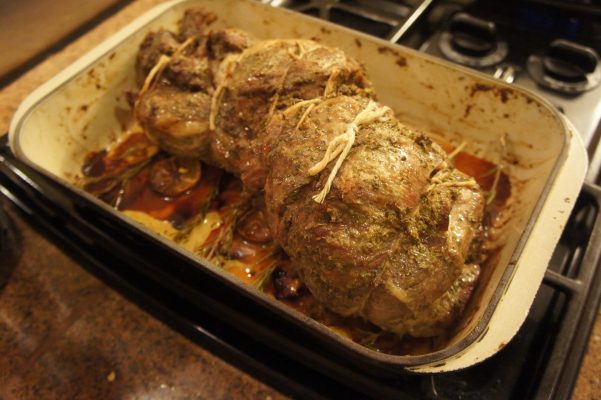
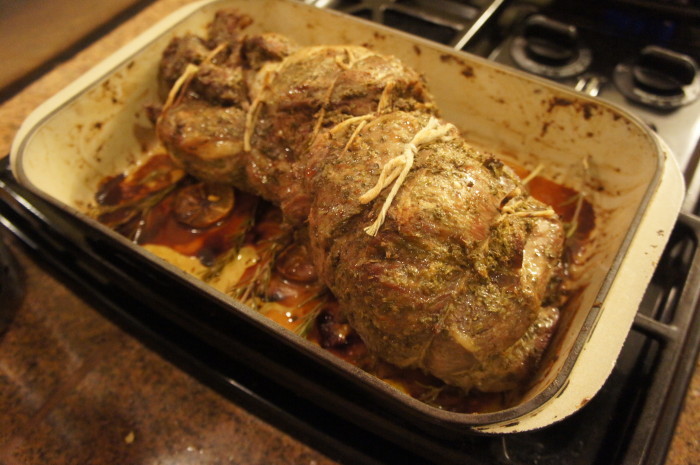
Look! We did it! The lamb out of the oven, ready for a little rest.

Yes, this is what arrived to my office. It was very exciting and bizarre.
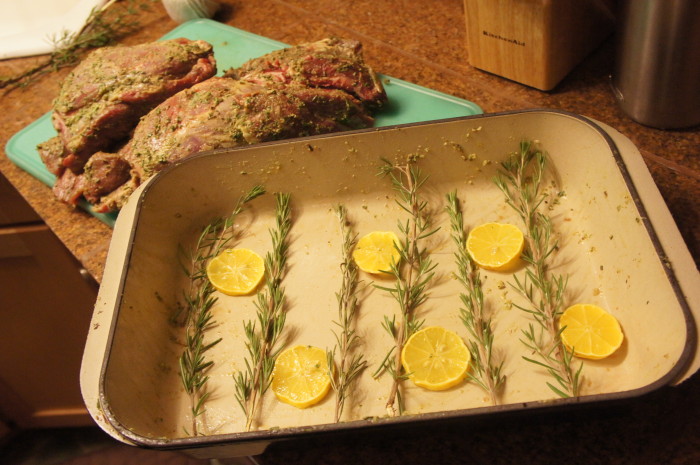
Prepping the baking dish while the lamb gets rolled

Clockwise starting at the top: brussels sprouts cooked in lamb fat/oil, salad, fingerling potatoes gremolata, and the star of the meal, the roasted lamb!

Did you know that February is Lamb Lover’s Month? Neither did I, until I was contacted by the American Lamb Board to participate in a lamb cooking contest (you can vote here, starting February 14th: www.lambloversmonth.com). Yes, that’s right folks. How could I possibly say no? So I filled out my registration, and got a boneless leg of lamb in the mail last Friday.

I immediately started researching lamb cooking techniques, and ended up kind of combining a few recipes. Because lamb is often used in Greek/Mediterranean cuisine, most recipes have lots of rosemary, lemon, mint, and even some yogurt sauces. I didn’t want to get too fancy because I wanted it to be something that we all could easily pull off. I wanted to do some kind of spice rub or marinade where I could leave the lamb overnight to really absorb the flavors of whatever I ended up going with.

So after some research, I decided to go with an adapted version of a recipe from The Herbfarm Cookbook. I used varied amounts of all of the ingredients to go for a little more of the taste I wanted (more lavender, thyme, adding lemon, etc.) and was very happy with the result: a strongly herb-flavored (but not overpowering), perfectly cooked piece of lamb.

For our sides, we cooked brussels sprouts in a combination of melted lamb fat and oil: slice each sprout, top to bottom, into 3-4 pieces, heat the fat/oil, toss in a layer of sprouts (careful, it will spit and it will hurt – long sleeves are your friend), and sprinkle with salt. Cook until the bottoms are nice and dark, tossing occasionally if desired. We also made a rough version of fingerling potatoes gremolata: slice up your potatoes, toss in oil and salt, sprinkle with some chopped garlic, roast them until tender, and then when you’ve removed them, top them with some melted butter and chopped parsley. And salad. We had salad too. If you like this recipe, the blog post, even just the pictures, head over to www.lambloversmonth.com to vote for our little blog to win the Lamb Lover’s Month cooking contest! It would be super awesome, and maybe I’d even invite you over to enjoy some free lamb…

Hope you all have a lovely Valentine’s day, featuring some kind of delicious food! (A latte with your loved one? A sexy seafood dinner? Roasted lamb? The possibilities are endless – get out there and try something new and adventurous!)

Herb Rubbed Lamb

Ingredients

Lamb

1/2 cup fresh rosemary pines
4 tsp fresh or 2 1/2 tsp dried lavender buds
4 tsp fresh thyme leaves
6 cloves garlic, peeled
1 Tbl Dijon mustard
1 tsp salt
1 tsp freshly ground pepper
zest of one meyer lemon
6 Tbl olive oil
1 boneless leg of lamb (about 3 pounds, though more also definitely works)
6 woody branches of rosemary
1 meyer lemon, sliced into thin rounds (and seeded, if necessary)
optional: a few more cloves of garlic, number is dependent on your passion for the garlic

Sauce

1/4 cup red wine
1 tsp dijon mustard
1 tsp balsamic vinegar

Instructions

Lamb

Start by processing all the herb paste ingredients except for the olive oil in a food processor until the herbs (particularly the rosemary leaves) are chopped. Now, with the machine running, slowly pour in the oil. Most machines have a spout type thing at the top you can remove so that you can pour ingredients in while blending. Continue to blend until it has reached a thick sauce consistency, scraping down the sides when necessary. There will still be little chunks of rosemary and garlic, you can’t make a complete paste out of it, but do the best you can.

If the lamb is tied, untie it. Spread the lamb out, and with a sharp knife, trim as much fat as you can from both sides of the meat. Think that fat is gross and that you’re going to toss it in the trash? Don’t! Fat can be used for lots of things. Melt it down and use it to cook veggies in or make a broth (I think? I’m not sure how well that would actually work if you haven’t got ANY meat attached, but it’s worth a shot.) Find a baking dish where the lamb will fit snugly. Rub the top of the lamb with about half of the herb paste, flip it over, and rub the other side. Set it in the dish, cover with plastic wrap, and stick it in the fridge for 8-24 hours (the longer the better). Now, I am not particularly a fan of recipes where you have to refrigerate anything for more than an hour – planning ahead is not my forte. But you know what I’m learning? It’s so worth it. When you let anything (particularly meat) absorb the flavors of your marinade or rub for a long time, it makes such a big, flavorful difference.

Preheat your oven to 425 degrees. Remove your lamb from the dish and, attempting to remove as little of the herb rub as possible, roll the lamb back into it’s original shape. If this seems relatively impossible (as it did for Jonah when he was rolling it), just roll it into whatever shape makes sense – you just want it to be kind of spiraled and uniform in size. Hopefully that makes sense. We also took some whole cloves of garlic and stuck them in little crevices in the lamb before rolling it up. They got gently cooked, and made for a nice look when the lamb was sliced for serving. Take a few pieces of kitchen twine and tie the lamb snugly in three places (or more, whatever you need to do to make it work – just as few as possible, mostly). Put the rosemary branches and lemon slices in the bottom of the baking dish and gently set the lamb on top. Roast the lamb at 425 for 10 minutes before reducing the heat to 350 degrees. Roast for about an hour and a half, or until an instant read thermometer inserted into the center registers 130-135 degrees. Note: ours DID NOT take an hour and a half. It was done a little over an hour at 350. Take the temperature in a few places and use the lowest . Remove the roast from the oven, transfer it to a board (preferably one with those grooves around the edges as it will be releasing lots of juices), cover it loosely with foil, and let it rest for about 10 minutes.

Sauce

While the meat is resting, whip up the sauce. Take the rosemary branches and lemon slices out of the baking dish, and tilt the dish so the drippings all run into one corner. Skim off as much fat as you can, transfer the remaining juices to a little saucepan. Add the wine and put it over low heat. Use a whisk to stir in the mustard and vinegar, and season to taste with salt and pepper if you’d like. Remove the strings from the meat and slice it thinly. Arrange on a platter (or just throw a couple slices on each plate) and pour the sauce over. Voila! A delicious dinner.

Latkes (and Belated Happy Hannukah)

These latkes get 2 thumbs up.

Yes, I know. By the time this post gets published, Hannukah and the time for latkes will be over. But if there is anything I’ve learned from the past week, it is that latkes should not be a “once a year” dish. They make a great little side dish, or a base for eggs benedict, or even just a fried egg on a Saturday morning. This is especially true once you’ve found a recipe you really like. And I have. After doing some hunting around and even trying another recipe I found, I made the latkes from “Jerusalem,” a cookbook I have previously written about, by Yotam Ottolenghi.

Now this recipe is what made me really want this cookbook. I thought it was interesting that there weren’t onions in it, and I also had never tried latkes with parsnips, although I know it’s not an uncommon thing. And here’s what I liked about these: Not too salty (an issue with the first recipe I tried this season), I liked having the chive flavor in there (although I halved the chives, because one of the people I was cooking for doesn’t like them), and the parsnip and very dried out potato made it extra crispy. Also, the fact that you fry them in a combination of butter and oil didn’t hurt.

Potato & Parsnip Latkes

Ingredients

5 1/2 cups peeled and grated waxy potatoes, such as Yukon Gold
2 3/4 cups peeled and grated parsnips
2/3 cup finely chopped chives
4 egg whites
2 Tbl corn starch
Butter and oil (preferably canola or sunflower) for frying
salt and pepper
sour cream and applesauce to serve

Instructions

For all of the grating, I recommend the grater attachment for a food processor, but if you haven’t got one, a box grater will work just fine. Then maybe you’ll have done enough physical activity to justify the fried potato goodness you’re about to eat.

Squeeze the grated potato out in a clean dishtowel (make a little satchel, twist the ends, and squeeze!) into the sink. Some recipes reserve the juice, let it separate, and then add the starch back in. This one doesn’t call for it, but if you want to, go for it. After you’ve squeezed out the potato, spread it out on a clean kitchen towel to dry as completely as you have time for. In a large mixing bowl, combine the potato, parsnip, chives, egg whites, corn starch, 1 tsp salt, and as much pepper as you’d like.

Preheat your oven to 250 degrees, and in the oven place a rimmed baking sheet with a cooling rack on it. Also prepare a plate or baking sheet with a couple layers of paper towel.

In a (preferably non-stick) pan, heat enough butter and oil so it’s ~1/4-1/2 inch deep over medium-high heat. To see if your oil is hot enough, drop in a little chunk of your potato mix. It should sizzle and bubble a bit without spitting violently. If it isn’t hot enough, take out the potatoes and keep heating and try again. When it is hot enough use a spoon to scoop about 2 Tbl portions of the potato mixture, squeeze out some of the juices, and shape into patties and carefully drop into the oil. Or, you can use my tried and true method: squeeze out the juices, drop into the oil, and then quickly use your spoon to spread and press the mixture into a patty. Fry for about 3 minutes a side, or until they are as dark/cooked as you like them, then flip and cook the other side. Remove from pan to the paper towels, then keep warm in the oven. Serve with sour cream, applesauce, and holiday cheer 😉 Enjoy!