Tag: Wine

Fresh Pasta with Pancetta, Leeks, & Breadcrumbs with Porcini Powder

Fresh Pasta with Breadcrumbs, Leeks, and Pancetta // Serious Crust by Annie Fassler

Fresh Pasta with Breadcrumbs, Leeks, and Pancetta // Serious Crust by Annie Fassler

Fresh Pasta with Breadcrumbs, Leeks, and Pancetta // Serious Crust by Annie Fassler

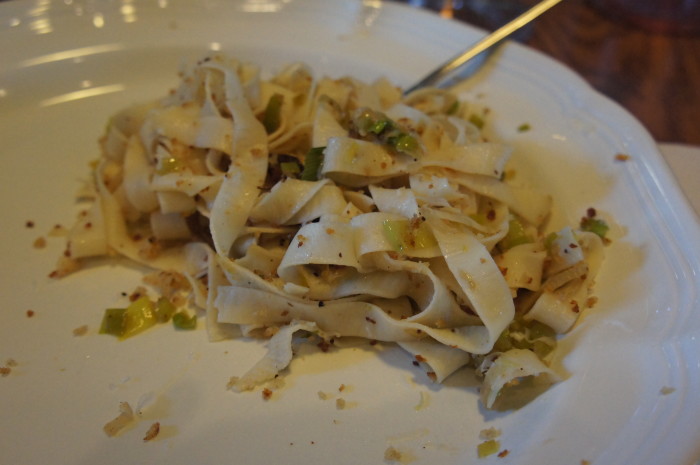
Porcini powder. Porcini powder? Yes. From the farmers market. I was told it was wonderful, and was given a little bag as a gift. But what to do with the stuff, that’s the question. I’m not sure I made the right choice… This pasta dish had so much going on in it that the porcini flavor was hiding. It was hiding behind the sourdough breadcrumbs and butter it had been sprinkled into, and under the pancetta it had been tossed with, and between the fresh pasta noodles it had been swirled around with.

All that being said, this dish was dang good, if I do say so myself. There were a few elements, and it took a few pans to get it all prepped. So no, this is not one of those magical one pot meals. Certainly not.

My dear friend Elsa was staying with us, and my friend Dylan came over for dinner, as well as Elsa’s friend Sarah, so we had help in manning all the pans. Tamar Adler said in The Everlasting Meal that there is value in, when a guest asks “is there anything I can do to help?” being able to say, “yes.” I have found that to be very true.

Think of this recipe as a guideline. Or a lightly painted upon canvas. You can remove, add, flavor, sprinkle, drizzle anything you like. I must say, though, that I used a different pasta recipe this time, and I liked it much better than the one I had been using. There’s something to be said for trying something new.

Fresh Pasta with Pancetta, Leeks, & Breadcrumbs with Porcini Powder

Ingredients

Fresh Pasta

2 cups all-purpose flour
3 eggs

Toppings

Olive oil
1 large or 2 small leek(s), sliced and rinsed
1 small white onion, chopped
2-3 cloves garlic, minced
Pancetta – the amount is up to you. I like the pancetta that is thin, almost like prosciutto, though that isn’t what we used here. I think if we’d used the thinner kind, it would’ve clung to the noodles better.
Fresh breadcrumbs
Butter
Porcini powder
Salt and pepper

Instructions

Fresh Pasta

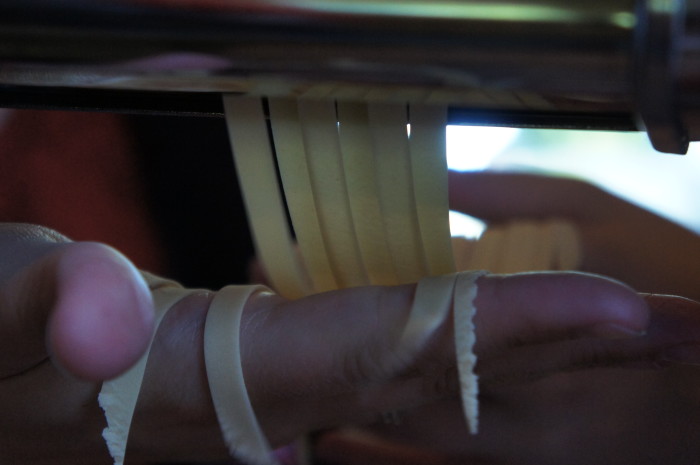
To make the pasta, pulse the flour alone in a food processor a few times. In a bowl, beat the eggs and then add them to flour, and process until the dough forms a ball. If your dough is dry and looks like little pea sized pieces of dough, you can add water 1/2 tsp at a time. If it sticks to the bowl of the processor, add flour 1 Tbl at a time. When the dough has formed a ball, turn it out onto a floured work surface and knead for 1-2 minutes. Wrap the dough in saran wrap and set it aside for up to 2 hours to relax (at least 15 minutes). Then roll out the pasta as you usually do and cut it as you normally would.

Toppings

In a pan over medium (or medium low), cook your pancetta, then set aside on a plate with a paper towel on it. Once the pancetta is removed, you can use that same pan to sautée the leeks, onion, and garlic, seasoning lightly with salt and pepper. You may want to add a drizzle of olive oil to the pan to help keep things from sticking. But then again, maybe you won’t.

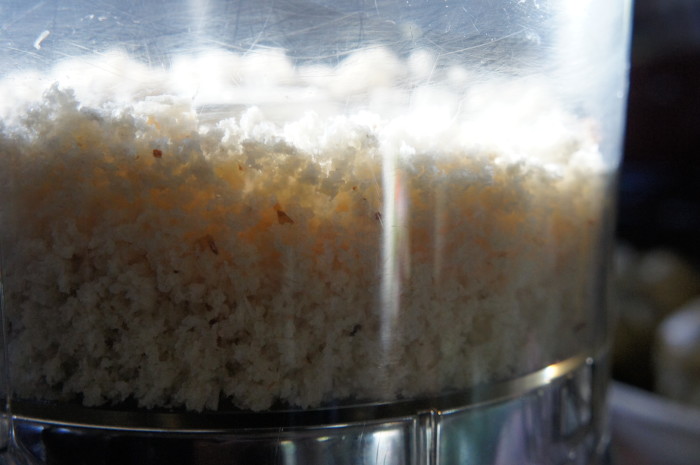
In another pan, melt some butter, then add the breadcrumbs and as much porcini powder as you feel like adding. Toast the breadcrumbs on low heat, stirring frequently to prevent burning.

As things are moving along, get out a big pot, fill it with water and a healthy serving of salt, and bring to a boil. Add the pasta (I like to cook fresh pasta in batches, as it makes it less likely to stick together). If you’re cooking fresh pasta, it really only needs to cook for a few minutes. I like to remove it when all the noodles are floating. Do you have a better method? I’d like to know it. If you’re cooking your pasta in batches, you can remove it with tongs into a colander to keep the water boiling on your stovetop.

Strain the pasta, put it in a bowl, and toss with all the various bits and pieces. Enjoy with a glass of buttery, nutty white wine and friends, around a table, on a sunny evening.

Restaurant Review: Navarre (or Portland’s Best Kept Secret)

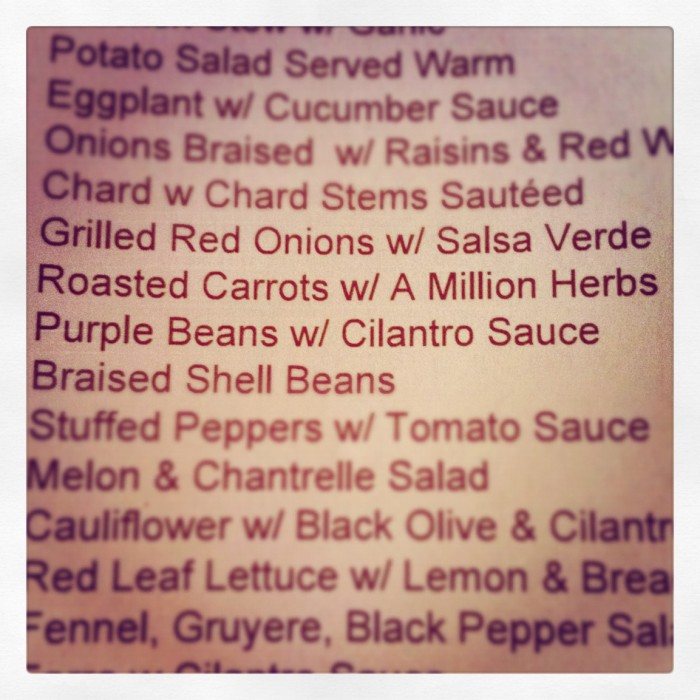
On the east side of Portland, where Burnside intersects with 28th, there are a slew of little cute establishments. You’ve got Crema, some food carts, Paadee, Laurelhurst theater (my favorite movie theater in town), Tabla, and even Ken’s Pizza if you go a couple blocks south. But my favorite one by far is the European looking Navarre, with about 30 seats, produce, jarred pickled veggies, and wine covering almost every surface, and the menu scrawled on the front window. Let me tell you though, writing the menu on the window cannot be an easy feat, as the menu is easily 30 items long and changes regularly. How regularly? 90% of the produce used at Navarre is grown within city limits (according to the latest issue of Portland Monthly).

I mean, come on: Roasted Carrots with a Million Herbs. Sounds delicious to me!

How I ever decided to go to Navarre for the first time is beyond me. I usually steer clear of places that don’t have a website. I know, I know, it’s incredibly biased. But speaking as one that does extensive restaurant research before I visit a spot, I really don’t like it when restaurants don’t have websites. In an age when that’s where everyone gets their information, why not? They do have a blog, but I just don’t really feel like the blog does their food justice and they don’t post very regularly.

The two menus, side by side, at Navarre. All ready to be filled out.

But let’s get to the good stuff, shall we? Their food! Oh the food. Let me tell you. You know that fad of “simple cooking”? This is the absolute best “simple” food I have ever had. Vegetables roasted with simple herbs or dressings and meat and fish expertly cooked in such a way that the flavors are magnified. As you can see on the menu pictured above, they always have 2 menus – the staples: things like bread, salami, gratin, fish, bird, and pork. You have to ask to find out what bird and how it’s cooked, or what vegetable they’re using for the gratin this evening. And on the second menu are all of the specials. Then you fill out the first menu with a marker (gotta love restaurants that give you markers), writing which specials you want and marking whether you want small or large plates of whatever you decide to order. They recommend about 3 small plates per person, which is perfect. I especially liked it because, between Jonah and myself, we got to try 6 different dishes instead of 2 mains and an appetizer that we would usually get at any other restaurant.

Lots of little plates for dinenr at Navarre, including steak, squash, kohlrabi, mushrooms, bread...

While I have been for brunch, which was delicious, I like the ambiance a little more at dinner time. The lights are a little bit lower, the candles are lit, and you get to enjoy wine from their pretty extensive list (given the size of the place). Some of my favorite dishes that I’ve had for dinner include but are not limited to: mushrooms roasted with rosemary, kohlrabi roasted with mustard and brown sugar, delicata squash roasted with butter, trout in parchment, cabbage gratin… the list goes on. Everything is prepared so well, so simply. Perhaps my favorite thing about Navarre is that I find it inspiring. Because the preparations are simple, I feel like I can go home and replicate them, which I love.

All in all, Navarre is definitely one of my top picks for places to dine in Portland. I think the perfect word to describe it is lovely. A lovely spot with lovely food. Try it out, but don’t spread the word too far. The other thing I love about this place is that I never have to wait for a table 😉

Haroset!

HarosetHaroset

Continuing along the Passover theme here: When we returned from Tucson, I was craving some haroset. It’s one of my favorite passover foods, and a great snack to have throughout the week. So much better than chips and salsa (in my opinion). For those of you who don’t know, Haroset is simply a combination of the following: apples, walnuts, cinnamon, and wine. I’ve also seen it with raisins, pears, other spices, and sugar. But today we’ll just keep it simple. Here’s what you’ll need:

Haroset

Ingredients

4 granny smith apples
1 cup walnuts
1/2 cup (more or less) sweet red wine (this is where Manischewitz comes in handy)
1 Tbl brown sugar
1 1/2 tsp cinnamon

Instructions

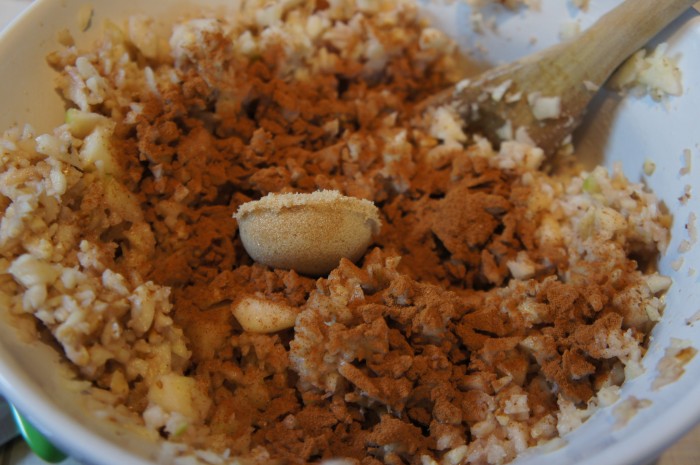
Peel, core, and finely dice the apples. I peeled them and cut them into chunks, then threw them in the food processor and pulsed them a few times. It worked really quite well and got the pieces smaller than I would have been willing to go if I had been chopping them by hand. Put the apples in a medium mixing bowl. Chop your walnuts too (I did these in the food processor too), and add them to the apples. Now pour in the wine, mixing so that the apples become a light pink. Feel free to add more wine if you want. Just don’t add too much; You don’t want a bunch of liquid sitting at the bottom of the bowl. Stir in the cinnamon and the sugar, and you’re done! Eat it on top of some matzoh with a bit of horseradish (not too much!) and enjoy!

Polenta Torta with Eggplant Sauce

Polenta Torta with Eggplant Sauce

Polenta Torta with Eggplant Sauce

Polenta Torta with Eggplant Sauce

Polenta Torta with Eggplant Sauce
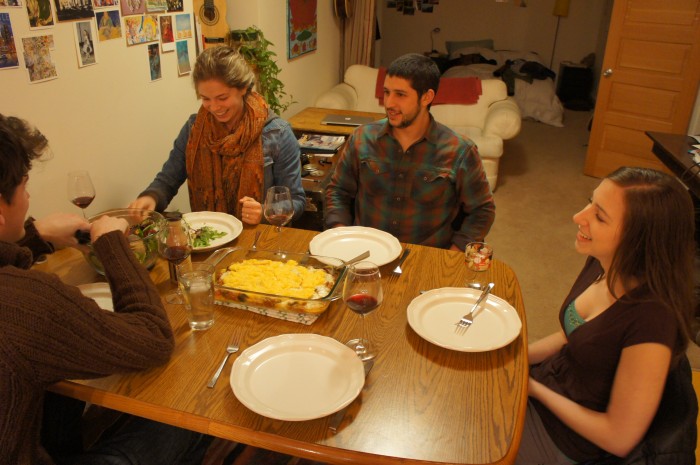
Jonah, Sophie, Johnny, and Mo at the table and ready to eat!

Last weekend, our friends (and newlyweds) Sophie and Johnny were in town. Sophie and Jonah were housemates senior year of college, along with the lovely Maureen (Mo). So we invited the three of them (Mo, Sophie, and Johnny) over for dinner for a little reunion. Mo is a vegetarian, so I immediately went to “Plenty,” that vegetarian cookbook that we are quickly falling in love with. I found a recipe for some eggplant sauce, to be served on top of sweet corn polenta. Alas, it is not corn season, so I decided to use the eggplant sauce to make a polenta torta (recipe found in Alice Waters’ “The Art of Simple Food”). It was a really simple dish, and while we didn’t execute it to the best of our abilities (our dish was too big which made the layering hard) it was still very good. The mozzarella brought a nice pop to the dish, and was really stringy which I love. The eggplant sauce, as I said above, was nice and creamy. It was kind of like a layered pizza, except no crust, just polenta.

Polenta Torta with Eggplant Sauce

Ingredients

Eggplant Sauce

2/3 cup vegetable oil
1 medium eggplant, cut into 3/4 inch pieces
2 tsp tomato paste
1/4 cup white wine
1 cup chopped peeled tomatoes (we used canned, and I ended up using the whole can just to yield a little more sauce)
6 1/2 Tbl water
1/4 tsp salt
1/4 tsp sugar
1 Tbl chopped oregano

Polenta

4 cups water
1 cup corn grits (polenta)
1 tsp salt
3 Tbl olive oil
1/2 cup parmesan cheese (freshly grated)

Polenta Torta

4 cups polenta (hopefully the above recipe yields 4 cups… we didn’t end up measuring)
2 cups tomato sauce (or in this case, Eggplant sauce)
1 cup parmesan cheese (freshly grated)
1/2 pound (2 medium balls) fresh mozzarella

Instructions

Eggplant Sauce

Heat the oil in a large saucepan, add the eggplant. Cook the eggplant on medium heat for ~15 minutes, or until it’s soft and nicely brown. When the eggplant is cooked, drain as much oil from the pan and discard it. Now add the tomato paste and stir it into the eggplant. Cook for about 2 minutes, then add the wine and cook for another minute or so. Now add everything else (tomatoes, water, salt, sugar, and oregano) and cook for another 5-10 minutes to let the flavors deepen. You probably want to keep the pot covered so the sauce doesn’t cook down too much. On the other hand, if it’s looking a little too liquid for your liking, cook it uncovered so it can cook down a little bit. At this point, you can set this aside until you are ready to use the sauce. I made this sauce the morning of the meal, and actually left it on the stove, covered, for many hours.

The great thing about this sauce is the creaminess that the eggplant brings to it. When eggplant has been cooked this long, it kind of falls apart, and I love it when that happens.

Polenta

Now, I’ll be honest with you: I didn’t cook the polenta. Jonah did while I was getting in my workout at the bouldering gym. So I’ll relay what he did to you, but I don’t have any insider tips because I wasn’t there. But here’s what he did: Boil the 4 cups of water in a saucepan. When it’s boiling, whisk in the corn grits and the salt. Now, turn down the heat and whisk until the polenta is suspended in the water and no longer sitting on the bottom of the pan. Cook for 30 minutes – 1 hour (the longer the better, according to Alice Waters), stirring occasionally. Don’t let the polenta get above a low simmer. If at any point the polenta seems to be getting too dry, add a little water. Once the polenta is all cooked, add the olive oil and parmesan cheese.

Polenta Torta

Preheat your oven to 350 degrees. Oil a baking dish (like I said, ours was too big, so keep this in mind when picking what dish to use), and spread 1 1/3 cups of polenta out over the bottom of the dish. Over the polenta, spread half of the eggplant tomato sauce, then half the mozzarella cheese, and sprinkle half the parmesan cheese. Repeat: spread 1 1/3 cups polenta, the other half of the sauce, mozzarella, and parmesan cheese over the dish. End with a layer of the polenta. Because our dish was too big, we only did one layer, which was ok, but it didn’t look as nice as it could/would have if we’d done it right.

Once it’s all layered up, you can put it in the oven for 30 minutes, or until it’s hot and bubbling. Allow to cool for a bit before serving and eating. Enjoy!