Tag: roasted

Lamb & Love

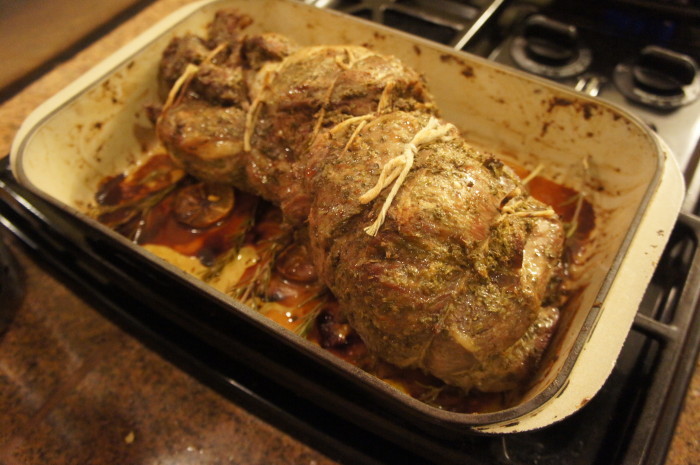
Look! We did it! The lamb out of the oven, ready for a little rest.

Yes, this is what arrived to my office. It was very exciting and bizarre.
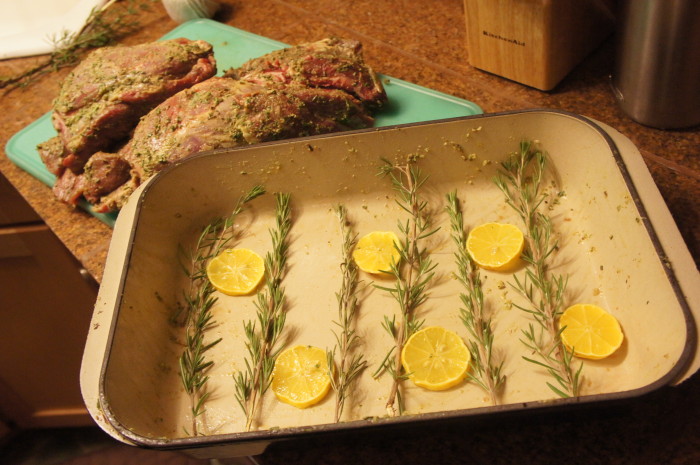
Prepping the baking dish while the lamb gets rolled

Clockwise starting at the top: brussels sprouts cooked in lamb fat/oil, salad, fingerling potatoes gremolata, and the star of the meal, the roasted lamb!

Did you know that February is Lamb Lover’s Month? Neither did I, until I was contacted by the American Lamb Board to participate in a lamb cooking contest (you can vote here, starting February 14th: www.lambloversmonth.com). Yes, that’s right folks. How could I possibly say no? So I filled out my registration, and got a boneless leg of lamb in the mail last Friday.

I immediately started researching lamb cooking techniques, and ended up kind of combining a few recipes. Because lamb is often used in Greek/Mediterranean cuisine, most recipes have lots of rosemary, lemon, mint, and even some yogurt sauces. I didn’t want to get too fancy because I wanted it to be something that we all could easily pull off. I wanted to do some kind of spice rub or marinade where I could leave the lamb overnight to really absorb the flavors of whatever I ended up going with.

So after some research, I decided to go with an adapted version of a recipe from The Herbfarm Cookbook. I used varied amounts of all of the ingredients to go for a little more of the taste I wanted (more lavender, thyme, adding lemon, etc.) and was very happy with the result: a strongly herb-flavored (but not overpowering), perfectly cooked piece of lamb.

For our sides, we cooked brussels sprouts in a combination of melted lamb fat and oil: slice each sprout, top to bottom, into 3-4 pieces, heat the fat/oil, toss in a layer of sprouts (careful, it will spit and it will hurt – long sleeves are your friend), and sprinkle with salt. Cook until the bottoms are nice and dark, tossing occasionally if desired. We also made a rough version of fingerling potatoes gremolata: slice up your potatoes, toss in oil and salt, sprinkle with some chopped garlic, roast them until tender, and then when you’ve removed them, top them with some melted butter and chopped parsley. And salad. We had salad too. If you like this recipe, the blog post, even just the pictures, head over to www.lambloversmonth.com to vote for our little blog to win the Lamb Lover’s Month cooking contest! It would be super awesome, and maybe I’d even invite you over to enjoy some free lamb…

Hope you all have a lovely Valentine’s day, featuring some kind of delicious food! (A latte with your loved one? A sexy seafood dinner? Roasted lamb? The possibilities are endless – get out there and try something new and adventurous!)

Herb Rubbed Lamb

Ingredients

Lamb

1/2 cup fresh rosemary pines
4 tsp fresh or 2 1/2 tsp dried lavender buds
4 tsp fresh thyme leaves
6 cloves garlic, peeled
1 Tbl Dijon mustard
1 tsp salt
1 tsp freshly ground pepper
zest of one meyer lemon
6 Tbl olive oil
1 boneless leg of lamb (about 3 pounds, though more also definitely works)
6 woody branches of rosemary
1 meyer lemon, sliced into thin rounds (and seeded, if necessary)
optional: a few more cloves of garlic, number is dependent on your passion for the garlic

Sauce

1/4 cup red wine
1 tsp dijon mustard
1 tsp balsamic vinegar

Instructions

Lamb

Start by processing all the herb paste ingredients except for the olive oil in a food processor until the herbs (particularly the rosemary leaves) are chopped. Now, with the machine running, slowly pour in the oil. Most machines have a spout type thing at the top you can remove so that you can pour ingredients in while blending. Continue to blend until it has reached a thick sauce consistency, scraping down the sides when necessary. There will still be little chunks of rosemary and garlic, you can’t make a complete paste out of it, but do the best you can.

If the lamb is tied, untie it. Spread the lamb out, and with a sharp knife, trim as much fat as you can from both sides of the meat. Think that fat is gross and that you’re going to toss it in the trash? Don’t! Fat can be used for lots of things. Melt it down and use it to cook veggies in or make a broth (I think? I’m not sure how well that would actually work if you haven’t got ANY meat attached, but it’s worth a shot.) Find a baking dish where the lamb will fit snugly. Rub the top of the lamb with about half of the herb paste, flip it over, and rub the other side. Set it in the dish, cover with plastic wrap, and stick it in the fridge for 8-24 hours (the longer the better). Now, I am not particularly a fan of recipes where you have to refrigerate anything for more than an hour – planning ahead is not my forte. But you know what I’m learning? It’s so worth it. When you let anything (particularly meat) absorb the flavors of your marinade or rub for a long time, it makes such a big, flavorful difference.

Preheat your oven to 425 degrees. Remove your lamb from the dish and, attempting to remove as little of the herb rub as possible, roll the lamb back into it’s original shape. If this seems relatively impossible (as it did for Jonah when he was rolling it), just roll it into whatever shape makes sense – you just want it to be kind of spiraled and uniform in size. Hopefully that makes sense. We also took some whole cloves of garlic and stuck them in little crevices in the lamb before rolling it up. They got gently cooked, and made for a nice look when the lamb was sliced for serving. Take a few pieces of kitchen twine and tie the lamb snugly in three places (or more, whatever you need to do to make it work – just as few as possible, mostly). Put the rosemary branches and lemon slices in the bottom of the baking dish and gently set the lamb on top. Roast the lamb at 425 for 10 minutes before reducing the heat to 350 degrees. Roast for about an hour and a half, or until an instant read thermometer inserted into the center registers 130-135 degrees. Note: ours DID NOT take an hour and a half. It was done a little over an hour at 350. Take the temperature in a few places and use the lowest . Remove the roast from the oven, transfer it to a board (preferably one with those grooves around the edges as it will be releasing lots of juices), cover it loosely with foil, and let it rest for about 10 minutes.

Sauce

While the meat is resting, whip up the sauce. Take the rosemary branches and lemon slices out of the baking dish, and tilt the dish so the drippings all run into one corner. Skim off as much fat as you can, transfer the remaining juices to a little saucepan. Add the wine and put it over low heat. Use a whisk to stir in the mustard and vinegar, and season to taste with salt and pepper if you’d like. Remove the strings from the meat and slice it thinly. Arrange on a platter (or just throw a couple slices on each plate) and pour the sauce over. Voila! A delicious dinner.

Candy for Grown Ups (or Roasted Tomatoes)

roasted tomatoes

Every summer, I get excited about the produce that will soon be available and all the delicious things I can make with it. I’ve already started with the rhubarb. I am waiting impatiently to go to Sauvie Island and pick strawberries. Soon there will be peaches and nectarines aplenty for me to use for things like salsa, smoothies, pies, etc. The other thing I love? Tomatoes. My little sister worked at a tomato stand at various farmer’s markets in Seattle last summer, and is slowly teaching me the joys of all these different weirdly colored tomatoes. But my favorite thing to do with tomatoes is to season them a little and roast them in the oven forever. And last week I got antsy. I couldn’t wait for the perfectly ripe, soft tomatoes to arrive at the markets. So I went to New Seasons and bought a bag of not-the-ripest roma tomatoes. I left them in our fruit bowl for a few days to soften up, and then I made roasted tomatoes.

Simple Roasted Tomatoes

Ingredients

Tomatoes (any kind will do – I usually go for just regular old vine tomatoes or romas or whatever is prettiest looking)
Olive Oil
Garlic
Salt
Dried basil and/or oregano

Instructions

All of the amounts of the ingredients above are based on your personal taste. If you like garlic, use a bunch. If you are trying to cut back on salt, don’t use it. They’re also great without the basil or oregano.

Preheat your oven to 300 degrees. If you have more time to cook, you can heat your oven to 250 degrees. Drizzle some olive oil into a large baking dish. Slice your tomatoes in half and, if you want, cut out the little stem bit. Rub the tomatoes sliced-side down in the olive oil, then flip them so the sliced-side faces up. Mince the garlic and sprinkle it over the tomatoes. Now sprinkle on some salt and whatever other seasoning you want (this is the time for the basil or oregano if you’re using it). Now here’s the fun part: set it and forget it. Throw the suckers in the oven and let them cook for 3-4 hours. I took these ones out at 4 hours because we were leaving the apartment, but they probably could have gone another 30 minutes. You’ll want to check on them after the 3.5-4 hour mark, as the way they cook will depend on the kind of tomatoes and the temperature of your oven. When they’re caramelized and cooked to your liking, remove them from the oven.

I suggest letting them cool enough to eat one before using them for anything else, just so you can taste heaven. After enjoying one all by itself, the rest is up to you: cut them up and put them on a pizza or in a salad, throw them in your food processor or blender for soup (I suggest looking up a recipe so you know what else to add) or pasta sauce. Also, the oil that is still at the bottom of the pan is delicious, so scrape this into whatever container you’re saving them in so you can use it too. These things are amazing. The kids I nanny for didn’t like tomatoes until I made these; I made a giant dish of roasted tomatoes, and they were almost gone by the time their mom got home from work. That’s how hard it is not to eat these all up.

Roasted Corn with Serranos and Onion

Corn

Corn

This corn recipe makes a lovely summer side dish. My dad taught it to me years ago. And it’s one of those recipes that’s really hard to mess up. Want it spicier? Add more serrano (or add more seeds). Want it more caramelized? Roast longer. The only thing I don’t like is how much it cooks down. So it can often turn out to be less than you anticipate. So be aware of that.

Roasted Corn with Serranos and Onion

Serves 2

Ingredients

3 ears of corn
1 medium white onion
Olive oil
Salt

Instructions

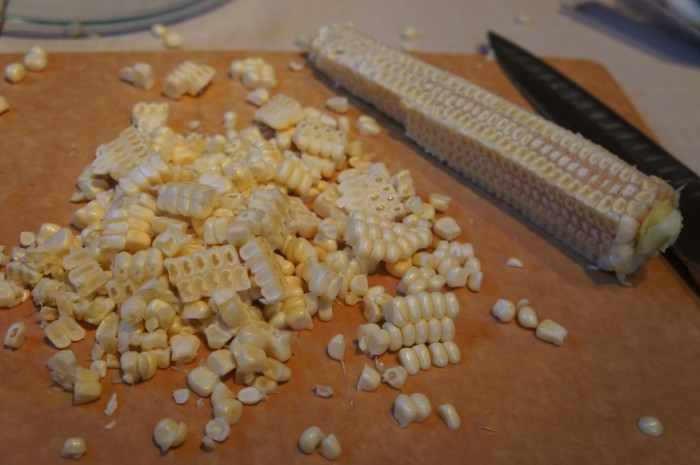
Preheat your oven to 375 degrees. Shuck the corn and cut the corn off the cob with a very sharp knife. This part can be a little tricky, so be careful not to cut off your fingers. Sharp knives make this step way easier. And cooking much easier in general. I got a really nice knife for my birthday, and let me tell you, it makes a world of difference.

Moving right along. Put the corn into a baking dish – I used a pie dish, but if you’re making lots, one of those big casserole pyrex dished is good. Chop up the onion, throw that into the dish too. Now, chop up the serrano. Careful not to touch your face. More seeds means more heat, so be aware of how much you’re adding. Mix that in with the corn. Toss with olive oil until just evenly coated (you don’t want it too oily) and salt.

Bake in the oven for anywhere from 30-45 minutes. The longer you cook it, the more roasty and caramelized the corn will get. But be sure to check on it; there’s a point when it crosses the line from roasty and delicious to dehydrated and a little tough. When it’s cooked to your liking, remove and enjoy!

Whole Roasted Chicken with Veggies

Whole Roasted Chicken with Veggies

Whole Roasted Chicken with Veggies

You may have noticed that roasted chicken was one of our previous blog posts, but this time its different.  There’s a couple different veggies, but the biggest difference is that I roasted an entire chicken!  I was excited and a little scared to do this.  I’ve seen my mom take apart a chicken many times – but for the most part Annie and I buy chicken parts as we need them; thighs and breasts mostly.

I bought a whole free-range fryer chicken at the store, after learning that the only differences between the fryer and roaster birds are their size – in other words, you can roast a fryer or fry a roaster.  For the most part, I followed a recipe from Thomas Keller’s Ad Hoc cookbook, although I tragically left out onions.  You can use any combination of root vegetables you want – I used leeks, carrots and potatoes.  The best thing about the Ad Hoc cookbook is that it has some great How-To’s with pictures for cutting and trussing a chicken.  For this recipe, I learned how to truss (tie up) a chicken!  Here’s a video of Thomas Keller himself trussing one up, although he does it in a more fancy way in this video than shows in the book.

We ate this last night for dinner, its a great winter-time meal-in-a-dish, and it makes lots of leftovers!

Whole Roasted Chicken with Root Vegetables

Ingredients

1 small whole chicken (smaller the tastier, mine was 4 lbs.)
2 leeks
3-4 carrots
8 golf-ball sized potatoes
1/4 cup oil (canola, olive)
6 garlic gloves, crushed and peeled
6 thyme sprigs
Herb butter (we used leftover herb butter we had from the salmon)
salt and pepper

Instructions

Let the chicken sit out for 1-2 hours to come to room temperature.  Remove anything that’s still in the cavity (neck, heart, etc) and season the cavity with salt and pepper, 3 of the garlic gloves, and 3 thyme sprigs.  Cut out the wishbone for better carving later (good luck, I completely failed at this.  Look up some videos online).  Truss the chicken.

Preheat the oven to 475 degrees. Cut the green tops of the leeks and trim the root end.  Slice them in half lengthwise and wash.  Cut the potatoes in half.  Cut the carrots in half lengthwise and cut into smaller sticks.  Combine all the root vegetables in a large mixing bowl with the remaining 3 garlic gloves and remaining 3 thyme sprigs, plus the oil and season with salt + pepper.

Lay out the veggies in a large baking dish, making a nest in the middle in which to nestle the chicken.  Place the trussed chicken in the bed of veggies, and rub/pour the herb butter on top of the chicken.

Bake for 25 minutes, then turn the heat down to 400 and bake for another 45 minutes. The internal temp of the bird should reach 160 degrees when its done…I had to put it in a bit longer.