Summer

Beet Tart with Goat Cheese and Greens

Beet Tart

Beet Tart
Beet Tart

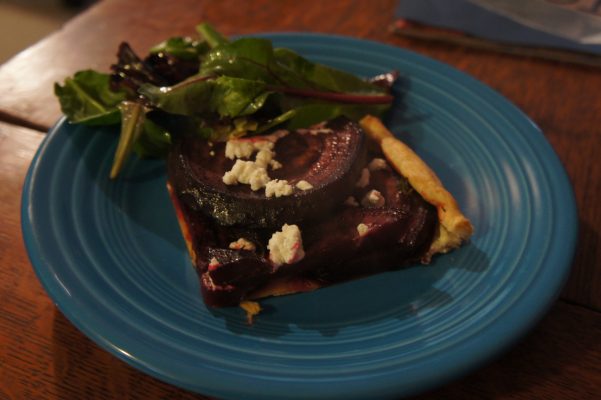
Last week, I was in the mood for something light but nice for dinner. After a little hunting, I found a recipe on Desserts for Breakfast for a delicious looking beet tart with goat cheese. Sounds good, no? And, the other great thing? It was super easy. Really though, I’m not just saying that.

Beet Tart with Goat Cheese and Greens

Ingredients

6 large or 4 GIANT beets
olive oil
8 – 10 sprigs of fresh thyme
salt
pepper
1 sheet of puff pastry
1 small package goat cheese
1 small package blue cheese
frisee or mixed greens
freshly squeezed lemon juice

Instructions

Preheat your oven to 400 degrees. Prepare two baking sheets: line one with foil and the other with parchment paper, a silpat, or just grease it with some olive oil. Peel your beets and slice them into slices about 1/4-1/2 inch thick. Remove the thyme leaves from the sprigs, and toss with the beets, olive oil, and a little salt and pepper. Lay the beets on the foil-lined baking sheet and bake for 10-12 minutes.

While the beets are roasting, roll out the puff pastry so it’s a little thinner (into a 10 by 10 inch square or comparably sized rectangle). Also, I didn’t really think about that whole thawing thing, so remember that, otherwise the time will come to use your puff pastry and it will still be a big hunk of ice. I mostly just stretched mine out because I was in someone else’s kitchen sans rolling pin. Anyway, once you’ve rolled or stretched it or whatever, transfer it to the other baking sheet (the one lined with parchment paper or greased). Arrange the beet slices on the puff pastry, leaving a nice edge around the beets, 1-2 inches. Roll the edges of the puff pastry up to create a little crust.

Bake at 400 degrees for 10 minutes, then turn the temperature down to 350 and bake for another 25-30 minutes or until the pastry is golden brown and puffed up and the beets are tender. Remove from the oven and let cool for a little bit.

While the tart is cooling, mix together some of the goat cheese and blue cheese with a fork. I didn’t give exact measurements of how much cheese because you know what cheese you like and how much cheese you’ll want on your tart, so I’m not gonna tell you how to do it. You can figure it out. Toss the greens or frisee with lemon juice, olive oil, and pinch of salt to coat it evenly and serve it alongside or over the tart. Enjoy!

Another Easy Bread Recipe

Bread
Bread

Bread

It has been so long since I’ve posted. I’m so sorry. It’s been a little busy around here! Here’s what I’ve been up to: applying for a new job, getting a new job (doing social media for a local nutritionist), going to a big scary audition (and a big scary callback, with another one tomorrow night), and having Jonah’s mom and sister in town!

I know, excuses excuses! But hopefully this post is me getting back in the saddle. So this is another venture into the world of bread. I promised myself that I would finally make a starter, but of course, I didn’t because we’ve been so busy. Maybe next week? Or something?

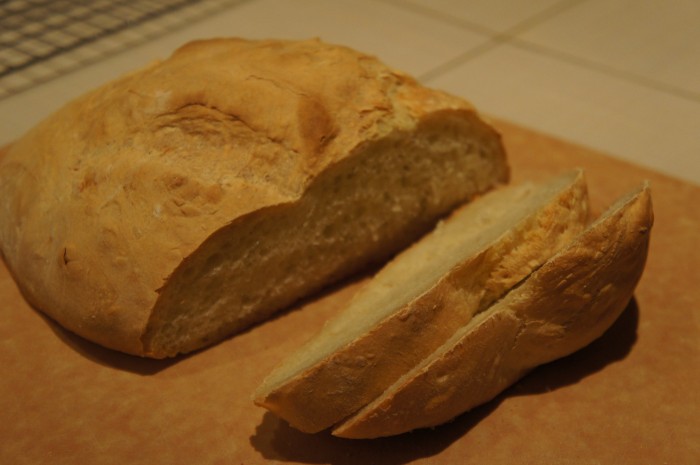
Anyway, this bread is easy. Easier than all the other breads. No kneading, no let it rise, beat it down, let it rise again, do all this fancy stuff. Put everything in a bowl, let it rise, split it up, let it sit again for a bit, then bake. Can it get any easier? I’m gonna go with…not really.

No Knead Bread

Makes 2 loaves

Note: I didn’t want 3 loaves of bread, so I made 2/3 of the recipe. I’ll give you the full recipe though, and you can decide how much you want to make! I’ll put the amounts I did for 2/3 of the recipe in parentheses.

Ingredients

3 cups lukewarm water (2 cups)
1 1/2 Tbl granulated yeast (1 Tbl)
1 1/2 Tbl kosher or other course salt (1 Tbl)
6 1/2 cups unbleached all purpose flour (4 1/3 cups)
a handful of cornmeal for the pan

Instructions

Ok, put the yeast, flour, and salt in a bowl (I used my electric mixer with the dough hook). Pour the water over the dry ingredients and mix until it’s combined, a few minutes. Now cover your mixing bowl with foil or oiled plastic wrap and let it rise for 2-5 hours (I went with 5 because I was out doing stuff all day).

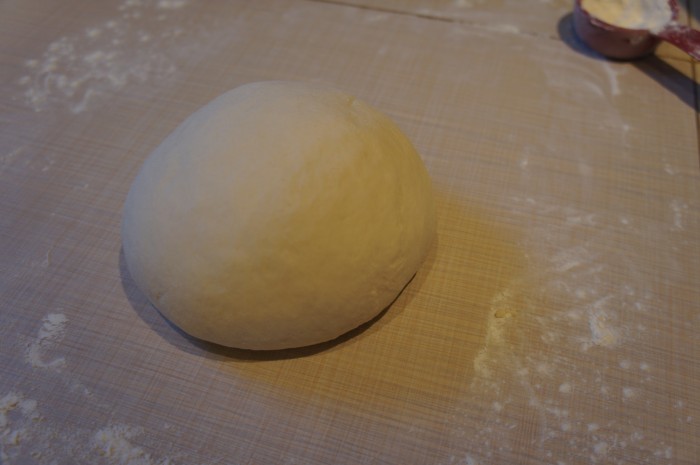
Now, cover your counter with PLENTY of flour. The dough is crazy sticky and wet, so be prepared for that. Dump it out onto the counter and separate the dough into however many loaves you’re making (original recipe: 3, my recipe: 2). Spread your handful of cornmeal over you baking sheet. Using lots of flour, form the dough into balls and place them on the baking sheet. The easiest way to form the balls is to pull the edges of the dough and tuck them underneath. Hopefully that makes sense. Once they’re on the baking sheet, you can let them rest for 30 minutes.

About halfway through the resting process, preheat your oven to 450 degrees. Once they’re done resting, slash your loaves with 3-4 lines. You can do whatever design you like, as long as you do something! The slashes allow the loaves to expand while they’re baking in a kind of designated way rather than just exploding however they want. When your oven is heated, put the loaves in! On a lower rack, put a pan filled with about 1 cup of water. This will create steam which will make the crust crispier. Bake the bread for 30-35 minutes.

After removing the bread from the oven, put it on a wire rack to cool. Try to let it cool all the way before cutting a slice, slather it in butter, and chowing down. Enjoy!

Gnocchi with Spicy Tomato Sauce

Gnocchi
Gnocchi
Gnocchi
Gnocchi
Gnocchi
Gnocchi
Gnocchi

I’ve been lusting after the pasta attachments for my KitchenAid. Dreaming of them, of all the beautiful pasta I would make if I had them. Oh man. I want them so badly. But I don’t have them. And I probably won’t for a while. But I want to make pasta, so I after eyeing a few gnocchi recipes, I thought, hell, I’ll try it.

This may not have been my best decision ever. I mean, you have to start somewhere, right? But I decided to do it when we had a friend coming for dinner. But she was supportive of my endeavors. After reading many recipes and such about how to handle your potatoes and how much flour and egg to add, onward I went. One important thing is you don’t want to put your potatoes in a food processor or use an immersion blender or anything like that. You want to put it through a ricer or a grater or mash it with a fork. I chose the last route.

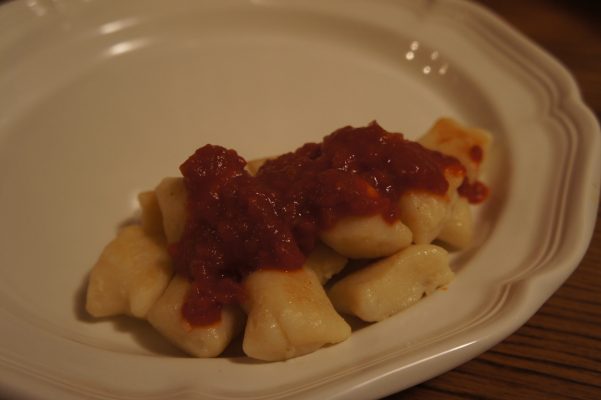
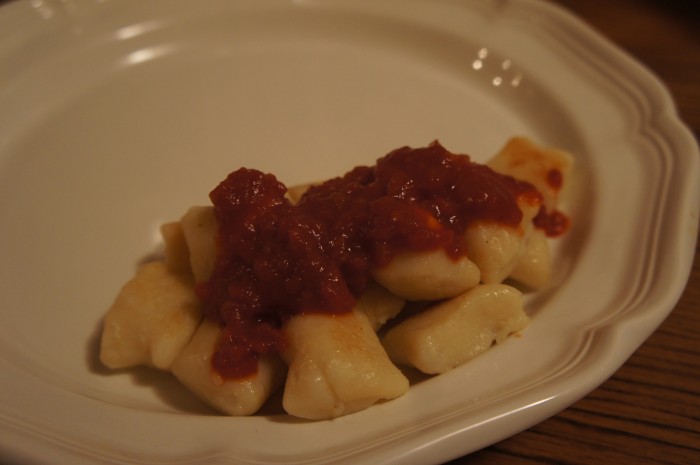
These gnocchi were pretty good for a first try. As I mentioned before, I think they were a little over-cooked. They also were a little dense, and I’m not sure why. There are a few possible explanations: 1) boiling them instead of roasting them? 2) added to much flour? 3) added too much egg? Who knows, but all of these are variables I plan on futzing with the next time around.

Potato Gnocchi and Spicy Tomato Sauce

Ingredients

Potato Gnocchi

2 lbs russet potatoes
1 tsp salt
1 egg, slightly beaten
1 1/2 cups flour, plus some for rolling/dusting

Spicy Tomato Sauce

1 tsp butter
2-3 large shallots
1/2 tsp red pepper flakes
1 tsp salt
1 28-oz can whole tomatoes, drained
1 15-oz can tomato puree/sauce
a pinch (or two) of sugar

Instructions

Potato Gnocchi

Cut your potatoes in half and put them in a pot of water. Bring the pot to a boil and cook until the potatoes are tender throughout. This will take about 40-50 minutes. When the potatoes are cooked, remove each half one at a time onto a cutting board and peel each piece before you move onto the next. Be careful as they’ll be very hot! But the skins come off pretty easy, and if not, just use a paring knife. Once all the potatoes are removed and peeled, mash them. I used a fork so that I could be more thorough and make sure there weren’t any big clumps. Anyway, mash the potatoes and spread them out on the cutting board so that they can cool.

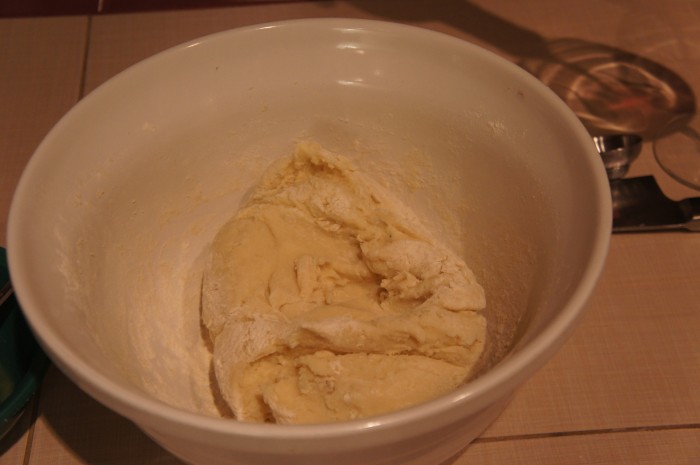
Once cool, put the potatoes in a bowl, add the egg and salt and mix together. Now add the flour a little bit at a time (I probably did 1/4 cup at a time) and mix it in. You don’t have to add all the flour. In fact, it’s probably better if you don’t (I don’t know this for a fact) because I assume the gnocchi will be less dense when cooked. Just add flour until the dough doesn’t stick to your hands anymore. Now dump the dough onto a lightly floured surface (read: counter) and knead it gently for a few minutes, incorporating more flour if necessary.

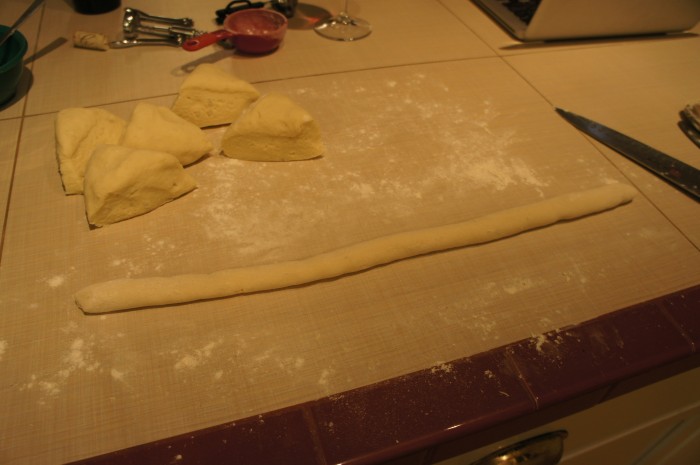
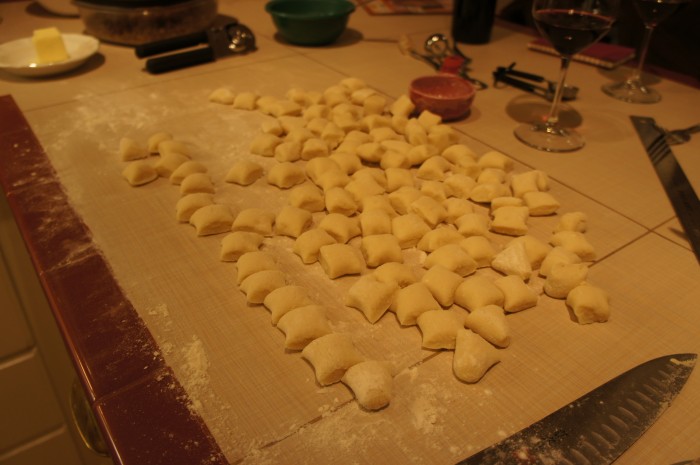
After kneading, divide the dough into 6 equal parts, and roll each chunk one at a time into a rope about 3/4 inch thick. Cut each rope into 1 inch pieces. You’ll want to be sure to do this on a floured surface, as the rolling and cutting especially can result in the dough stick to the counter, which makes it hard to…ya know…remove them.

While you’re rolling out your dough, you can bring a large pot of salted water to a boil. When it’s boiling, add the gnocchi in batches. I made the mistake of putting all of mine in at once and I think this caused the ones that were put in at the beginning. So do it in batches. After a little bit, your gnocchi will rise to the top of the pot. Let them cook for another minute after they do that, and then remove them with a slotted spoon to a bowl or colander or whatever. Do the same with the rest of the gnocchi.

I also decided to cook them in a pan after boiling them for 2 reasons: 1) they were pretty mushy and I wanted to dry them out a bit, and I knew this would help. 2) I love gnocchi that has that little bit of crunch from being lightly seared in a pan of butter. Yum. So if you want to do that, melt a bit of butter in a pan and cook the gnocchi in batches until it’s lightly browned on each side.

Spicy Tomato Sauce

Be warned, this pasta sauce has quite a bite to it from the chili flakes. I thought it was a perfect amount of spiciness, but if you are nervous about it, add less than 1/2 a tsp and add more till it suits your tastebuds.

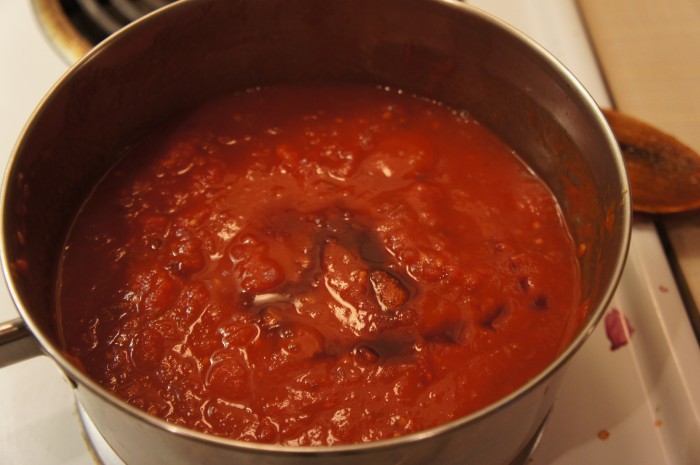
Melt the butter in a saucepan. Add the shallots, pepper flakes, and salt. Cook until the shallots are translucent and beginning to brown. At this point, add the wine and let it cook down. Now add the whole tomatoes and tomato puree, breaking the whole tomatoes up with a wooden spoon as they cook. Taste the sauce, and if it’s a little too spicy, add some sugar (a little bit at a time) and perhaps some wine. Allow the sauce to cook down until it’s the right consistency and put it atop your favorite pasta (or perhaps the gnocchi you just made).

Granola by Orangette

Granola
Granola

Granola

I am a big fan of homemade granola. I used to not like granola very much. The stuff you buy in the paper bags at the store was just too hard and crunchy for me, and I didn’t like not knowing what all the seeds and dried fruits in it were. This all changed when I had a roommate for a summer who made her own granola. The stuff used to make our entire house smell like heaven for days. It was amazing. So then I started using her secret recipe (secret being the operative word here, otherwise it would be on the blog, trust me) to make my own as well. I added some flax seeds here and some raisins there, and before I knew it, I became a lover of granola.

Remember those salted chocolate cookies I made last week? Well on the same blog, the post before those cookies is a recipe for Olive Oil and Maple Granola. That sounds…um…heavenly. Right? Am I right? You will, especially after I tell you the ingredients. Anyway, so I decided to make it. I love having granola around, it’s another quick alternative to cereal (try this granola with some Greek yogurt and slices of banana).

Olive Oil & Maple Granola

Ingredients

3 cups rolled oats
1 cup raw hulled pumpkin seeds
1 cup raw hulled sunflower seeds
1 cup unsweetened coconut chips
1 1/4 cups raw pecans, whole or chopped
1/2 cup packed light brown sugar
1 tsp kosher salt
3/4 cup maple syrup
1/2 cup olive oil (plus some for coating the pan)

Instructions

Preheat the oven to 300 degrees. Prepare a baking sheet by spraying it with baking oil or just pouring on a little olive oil and spreading it around.

In a bowl, combine the oats, pumpkin seeds, sunflower seeds, coconut chips, pecans, light brown sugar, and salt, and mix it all up.  Add the olive oil and maple syrup, and stir until the dry ingredients are evenly and well-coated.

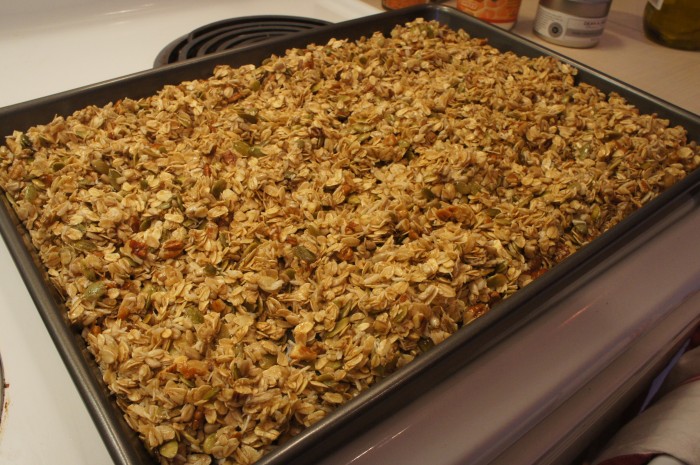
Spread the oat mixture onto your baking pan in one even layer. Put it in the oven and bake for 45 minutes, stirring around every 15 minutes. When it’s done, the granola will be golden brown and toasted. Take it out of the oven (add more salt if you want to, but do a taste check first), and set the pan on a wire rack to cool. If you want to stir in any dried fruit – think cherries, raisins, or cranberries – now’s the time.

The granola will store well in an airtight container. It’s delicious, perfectly sweet, and nutty – try not to eat it too quickly. One great thing about this recipe is that it makes about 7 cups, so plenty of granola to last you at least a couple weeks. Enjoy with some rich greek yogurt!

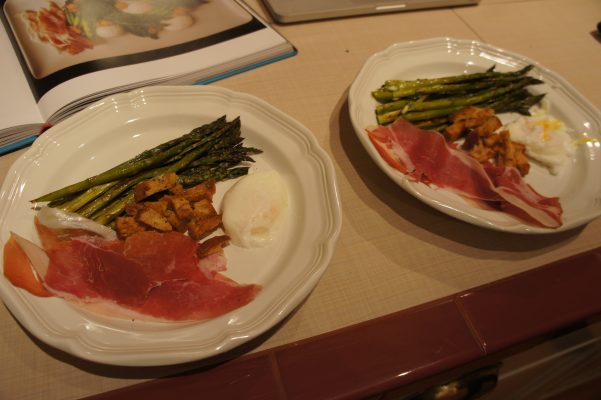
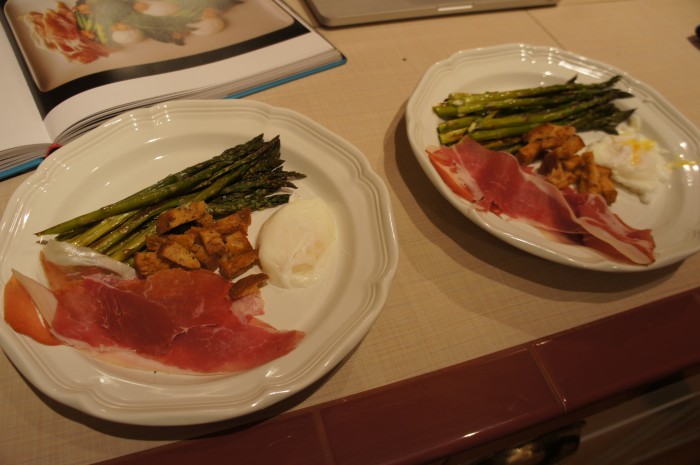
Asparagus Salad with Prosciutto and Poached Eggs

Asparagus salad with croutons, prosciutto, and poached eggs

Asparagus salad with croutons, prosciutto, and poached eggs

In the Ad Hoc cookbook (by Thomas Keller), there’s this delicious looking asparagus salad with croutons, prosciutto, and poached eggs. Sounds good, right? I don’t know about you, but I love all of those things. Jonah and I were in the mood for a light dinner, so we decided to make it the other night. The only problem? Neither of us had ever poached an egg before. It’s one of those things, like baking with yeast, that scared me even though it’s probably not actually that hard.

But I did it! And you can do it! I did! My first attempt was much more successful than my second attempt. After having some little egg bits in the pot from the first egg and then swishing it all around to create my whirlpool, the visibility was not so good, so I had trouble telling where my egg was in it’s cooking process. And then it broke when I removed it. Don’t worry, I made Jonah eat that one. Hahaha.

Fall Salad with Poached Eggs, Asparagus, and Proscuitto

Ingredients

2 eggs
1 bunch asparagus
olive oil
salt
8 slices of prosciutto
Croutons (fresh! our grocery store has some really delicious ones made in house. please don’t buy those gross ones in the resealable bags. blech.)
balsamic vinegar, olive oil, salt, and pepper for finishing

Instructions

Poached eggs

Put a few inches of water in it plus a dash of vinegar (white distilled, because that was the only kind I had that seemed reasonable), and started heating it. The important thing (it would seem, from my research) is to have the water hot enough but not so hot that it’s boiling or even simmering. Got that? No bubbles breaking the surface. While your water is heating, break your egg into a small bowl or ramekin. It’s good to not break the egg directly into the water because it gives you a little more control.

When the water is hot enough, take a wooden spoon or spatula (I would advise a spatula… I liked it better for helping the egg along later) and stir it so that it creates a nice little whirlpool. Pour your egg gently into the middle of the whirlpool. It will look, for a moment, like you’ve done something horribly wrong and this will never work and you’ll be asking yourself why you even tried in the first place. But just wait! After the egg has been in the water for about 30 seconds or so, you can start to help it along by nudging it with your spatula, pushing the bits together. After a minute or so, you may notice that your egg has stuck to the bottom of your pan. Gently slide your spatula underneath it to get it unstuck. I also liked to roll my egg over because the bottom of the pot is hotter (duh) and it helped it to cook a little more evenly. Now, after about 3-5 minutes, you should be done! Remove the egg with a slotted spoon and put it in one of 3 places: 1) an ice bath, and then reheat it in the pot of water when you’re ready to serve (Thomas Keller). 2) on a paper towel to dry a little bit (Smitten Kitchen). 3) If you are out of paper towels and don’t feel like preparing an ice bath and then reheating your eggs, a lint-free dishtowel (me).

Fall Salad

Preheat your oven to 375 degrees. Trim your asparagus, put on a baking sheet, and toss with olive oil and salt. Put it in the oven for about 20 minutes, or until the asparagus is cooked to your liking (some people like it crunchy, some people like it soft). Note: Thomas Keller wanted us to grill our asparagus, but we don’t have a grill. Roasting it is a wonderful and winter-friendly alternative.

On a plate, arrange your asparagus, eggs, prosciutto, and croutons. Season to taste with salt and pepper and drizzle with oil and vinegar.

This meal was delicious and light. I can see it being lovely for a summer dinner party. It’s fairly easy too, once you get the whole egg poaching thing down (I’m still working on that part). Enjoy!

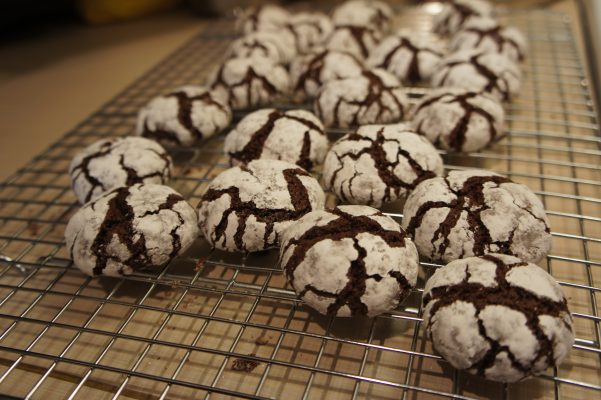
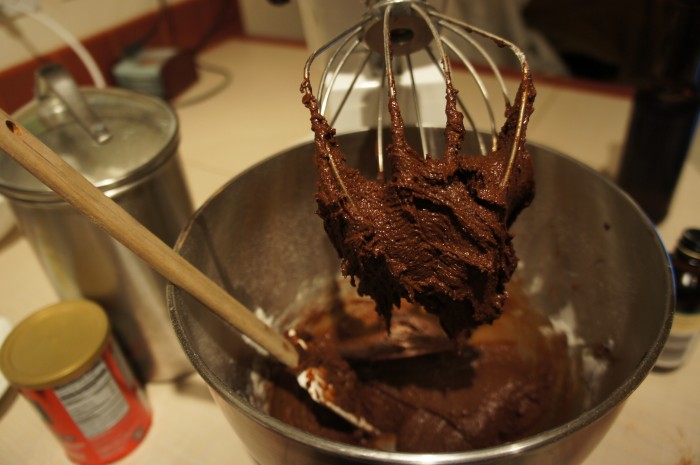
Chocolate Crinkle Cookies

Chocolate Crinkle Cookies

Chocolate Crinkle Cookies

You’ll notice that this is my second chocolate cookie recipe within a week. I know, I know, why Annie? Why do you tempt yourself with these delicious chocolatey cookies? First, I can’t help it. Sometimes I just want something fudgy and gooey and crisp around the edges. Second, I don’t eat all of them myself. The first cookies (the salted chocolate cookies) were mostly consumed by a bunch of friends we had over, and the second cookies (the ones I’m about to tell you about) I brought to Jonah’s boss. We’ve started a little tradition that whenever I make cookies, Jonah takes some into work so that we don’t eat them all, and his coworkers are loving it. Jonah works at a great start-up company in Portland that does internet radio, and we may be hitting the airwaves ourselves soon with a food/cooking show. We’ll see what happens, but we’re talking about it. Thoughts?

Anyway, now onto some chocolate crinkle cookies. I wanted to make something that did not require me to buy anything since we have so much baking stuff in our apartment. So after some searching, I found this recipe on 17 and baking for these. Easy, delicious, and pretty. I halved the recipe because, well it supposedly yields 7 DOZEN COOKIES and let’s face it, we really didn’t need that many. So I’ll give you my miniature version.

Chocolate Crinkle Cookies

Makes 3 dozen cookies

Ingredients

1/2 cup unsweetened cocoa powder
1 cups granulated sugar
1/4 cup vegetable oil
2 eggs
1 tsp vanilla extract
1 cup all-purpose flour
1 tsp baking powder
1/4 tsp salt
1/4-1/3 cup confectioners’ sugar

Instructions

In a bowl (or in the bowl of your electric mixer, if you’re using one) combine the cocoa powder, sugar, and oil. Scrape down the sides, and add the eggs one at a time, mixing well between each addition. Add the vanilla. Now throw in the flour, baking powder, and salt and mix to combine. Cover the bowl and refrigerate for at least 4 hours. I let mine sit in the fridge overnight because I didn’t feel like starting the baking process at 11 p.m.

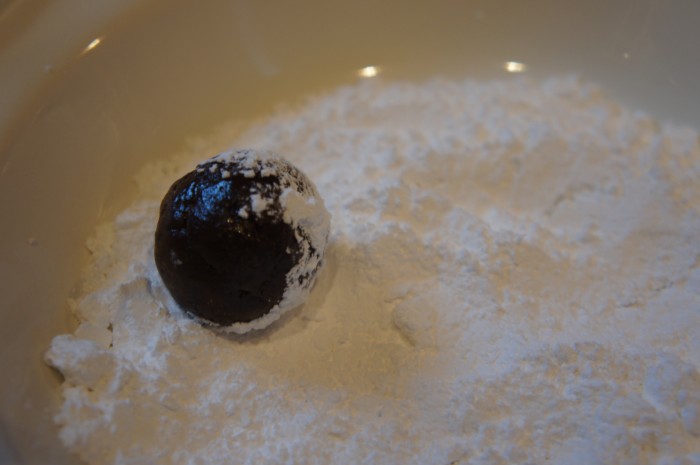
When you’re ready to bake the suckers, preheat your oven to 350 degrees, line a baking sheet with parchment paper, and pull out the cookie dough. Put the powdered sugar into a shallow bowl, and roll the dough into balls about 1 inch in diameter or about a rounded teaspoon. You’ll want to lightly oil your hands so the dough doesn’t stick to your palms when you’r rolling it. After making the balls of dough, roll them in powdered sugar to coat evenly, dusting off any extra, and put them on the cookie sheet at least an inch apart.

Now put them in the oven and bake for 10-12 minutes (mine were perfect at 11). Let them cool on the cookie sheet for a minute before moving them to a rack to cool completely. These cookies look like cookies you see in the magazine. They cracked beautifully and looked so pretty with the contrast of the white powdered sugar and the dark chocolate insides. Enjoy these treats with a glass of milk!

Mexican Bowls

Mexican Bowls

Mexican Bowls
Mexican Bowls

Mexican Bowls

The other night, dinner rolled around, and I was feeling incredibly lazy. Nothing that I could think of eating actually sounded good to me, so I put Jonah in charge. There’s a restaurant here in Portland called Por Que Non that has really good Mexican food. They have this dish called a Bryan’s Bowl that is just a bowl of delicious rice and beans and meat and cheese and guacamole and salsa and everything you could ever want in a little bowl. It’s incredibly good. So Jonah suggested making something like the Bryan’s Bowl, and I was not particularly optimistic, because usually when restaurants have something like that they have some secret delicious sauce they pour over it to make it so freaking good. And we didn’t. But…oh well. So he searched something or other on the internet and found this recipe for Cilantro Lime Rice to use as the base for our Mexican bowls. And man oh man, it made all the difference.

Mexican Rice Bowls

Ingredients

Cilantro Lime Rice

1 cup uncooked white rice
1 teaspoon butter
2 cloves garlic, minced
2 tsp plus 1 Tbl lime juice, freshly squeezed is highly preferred
1 15-oz can vegetable or chicken broth
1 cup water
2 tsp granulated sugar
4 Tbl fresh chopped cilantro

Mexican Rice Bowl

Cilantro Lime Rice
Black Beans
Chopped Red Onion
Chopped tomato (or salsa)
Chopped avocado (or guacamole)
Sour Cream
Hot sauce
Lime wedges
Chopped cilantro
Tortilla chips

Instructions

Cilantro Lime Rice

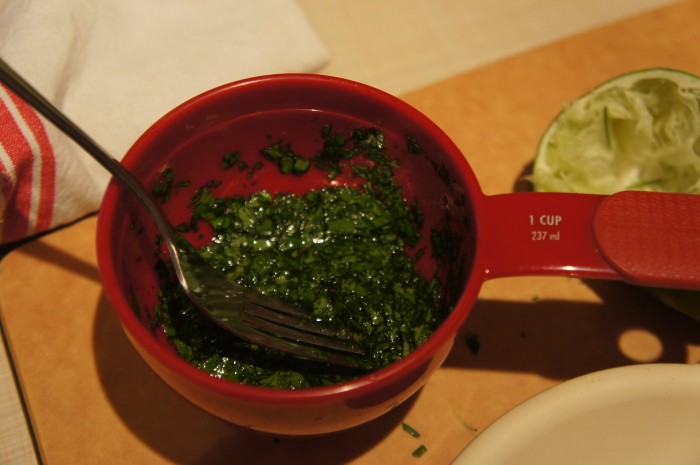
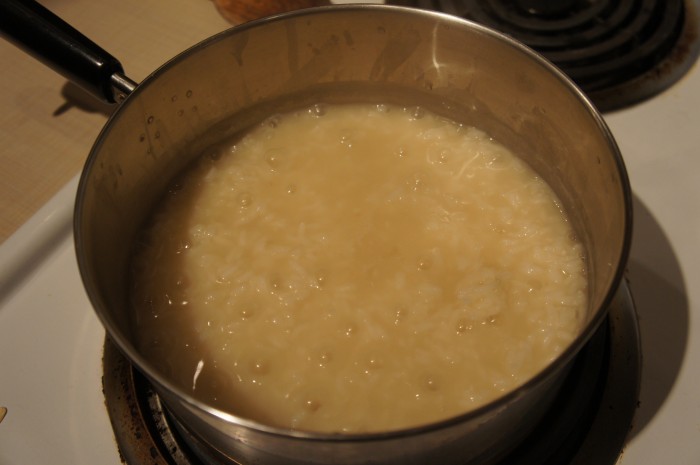
Let’s start with the rice. Put the rice, butter, garlic, 2 tsp of lime juice, broth, and water in a pan. Bring the contents to a boil, reduce the heat to low, and cover and cook the rice until it’s tender (about 15-20 minutes). While the rice is cooking, mix the leftover Tbl of lime juice with the sugar and cilantro. When the rice is done, remove it from the heat and stir in the cilantro/lime mixture.

Mexican Rice Bowl

While the rice is cooking you can also prep the rest of your ingredients for your bowl. We drained the beans and just heated them in the microwave, chopped the onions, and got out the salsa, guacamole, sour cream, cholula, and some tortilla chips.

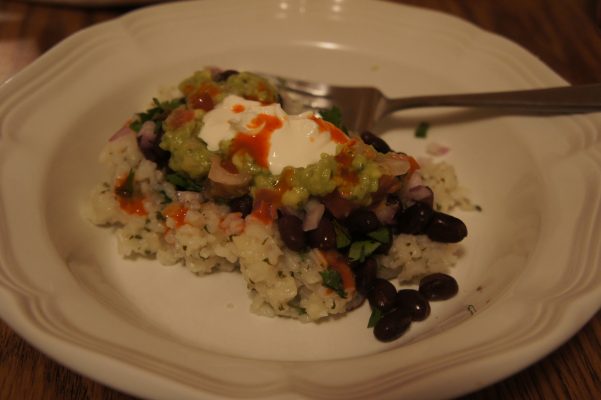
Now it’s time to assemble your bowl. I did mine kind of like you would if it were the filling of a burrito, making even layers of all the ingredients I wanted. I also used my bowl as kind of a layered dip and ate it with tortilla chips for an added bit of crunch. Oh man. I may not have been in the mood for this meal at the beginning of the evening, but it really hit the spot! Enjoy!

Cheese Straws with a Bite

Cheese Straws with a Bite

Cheese Straws with a Bite

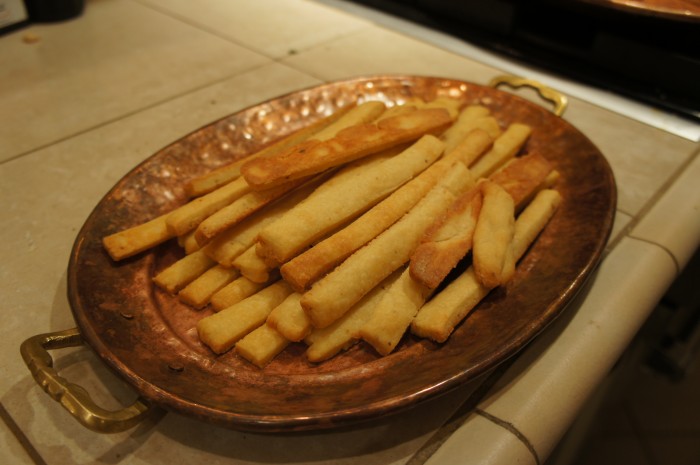
For some reason I’ve been in the mood to make some kind of cheesy snacking food lately, like crackers or something. So this weekend when I was up in Seattle, I took the opportunity to make these cheese straws from Smitten Kitchen. They are ridiculously easy and have quite a bite to them due to the red pepper flakes. If you don’t want to risk them being too spicy for you (or whoever else may be eating them), you can easily reduce the amount of red pepper flakes, but I thought it was quite delicious.

Cheese Straws

Ingredients

1 1/2 cups grated extra-sharp Cheddar cheese
4 tablespoons (1/2 a stick) unsalted butter, room temperature and cut into 4 pieces
3/4 cup flour, plus some for rolling out the dough
1/2 teaspoon salt
1/2 teaspoon crushed red pepper flakes
1 tablespoon milk or half-and-half

Instructions

Preheat your oven to 350 degrees. In a food processor, pulse the cheese, butter, flour, salt, and pepper flakes. Pulse it until the mixture is in coarse crumbs.

Now add the milk until the dough comes together and forms a ball. Lightly flour a cutting board or your kitchen counter, dump the dough out, and roll it into as rectangular of a shape as possible and about 1/8 of an inch thick. With a sharp knife slice the dough into 1/4 inch – 1/3 inch strips. I left some edges ragged and trimmed others, I don’t think it really matters.

Now you can gently put the strips onto a cookie sheet (no need to grease it because of the butter). You want to leave a little space between them, but they don’t need much (1/4-1/2 an inch is plenty). The dough is fragile, so they might break, but don’t worry about it. The cheese straws can be any length really.

Bake them in the oven for 12 – 15 minutes (I think I baked mine closer to 15, I like the ends nice and brown). Remove them from the oven, allow to cool for a minute or two on the baking sheet, and then transfer to a cooling rack.

Good luck keeping these around for long. They were gone pretty quickly. They’re perfectly crispy and cheesy with a bit of spice… Mm! I love them. Enjoy!

Bread, again, but different

Bread

Bread
Bread

Bread

Bread

Jonah and I keep a little white board in our apartment next to our refrigerator where we write all kinds of things: items to get at the grocery store, tasks to do (such as getting a watch so we can time our couch-to-5k runs which we’ve just started), occasionally notes to each other, and there are also little magnets so we can put checks to be deposited and notes from our bosses, etc. It’s really a handy little space near the door to remind us of all the little things we need to do.

Anyway, on Monday, Jonah wrote a little grocery list on the board before he went into work. Upon seeing that bread was on the list and I hadn’t baked anything in a couple days and hadn’t made bread in quite some time, I decided to make some instead of just buying some. I had found this incredibly easy looking recipe over at Joy the Baker and had been waiting to try it. I think it’s my last “super easy” recipe before I try making my own sourdough starter. So keep an eye out. The other great thing about the recipe was that it only called for bread flour, and I’m still trying to use up that giant bag, so it was perfect. You’ll only need 4 ingredients, one of which is water, so really, only 3.

This bread is delicious with just some butter, toasted with butter and jam. Jonah said it also made a delicious PB+J. And I’m about to go try using it for a grilled cheese. This bread was so supremely simple to make, I think everyone should try it. It’s great for a beginner recipe that still has some of that crispy crust. Enjoy!

Simple Bread

Makes 2 loaves

Ingredients

4 cups bread flour
2 tsp salt
2 tsp active dry yeast
1 1/2 cups warm water

Instructions

Put 3 3/4 cups of the flour into a mixing bowl (electric mixer would be nice). Reserve the other 1/4 cup of the flour for kneading/incorporating later. On one side of the pile of flour in your mixing bowl, put the salt, and on the other side, put the yeast. Not sure why this is so important as everything is about to get mixed together, but whatever. Now pour the water over the flour and mix it until it just comes together (I started with the paddle attachment and then switched to the dough hook once the dough had come together).

Once the dough comes together and you switch to a dough hook, put your mixer on a medium speed and let it knead the dough for 2 minutes. The dough should easily clear the sides of the bowl but stick to the bottom a little bit. If you feel the need, you can add a little flour or water depending on the status of your dough, but mine was pretty spot on, so I didn’t want to mess with it. After mixing it for 2 minutes, let it rest for 5 minutes. After the 5 minute rest, mix it again for 3 minutes. At this point you can flour your counter (with that 1/4 cup of bread flour you reserved) and dump the dough out.

Now you can hand-knead the dough, incorporating the 1/4 cup of the flour reserved. You may not need to incorporate the whole 1/4 cup. I’d say I got about 1/8 cup into the dough, and then stopped. This was the first time in my bread-making experience that I felt like I could tell by the feel of the dough when it was ready. Right when I dumped it onto the counter, it was not as dense as my other doughs have been; instead it was light and easy to work with. I didn’t want to push it, so when it stopped taking the extra flour in, I stopped adding. When the dough seems smooth enough, form it into a ball, lightly oil a bowl (I just used the same mixing bowl) and put the dough in, turning to coat the dough with oil. Cover the bowl with plastic wrap and a dish towel, and let rest for 1 1/2 hours.

After the 1 1/2 hours, the dough should have about doubled in size. Remove the dough from the bowl, punch it down, and reform it into a ball, replace it in the bowl and cover it, letting it rise for another half hour.

After this second shorter rest, remove the dough from the bowl onto a lightly floured surface (I just never cleaned my counter till the bread was in the oven) and cut it into two pieces. Form each lump into a smooth and round ball. The best way to do this is to just keep grabbing the edges of the dough and tucking them underneath. Eventually you’ll have a tight, smooth ball. Cover the two balls of dough with a damp cloth and let them rest on the lightly floured surface (aka counter) for 45 minutes to an hour.

Towards the end of this resting period, you can preheat your oven to 450 degrees. Make sure your rack is in the bottom half of your oven because the bread will rise. And put another rack below it. Put a baking sheet (or baking stone if that’s what you’re using) in the oven while it’s heating so it gets hot. Uncover your balls of dough, and slash the tops with 2-4 slashes to guide the expansion of the bread while it’s baking. When your oven is heated, take out the hot baking sheet and carefully put the dough on it, and put it in the oven.

Now it’s time for the steam. A couple minutes after you put the bread in the oven, you can dump 1/4 cup of water onto the oven floor (if you have an electric oven) and immediately close the door, then repeat in a couple minutes. I wasn’t all about dumping water in my oven for some reason, so I did what I’d read in a previous recipe and put half a cup (so I didn’t have to open the oven again and let the heat escape) of water on another baking sheet and put it on the rack beneath the bread. It also works just fine and creates steam. the steam is what helps make the crust nice and crispy, I think.

Anyway, you’ll want to bake the loaves for 20-25 minutes. They’ll be a beautiful golden brown. It’s smart to throw a thermometer in there too, just to make sure. They should register between 190-210 degrees. Now, transfer them to a wire rack to cool (mine were still making crackling/baking noises for a couple minutes, it was kind of cool). Make sure they are completely cool before taking a slice, spreading on some butter, and enjoying.
Korean Marinated Beef

Korean Marinated Beef

Korean Marinated Beef

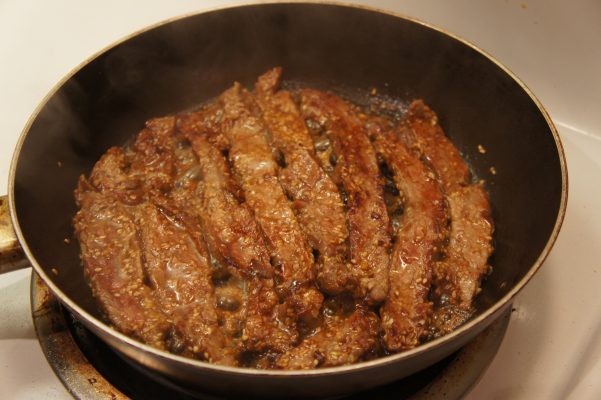
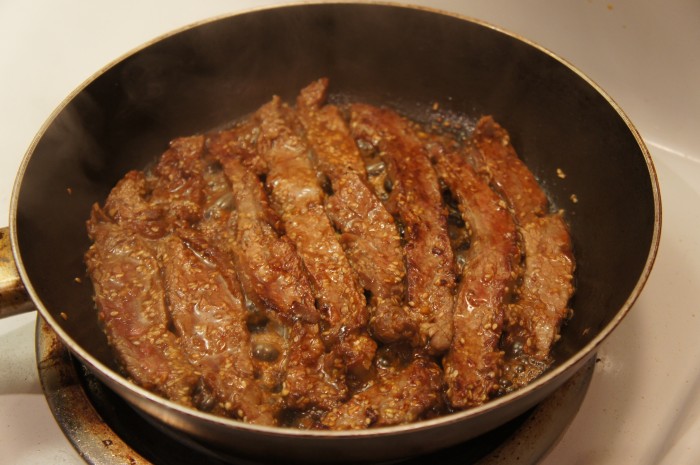
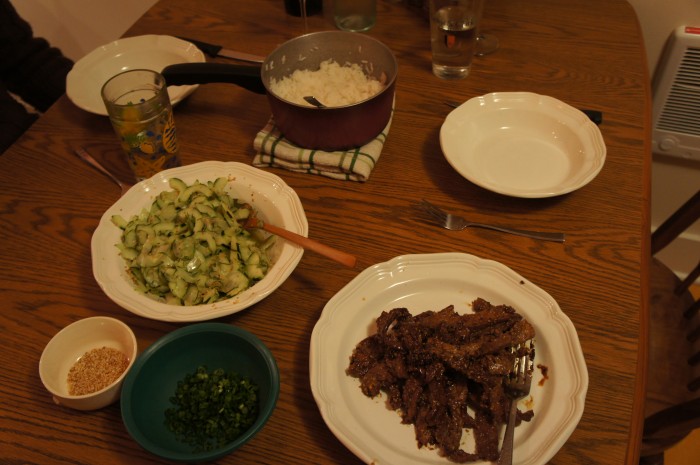
This Korean marinated beef was the second part of our asian dinner the other night. I found this recipe in our Gourmet Today cookbook, which is wonderful. This recipe was crazy good and super quick. The meat was nice and tender and perfectly cooked and the marinade caramelized nicely in the pan. You’re supposed to serve the beef in a lettuce cup with kimchi and rice, but we just served it over rice alongside the Japanese cucumber salad seen in the previous post. Here’s what you’ll need:

Korean Marinated Beef

Ingredients

1/4 cup soy sauce
1 Tbl sugar
2 tsp Asian sesame oil
1 bunch of scallions, minced, with the white and green parts separated
1 Tbl minced garlic
1 Tbl minced peel fresh ginger
3 Tbl sesame seeds, toasted
1 lb flank steak (we did about 3/4 of a pound, just because the cut of meat is a little expensive and the recipe serves 4 people), cut across the grain into very thin slices (the recipe says no more than 1/8 inch thick, but I was like, hell no, so I just sliced it as thin as I could)
1 Tbl vegetable oil for cooking

Instructions

In a medium sized mixing bowl, stir together the soy sauce, sugar, sesame oil, the whites of the scallions, the garlic, ginger, and 2 Tbl of the sesame seeds. Whisk this up until the sugar is dissolved. Now add the steak, toss it around to make sure it’s evenly coated, and let it marinate for 15 minutes.

After that 15 minute wait, heat the oil in a pan over high heat. You definitely want the oil to be shimmering, if not smoking. Now add the steak in one layer and cook (ours took 2 batches), turning halfway through. If your heat is high enough, it’ll only take about 4-5 minutes for your meat to be cooked through and even get a nice sear/caramelization from the marinade. When the meat is just cooked through – don’t cook it too long or it will lose some of it’s tenderness – transfer to a plate, sprinkle with the rest of the sesame seeds and the scallion greens. Serve with rice and Japanese cucumber salad (see previous post). Enjoy!
Japanese Cucumber Salad

Japanese Cucumber Salad

Japanese Cucumber Salad

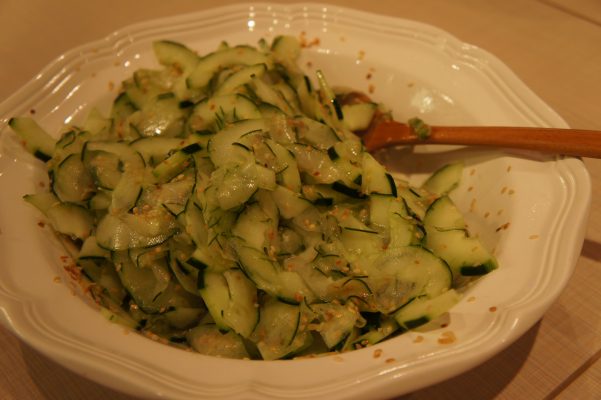
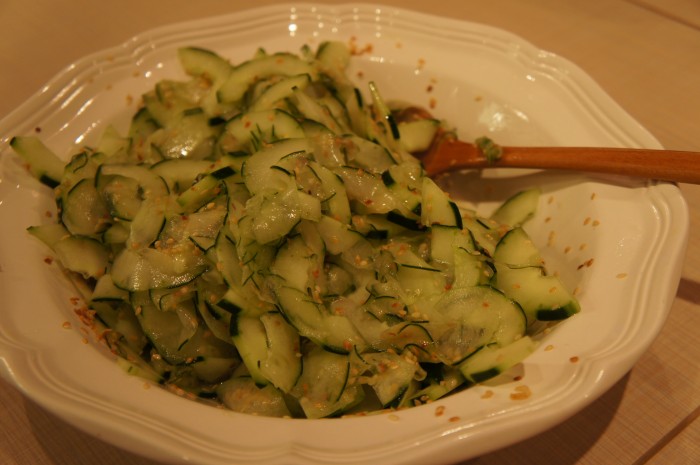
Last week, Jonah and I made a delicious dinner of this Japanese cucumber salad and Korean marinated beef (to be seen in an upcoming post). This salad was so incredibly simple and delicious. It would be perfect for a summer dinner. It’s very refreshing. But we had it in the winter and it was still so crazy good that I couldn’t stop eating it.

Japanese Cucumber Salad

Ingredients

2 medium cucumbers (or 1 large English cucumber)
1/4 cup rice vinegar
1 tsp sugar
1/4 tsp salt
2 Tbl toasted sesame seeds

Instructions

We bought the sesame seeds in the bulk section at our grocery store (we needed a bunch for the beef too, so it made sense) and you can just toast them in a dry pan over medium heat. Keep an eye on them though, because they can burn quickly.

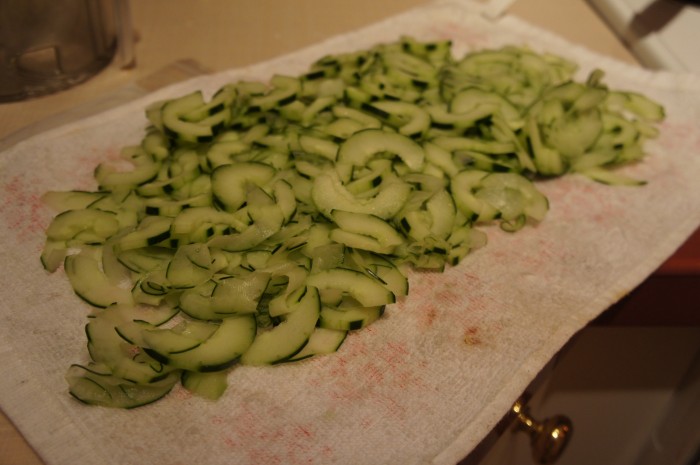
Peel the cucumbers leaving alternating green stripes of the peel. Slice them in half lengthwise and scoop out the seeds. Now, using a food processor, sharp knife, or one of those mandolin things if you’re one of those people, slice your cucumbers into very thing slices. Think paper thin. Lay your cucumber slices out on a double layered paper towel or a dishtowel to absorb some moisture while you whip up the dressing.

Combine the rice vinegar, sugar, and salt in a bowl, making sure to stir it up to dissolve the sugar. When you’re ready to serve, add the sesame seeds and cucumbers, and toss to coat. Serve!

Eggplant with Buttermilk Sauce

Pomegranate seeds for the Eggplant with buttermilk sauce

Eggplant with buttermilk sauce

Eggplant with buttermilk sauce

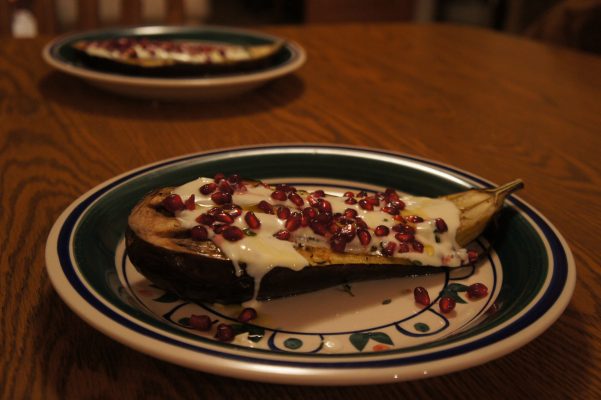
The posting of the recipe is long overdue, as I made this dish quite a while ago.  So I may not remember the exact details of everything I did to make this – but here goes.  Have I told you about the unprecedented influx of cookbooks in Annie and I’s apartment?  I went from owning exactly zero cookbooks before Christmas and my birthday this year (Jan 6) to having 4.  That’s a 400% increase in cookbooks within the span of a month!  Anyway, Annie’s mom got me this great cookbook called Plenty, that has some fantastically new and different recipes. This is one of them.

A picture of this eggplant with buttermilk sauce recipe is on the cover of the Plenty cookbook, so I decided to make it.  It looked like nothing I had ever tasted before, and that’s what it ended up tasting like!

Eggplant with Buttermilk Sauce

Ingredients

2 eggplants
1/2 cup olive oil
4-6 thyme sprigs
salt and pepper
1 pomegranate (this is the fun part)
For the sauce:
9 Tbs buttermilk
1/2 cup Greek yogurt
1.5 Tbs olive oil
1 small garlic clove, finely chopped
pinch of salt

Instructions

Preheat the oven to 400 degrees. Cut the eggplants in half lengthwise (see photo below). Now cut some lengthwise incisions on each half, but not all the way through to the skin. This is just to let the oil and juices get around. Make some more diagonal incisions (I sort of did this like you would cut an avocado before you scoop the flesh out).

Place the eggplant halves on a baking sheet, and brush them with the 1/2 cup olive oil until it’s all used up.  Sprinkle with some thyme leaves and salt and pepper.  Roast for 45 minutes, when the eggplant flesh should be soft and browned.

While the eggplant is roasting away, let’s do something fun. To get all the seeds out without digging through the fruit like a raccoon, start by cutting the pomegranate in half.  Hold one half over a bowl with the flesh side facing down into your hand (watch out, your fingers are about to get juicy). Use the back of a wooden spoon and start whacking the back of the pomegranate gently, and then with increased force, until the seeds start to fall out into the bowl.  Don’t lose faith if seeds don’t start raining down right away: it takes a minute for them to start getting loose. It helps to flip the pomegranate half over once in a while to gently pull the membranes apart and pick them out. Do the same thing with the other half.

Make the sauce by whisking all of the sauce ingredients together in a small bowl.  I used Greek yogurt that was honey-flavored, which may have been a mistake.

When the eggplant halves are done, serve by spooning plenty of the sauce over the halves.  Sprinkle your expertly-harvested pomegranate seeds on top and garnish with some more thyme and drizzle with a bit of olive oil.

The taste was amazing – a combination of things I have never tasted in combination before!