Tag: Rosemary

Lamb & Love

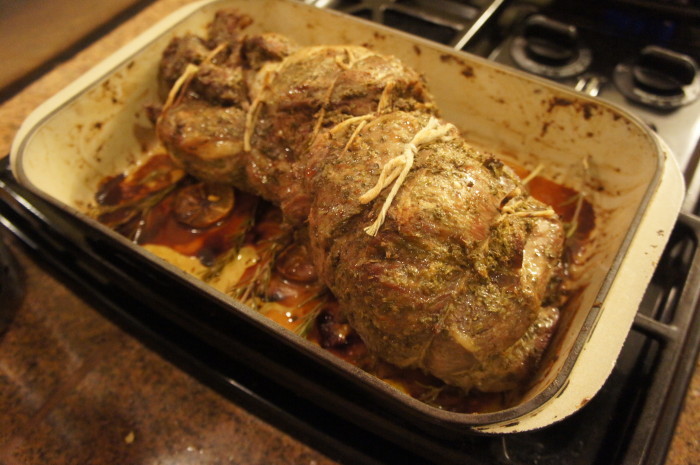
Look! We did it! The lamb out of the oven, ready for a little rest.

Yes, this is what arrived to my office. It was very exciting and bizarre.
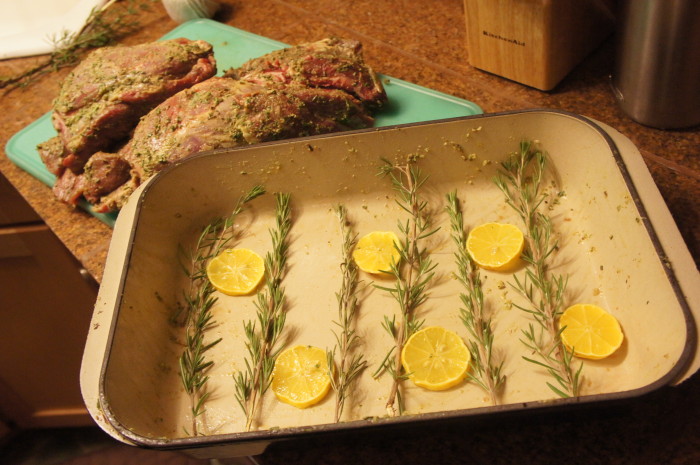
Prepping the baking dish while the lamb gets rolled

Clockwise starting at the top: brussels sprouts cooked in lamb fat/oil, salad, fingerling potatoes gremolata, and the star of the meal, the roasted lamb!

Did you know that February is Lamb Lover’s Month? Neither did I, until I was contacted by the American Lamb Board to participate in a lamb cooking contest (you can vote here, starting February 14th: www.lambloversmonth.com). Yes, that’s right folks. How could I possibly say no? So I filled out my registration, and got a boneless leg of lamb in the mail last Friday.

I immediately started researching lamb cooking techniques, and ended up kind of combining a few recipes. Because lamb is often used in Greek/Mediterranean cuisine, most recipes have lots of rosemary, lemon, mint, and even some yogurt sauces. I didn’t want to get too fancy because I wanted it to be something that we all could easily pull off. I wanted to do some kind of spice rub or marinade where I could leave the lamb overnight to really absorb the flavors of whatever I ended up going with.

So after some research, I decided to go with an adapted version of a recipe from The Herbfarm Cookbook. I used varied amounts of all of the ingredients to go for a little more of the taste I wanted (more lavender, thyme, adding lemon, etc.) and was very happy with the result: a strongly herb-flavored (but not overpowering), perfectly cooked piece of lamb.

For our sides, we cooked brussels sprouts in a combination of melted lamb fat and oil: slice each sprout, top to bottom, into 3-4 pieces, heat the fat/oil, toss in a layer of sprouts (careful, it will spit and it will hurt – long sleeves are your friend), and sprinkle with salt. Cook until the bottoms are nice and dark, tossing occasionally if desired. We also made a rough version of fingerling potatoes gremolata: slice up your potatoes, toss in oil and salt, sprinkle with some chopped garlic, roast them until tender, and then when you’ve removed them, top them with some melted butter and chopped parsley. And salad. We had salad too. If you like this recipe, the blog post, even just the pictures, head over to www.lambloversmonth.com to vote for our little blog to win the Lamb Lover’s Month cooking contest! It would be super awesome, and maybe I’d even invite you over to enjoy some free lamb…

Hope you all have a lovely Valentine’s day, featuring some kind of delicious food! (A latte with your loved one? A sexy seafood dinner? Roasted lamb? The possibilities are endless – get out there and try something new and adventurous!)

Herb Rubbed Lamb

Ingredients

Lamb

1/2 cup fresh rosemary pines
4 tsp fresh or 2 1/2 tsp dried lavender buds
4 tsp fresh thyme leaves
6 cloves garlic, peeled
1 Tbl Dijon mustard
1 tsp salt
1 tsp freshly ground pepper
zest of one meyer lemon
6 Tbl olive oil
1 boneless leg of lamb (about 3 pounds, though more also definitely works)
6 woody branches of rosemary
1 meyer lemon, sliced into thin rounds (and seeded, if necessary)
optional: a few more cloves of garlic, number is dependent on your passion for the garlic

Sauce

1/4 cup red wine
1 tsp dijon mustard
1 tsp balsamic vinegar

Instructions

Lamb

Start by processing all the herb paste ingredients except for the olive oil in a food processor until the herbs (particularly the rosemary leaves) are chopped. Now, with the machine running, slowly pour in the oil. Most machines have a spout type thing at the top you can remove so that you can pour ingredients in while blending. Continue to blend until it has reached a thick sauce consistency, scraping down the sides when necessary. There will still be little chunks of rosemary and garlic, you can’t make a complete paste out of it, but do the best you can.

If the lamb is tied, untie it. Spread the lamb out, and with a sharp knife, trim as much fat as you can from both sides of the meat. Think that fat is gross and that you’re going to toss it in the trash? Don’t! Fat can be used for lots of things. Melt it down and use it to cook veggies in or make a broth (I think? I’m not sure how well that would actually work if you haven’t got ANY meat attached, but it’s worth a shot.) Find a baking dish where the lamb will fit snugly. Rub the top of the lamb with about half of the herb paste, flip it over, and rub the other side. Set it in the dish, cover with plastic wrap, and stick it in the fridge for 8-24 hours (the longer the better). Now, I am not particularly a fan of recipes where you have to refrigerate anything for more than an hour – planning ahead is not my forte. But you know what I’m learning? It’s so worth it. When you let anything (particularly meat) absorb the flavors of your marinade or rub for a long time, it makes such a big, flavorful difference.

Preheat your oven to 425 degrees. Remove your lamb from the dish and, attempting to remove as little of the herb rub as possible, roll the lamb back into it’s original shape. If this seems relatively impossible (as it did for Jonah when he was rolling it), just roll it into whatever shape makes sense – you just want it to be kind of spiraled and uniform in size. Hopefully that makes sense. We also took some whole cloves of garlic and stuck them in little crevices in the lamb before rolling it up. They got gently cooked, and made for a nice look when the lamb was sliced for serving. Take a few pieces of kitchen twine and tie the lamb snugly in three places (or more, whatever you need to do to make it work – just as few as possible, mostly). Put the rosemary branches and lemon slices in the bottom of the baking dish and gently set the lamb on top. Roast the lamb at 425 for 10 minutes before reducing the heat to 350 degrees. Roast for about an hour and a half, or until an instant read thermometer inserted into the center registers 130-135 degrees. Note: ours DID NOT take an hour and a half. It was done a little over an hour at 350. Take the temperature in a few places and use the lowest . Remove the roast from the oven, transfer it to a board (preferably one with those grooves around the edges as it will be releasing lots of juices), cover it loosely with foil, and let it rest for about 10 minutes.

Sauce

While the meat is resting, whip up the sauce. Take the rosemary branches and lemon slices out of the baking dish, and tilt the dish so the drippings all run into one corner. Skim off as much fat as you can, transfer the remaining juices to a little saucepan. Add the wine and put it over low heat. Use a whisk to stir in the mustard and vinegar, and season to taste with salt and pepper if you’d like. Remove the strings from the meat and slice it thinly. Arrange on a platter (or just throw a couple slices on each plate) and pour the sauce over. Voila! A delicious dinner.

Lemon Tart with Rosemary Crust


When planning this year’s Thanksgiving menu – which, believe me, took over a month – my father and I went back and forth quite a bit on what recipes to include. We wanted to go with some less traditional recipes. For instance, instead of a regular stuffing, we stuffed onions; there were no sweet potatoes or mashed potatoes at our dinner, instead we had twice cooked stuffed delicata squash (I’m working on getting you that recipe…); our brussel sprouts were glazed with balsamic, tossed with pancetta, and sprinkled with breadcrumbs. It was heavenly. Dessert, for some odd reason, turned out a little lackluster. You know how you wait all year for those pies? Those perfectly creamy pumpkin pies, those apple pies so full of apples you don’t know if they’ll all fit in the pie dish, and the pecan pie with the perfect ratio of nut to candy-like filling? Yeah… we didn’t really get those this year. Probably because we went with the whole “let’s try new recipes!” idea. And hey, I’m glad we did. What’s the fun in cooking if you’re using the same recipes over and over, right?

In addition to the traditional pumpkin/apple/pecan pies, we also decided to add a lighter dessert to the menu. You know Pinterest, right? Well I had found this recipe for a lemon tart with rosemary crust, and without really reading the whole thing, recommended it as a light, fruity dessert. Only upon arriving in Seattle and reviewing all of the recipes did I realize that the crust was a spelt crust. Now, I don’t hate gluten-free things, but I am a little…doubtful, one might say, of their deliciousness when compared with regular gluten-filled things. So I was wary. But I made it anyway. And what I loved about this tart is that the crusty is really rosemary-y, unlike all those recipes where you add a little bit of whatever herb and can barely taste it. I also loved how tart the filling was. My family loves sour anything, so the filling (not as much the crust, but whatever) was a big hit. If I were to make it again, I would probably 1.5 times the filling and just add some fresh rosemary to my own pie dough for the crust.

Lemon Tart with Rosemary Crust

Ingredients

Rosemary Spelt Crust

1 1/3 cup spelt flour
3 Tbl sugar
1 Tbl fresh rosemary, chopped
pinch of salt
1/3 cup cold butter, cubed
1-2 Tbl ice water

Lemon Filling

1 cup plain Greek yogurt (I wouldn’t recommend non-fat, as you’ll lose some of the richness, but if that’s what you’re into, go for it.)
1/2 cup sugar
2 eggs
1/2 cup freshly squeezed lemon juice
1 teaspoon lemon zest

Instructions

Rosemary Spelt Crust

Preheat your oven to 350 degrees. Butter a 9-inch tart pan and set aside.

In a food processor, pulse the flour, sugar, rosemary, and salt a few times. Add the butter and pulse until crumbs start to form. Add the ice water, 1 Tbl at a time, pulsing in between. When the dough holds together when pinched between your fingers, it is done. Don’t add any more water than is absolutely necessary.  It will seem crumbly, but trust me, it’s fine.

Dump the dough into the prepared tart pan. Press the dough into the pan, starting in the center and working your way outwards and up the sides (evenly!). Pierce the crust with a fork a few times and bake for 15 minutes. Allow to cool at least 5 minutes before you pour in the filling.

Lemon Filling

While the crust is baking, you can prep the filling. In a mixing bowl, whisk together the yogurt and sugar. Add the eggs one at a time, then the lemon juice and zest. Whisk until the mixture is smooth and well combined. Pour the filling into the (at least slightly cooled) crust and bake for 25-30 minutes or until the center is set and jiggles only slightly when shaken. It is weird to me that shaking things and their jiggling is in a recipe, but hey, that’s how it goes sometimes.

Allow the tart to cool completely, and then stick it in the fridge to chill for at least 1 hour before serving. If you’re feeling fancy, serve it with fresh whipped cream.

Lemon Rosemary Palmiers

Lemon Rosemary Palmiers

Lemon Rosemary Palmiers

Lemon Rosemary Palmiers

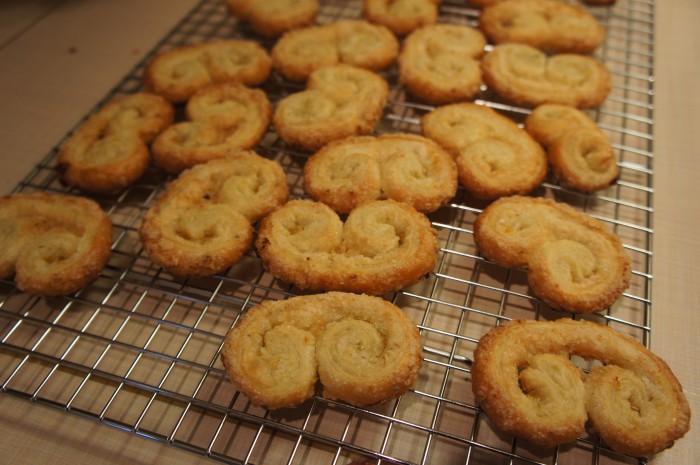
When I say palmiers, doesn’t something incredibly fancy and impossible to make come into your mind? It does for me. If the name is so French that Jonah can’t say it, it’s gotta be tricky. (Every time I told him I was going to make these, Jonah asked “What’s a palmier again?”) But that is so not true. Especially when you’re just going to use your leftover puff pastry from that beet tart you made… Seriously. So easy.

I found these on Joy the Baker and have been dying to make them. They’ve been calling my name from my Pinterest food board. I adapted the recipe and the method a teensy bit.

Lemon Rosemary Palmiers

Ingredients

1 package puff pastry
3/4 cup of sugar
zest of 1 large lemon
1 teaspoon finely chopped rosemary (fresh is better, but dried will do just fine)

Instructions

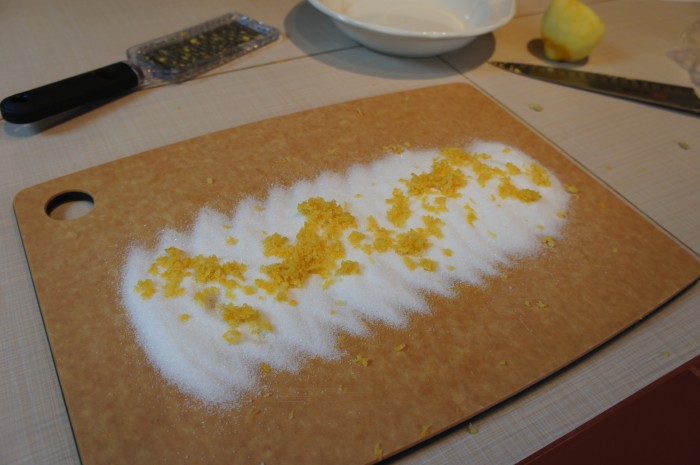
Finely chop the rosemary and set aside.  On a clean, flat surface rub lemon zest into the sugar using a bench knife (if you have one) or the back of a spoon (that’s more like it).  Put the sugar in a bowl and set aside. Unfold the thawed puff pastry onto a lightly (very lightly) floured surface and roll it out a little bit. You don’t need it too much bigger, just like an inch on each side is good. Move the puff pastry somewhere else, sprinkle the surface with about 1/3 of the lemon sugar, and then put the puff pastry back on top of it, pressing it down a bit to get the sugar to stick. Once the puff pastry is down, spread the rest of the sugar and the rosemary over the surface.

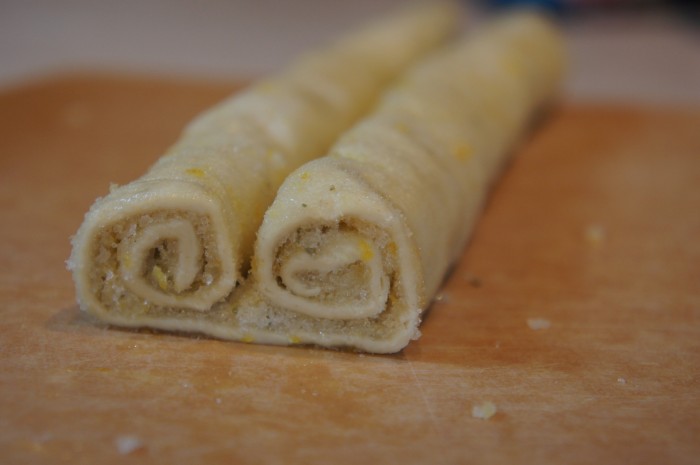
Now tis time to roll. Roll the long side in towards the middle. Then roll in the other long side to the middle. Gently press the sides together so they stick a little bit (though the outside will be covered with lemon sugar, so mine didn’t stick crazy well). Wrap this in plastic wrap and refrigerate it for about an hour, or until it’s cold and relatively firm.

Preheat your oven to 400 degrees. Remove dough from the fridge and slice in about 1/2-inch thick slices.  Place on lined baking sheet (think silpat or parchment paper – I used foil and buttered/floured it, which work well).  Bake for 10 to 15 minutes of until golden brown.  You’ll probably want to rotate the baking sheet halfway through baking.  Keep a close eye on the cookies after about 11 minutes.  They might burn quickly because of all the sugar. Actually, because of the burning sugar, I replace the foil between each batch so it didn’t smoke. Remove the palmiers from the pan pretty much immediately after baking, and put them on a wire rack to cool. Once they’re cool, dig in and enjoy!