Tag: dinner

Butternut Squash Enchiladas

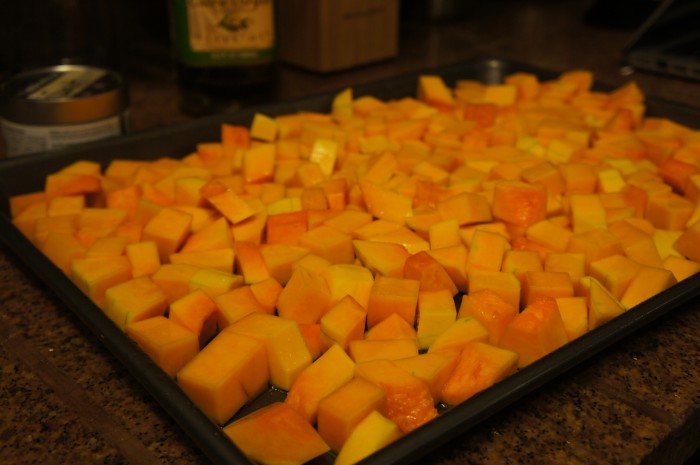
Squash for Enchiladas

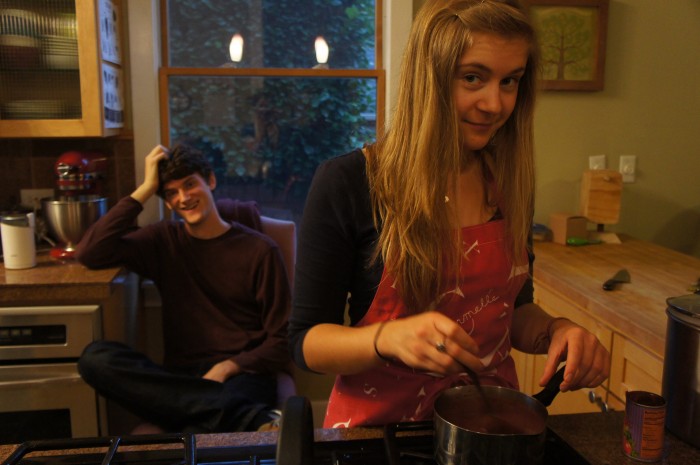
Carmelle makes enchilada sauce
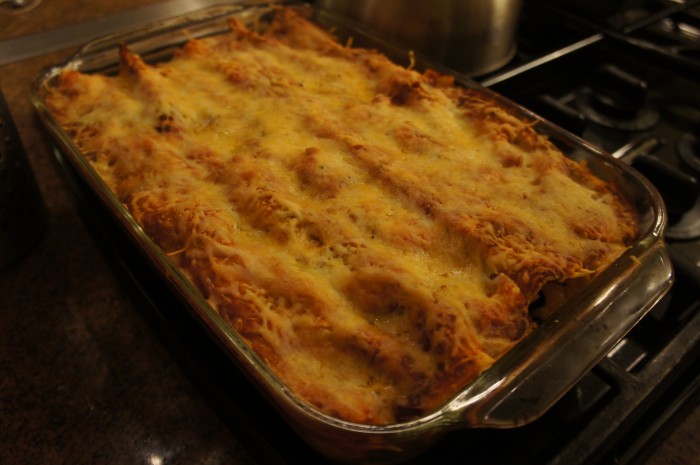
Squash enchiladas pre-cheese

Squash Enchiladas

Fall is a perfect excuse to put squash in, oh, just about everything you make. Squash ravioli? Yes. Squash cake? Absolutely. Squash enchiladas? Of course.

The inspiration for this meal came from 1) the abundance of squash at the grocery store, 2) the fact that I’d had something similar (some kind of squash taco) at a restaurant here in Portland called Oba, 3) there were people coming for dinner, and I wanted to make something easy that was basically a meal in a dish. This was exactly that, a delicious, relatively easy meal in a dish. I’ll also say this: this was loosely based on a squash enchilada recipe I found, but I was quasi-doubling it. Also, I bought too big of a squash because it was pretty. So we had lots of extra filling, which I just threw in a pan, covered with enchilada sauce and cheese, and baked on it’s own, sans tortillas. But I’ll try adjusting amounts below so that you don’t have that same problem.

Butternut Squash Enchiladas

Ingredients

One ~2 lb butternut squash, peeled, seeded, and cubed
Olive oil & salt
1 can black beans, rinsed
1 medium onion, diced
mild green salsa (we used one of those little cans from the grocery store)
12 small corn tortillas
1-2 cans enchilada sauce (Carmelle made our enchilada sauce because she is a Mexican food guru… but I was prepping the filling, so I wasn’t paying attention. Dang!)
1 bag of mexican blend shredded cheese

For serving: sour cream and sliced avocado

Instructions

First, preheat your oven to 400 degrees. Spread your squash on a large baking sheet, toss with olive oil and salt, and bake for 20 minutes, or until squash is tender. Remove from oven and allow to cool for a few minutes before putting into a large mixing bowl. Add the black beans and onion and mix to combine. At this point, you can lower the temperature of your oven to 350 degrees.

Cover the bottom of a large casserole dish with a layer of enchilada sauce and about half the can of salsa. Warm the tortillas a little bit, one by one, in a pan with a little bit of olive oil, just so that they won’t break when you stuff them. Take a warm tortilla, fill it with the squash/bean/onion mixture, a sprinkle of the cheese, and roll it up. The ends don’t need to be all nice and tucked in, but you want the tortilla to overlap enough… Does that make sense? Fill the dish with filled, rolled tortillas, and cover with enchilada sauce, salsa, and the rest of the cheese (or just however much cheese you want).

Throw that dish in the oven (don’t throw it, actually… that would be bad) for 30 minutes, or until the cheese is bubbling and a bit brown. Allow to cool for a few minutes before serving with sour cream and slices of avocado. Enjoy!

Eggplant with Buttermilk Sauce

Pomegranate seeds for the Eggplant with buttermilk sauce

Eggplant with buttermilk sauce

Eggplant with buttermilk sauce

The posting of the recipe is long overdue, as I made this dish quite a while ago.  So I may not remember the exact details of everything I did to make this – but here goes.  Have I told you about the unprecedented influx of cookbooks in Annie and I’s apartment?  I went from owning exactly zero cookbooks before Christmas and my birthday this year (Jan 6) to having 4.  That’s a 400% increase in cookbooks within the span of a month!  Anyway, Annie’s mom got me this great cookbook called Plenty, that has some fantastically new and different recipes. This is one of them.

A picture of this eggplant with buttermilk sauce recipe is on the cover of the Plenty cookbook, so I decided to make it.  It looked like nothing I had ever tasted before, and that’s what it ended up tasting like!

Eggplant with Buttermilk Sauce

Ingredients

2 eggplants
1/2 cup olive oil
4-6 thyme sprigs
salt and pepper
1 pomegranate (this is the fun part)
For the sauce:
9 Tbs buttermilk
1/2 cup Greek yogurt
1.5 Tbs olive oil
1 small garlic clove, finely chopped
pinch of salt

Instructions

Preheat the oven to 400 degrees. Cut the eggplants in half lengthwise (see photo below). Now cut some lengthwise incisions on each half, but not all the way through to the skin. This is just to let the oil and juices get around. Make some more diagonal incisions (I sort of did this like you would cut an avocado before you scoop the flesh out).

Place the eggplant halves on a baking sheet, and brush them with the 1/2 cup olive oil until it’s all used up.  Sprinkle with some thyme leaves and salt and pepper.  Roast for 45 minutes, when the eggplant flesh should be soft and browned.

While the eggplant is roasting away, let’s do something fun. To get all the seeds out without digging through the fruit like a raccoon, start by cutting the pomegranate in half.  Hold one half over a bowl with the flesh side facing down into your hand (watch out, your fingers are about to get juicy). Use the back of a wooden spoon and start whacking the back of the pomegranate gently, and then with increased force, until the seeds start to fall out into the bowl.  Don’t lose faith if seeds don’t start raining down right away: it takes a minute for them to start getting loose. It helps to flip the pomegranate half over once in a while to gently pull the membranes apart and pick them out. Do the same thing with the other half.

Make the sauce by whisking all of the sauce ingredients together in a small bowl.  I used Greek yogurt that was honey-flavored, which may have been a mistake.

When the eggplant halves are done, serve by spooning plenty of the sauce over the halves.  Sprinkle your expertly-harvested pomegranate seeds on top and garnish with some more thyme and drizzle with a bit of olive oil.

The taste was amazing – a combination of things I have never tasted in combination before!

Whole Roasted Chicken with Veggies

Whole Roasted Chicken with Veggies

Whole Roasted Chicken with Veggies

You may have noticed that roasted chicken was one of our previous blog posts, but this time its different.  There’s a couple different veggies, but the biggest difference is that I roasted an entire chicken!  I was excited and a little scared to do this.  I’ve seen my mom take apart a chicken many times – but for the most part Annie and I buy chicken parts as we need them; thighs and breasts mostly.

I bought a whole free-range fryer chicken at the store, after learning that the only differences between the fryer and roaster birds are their size – in other words, you can roast a fryer or fry a roaster.  For the most part, I followed a recipe from Thomas Keller’s Ad Hoc cookbook, although I tragically left out onions.  You can use any combination of root vegetables you want – I used leeks, carrots and potatoes.  The best thing about the Ad Hoc cookbook is that it has some great How-To’s with pictures for cutting and trussing a chicken.  For this recipe, I learned how to truss (tie up) a chicken!  Here’s a video of Thomas Keller himself trussing one up, although he does it in a more fancy way in this video than shows in the book.

We ate this last night for dinner, its a great winter-time meal-in-a-dish, and it makes lots of leftovers!

Whole Roasted Chicken with Root Vegetables

Ingredients

1 small whole chicken (smaller the tastier, mine was 4 lbs.)
2 leeks
3-4 carrots
8 golf-ball sized potatoes
1/4 cup oil (canola, olive)
6 garlic gloves, crushed and peeled
6 thyme sprigs
Herb butter (we used leftover herb butter we had from the salmon)
salt and pepper

Instructions

Let the chicken sit out for 1-2 hours to come to room temperature.  Remove anything that’s still in the cavity (neck, heart, etc) and season the cavity with salt and pepper, 3 of the garlic gloves, and 3 thyme sprigs.  Cut out the wishbone for better carving later (good luck, I completely failed at this.  Look up some videos online).  Truss the chicken.

Preheat the oven to 475 degrees. Cut the green tops of the leeks and trim the root end.  Slice them in half lengthwise and wash.  Cut the potatoes in half.  Cut the carrots in half lengthwise and cut into smaller sticks.  Combine all the root vegetables in a large mixing bowl with the remaining 3 garlic gloves and remaining 3 thyme sprigs, plus the oil and season with salt + pepper.

Lay out the veggies in a large baking dish, making a nest in the middle in which to nestle the chicken.  Place the trussed chicken in the bed of veggies, and rub/pour the herb butter on top of the chicken.

Bake for 25 minutes, then turn the heat down to 400 and bake for another 45 minutes. The internal temp of the bird should reach 160 degrees when its done…I had to put it in a bit longer.

Spicy-Miso Salmon and Citrus Rice Bowl

Salmon rice bowl
Miso Salmon
Miso Salmon

Miso Salmon

This meal all started because Annie gave me a wonderful Christmas present: The Sriracha Cookbook.  You’ve probably seen Sriracha at your local asian restaurant, and you may know it as “rooster sauce” – or if you don’t know it, its basically an asian hot sauce made with chiles and garlic and its ohhh so good.  And you need it for the recipe that follows.

So the Sriracha Cookbook, as one might expect, is chock full of recipes that include Sriracha in them.  I picked the Miso-Sriracha Glazed Salmon recipe for dinner, mostly because we already had miso paste and Sriracha in our house.  The recipe in the book tells you to serve it atop steamed rice, but I wanted to do something more interesting, so I found a great recipe on Martha Stewart.com that I adapted to include the miso-Sriracha salmon.  Its a wonderful rice bowl that includes salmon, orange slices, and sugar snap peas atop some brown rice with a great orange sauce and mint to sprinkle on top of it all.  It tasted so light and substantial at the same time, and was a wonderful meal in a bowl!

A note on the rice: I actually used a rice called Camargue Red Rice, which Annie’s mom brought us from the south of France, where it grows.  The package had no English on it so I actually had to get online and do a little research before cooking it.  Anyway, it was delicious but I don’t think its necessary to make this dish great, so I put brown rice in the recipe below.

Spicy Miso Salmon and Citrus Rice Bowl

Ingredients

Spicy Miso Salmon

1/2 Tb. toasted sesame oil
1/4 cup brown sugar
2 Tb. soy sauce
2 Tb. white miso paste
1/2 Tb. Sriracha
1 clove garlic, minced
1 lb. salmon fillet(s)

Citrus Rice Bowl

4 oranges (I used Valencia)
A 1-inch piece of fresh ginger, peeled and thinly sliced
1 bay leaf
1 tsp. coriander seeds
1 Tb. rice vinegar
1 tsp. soy sauce
1 tsp. honey
1 tsp. toasted sesame oil
1 cup uncooked brown rice
1/2 cups sugar snap peas
1/4 cup fresh mint, chopped, for garnish
sliced green onions, green part only, for garnish

Instructions

Cook the rice according to the package directions.  I added a bit of chopped garlic and butter into 3 1/3 cups of water, brought it to a boil, and then simmered for about an hour.

In a small mixing bowl, make the Spicy Miso Salmon glaze: combine the oil, brown sugar, soy sauce, miso paste, Sriracha, and garlic.  Set aside.

Peel and separate 2 oranges into individual boats.  Now comes the hard part: you are supposed to detach and discard the membranes in order to get to the meat of the orange slice.  I experimented a lot during this step, and eventually found that I could cut down the back of each orange segment, pull it apart, and pull off the membrane from each side.  You could just skip this step entirely, but the orange slices won’t look as pretty, and you won’t get the same taste.  Regardless, put these orange segments in a bowl and set aside.

Remove the stems from the sugar snap peas, rinse, and chop into 1/2-inch pieces (I just chopped each pod in half).  Set aside.

Now juice the remaining 2 oranges into a small saucepan, and add the sliced ginger and bay leaf.  Crush the coriander seeds with the side of a knife and add them to the orange juice mixture, then bring to a boil.  Cook the mixture until it reduces to about 2/3 cup, about 6 minutes.  Take it off the heat and let it cool, then strain into a bowl to get rid of the ginger, bay leaf, and seeds.  Now whisk in the vinegar, soy sauce, honey, and oil.

Preheat the broiler to high. Lay the salmon fillet(s) across an aluminum foil-lined broiling pan (or any baking sheet with a rim).  Take out the glaze you made in step 2 and spread it generously on top of the salmon.  Broil the salmon 6 inches from the flame (or heat coil, as the case may be), until the fish flakes easily, about 10 minutes.  I spread more of the glaze on the fish after 5 minutes of broiling.

Dish the rice into bowls, and top with salmon, peas, and orange segments. Garnish with mint and green onion slices.  Reheat the orange sauce/mixture if it needs reheating, and drizzle it generously over everything.

Enjoy!