Books about food: What could be better?

Lately, the only books I have been reading are food memoirs. And by lately, I mean the past… year or so. I thought I’d share some of my favorites with you as it is the perfect time of year to curl up with a good book and a cup of tea. Also, it’s that time when sometimes you buy holiday gifts for people, and I think any one of these would make a lovely present.

Blood, Bones, and Butter by Gabrielle Hamilton: This is the book that started me on this food/chef memoir kick. Recommended to me by my dad’s girlfriend, Darla, this is a very well written story about Hamilton’s journey as a chef, the opening of her restaurant Prune in NY, and her marriage. Because this was the first chef memoir I read, I was totally enthralled and unable to put it down, which worked because at the time I read it I was without internet, without TV, and without a job. Hamilton also went to school for writing (a theme among cooks, I’m finding), so the story is very well written, engaging, and beautiful. No one can write about Italian tomatoes the way this woman can.
J: This book reminded me of the power that food has to bring people together and help us celebrate life.  The chapters about the author’s childhood reminded me of the parties our “yard” of three families used to host in the summer where we would line up tables in the yard and people would bring food, we would grill, and have a good time.

Heat by Bill Buford: This book is all about Mario Batali. Well, kind of. It’s about Bill Buford, a writer at the New Yorker, leaving his job to follow in Batali’s footsteps. First by procuring a job at Batali’s NY hotspot Babbo, and eventually by traveling to Italy to study under the same little old ladies in rural villages as Batali did. This book is a little more academic in some sense, as Buford delves in to the history of Italian cuisine and the methods of certain dishes. He also teaches us how to properly make pasta and how to butcher a pig (brought up to his NY apartment via vespa and elevator).

A Homemade Life by Molly Wizenburg: I went on a trip with my dad this past summer, and he brought this book, which I promptly stole and started reading. Wizenburg is a beautiful writer, which is one reason I love reading her blog. This book is a series of short stories from her life, all of which mention or are centered around food. What I love about this book is that she shows us her connection to food from a young age, and you see her passion develop from her childhood to adulthood. I also love that she provides recipes for the foods she talks about, making it even easier to connect to her and her stories because it’s so easy to go into the kitchen and make her wedding cake, or make her father’s potato salad. The story isn’t necessarily linear, which I actually liked because it was easy to read a chapter before bed without getting totally wrapped up in the story. (P.S. I made her wedding cake, also called “Winning Hearts and Minds” cake for a friend’s birthday. It was kind of like a very cakey chocolate souffle, or just chocolate butter. It was really lovely, and I totally recommend it.)

Tender at the Bone by Ruth Reichl: If you don’t know who Ruth Reichl is, shame on you. She is a very (very) famous food critic for the New York Times, food writer, and editor-in-chief at Gourmet Magazine. In fact, she has another book about being a food critic that I can’t wait to read. This book, however, is similar to A Homemade Life. Reichl tells us about her relationship to food from a very young age: her mother was a self-taught cook, not following recipes, pairing odd ingredients, and often encouraging her family to eat dishes long after they had gone bad in the refrigerator. Reichl, perhaps because of this, learned to cook, and was known amongst her friends as the one to be fed by. Accompanied by recipes, Reichl tells us stories of dishes from her childhood through her adulthood. I haven’t yet made any of these recipes, but I’m sure that when I do, they’ll be good.

Life, on the Line by Grant Achatz and Nick Kokonas: This is probably my favorite chef memoir that I have read so far. Buying this book was hard for me. I was at Powell’s, looking at their little table of highly recommended or newly released or whatever it was, and I didn’t even pick this book up. Why? Because if you click on the link above, you’ll see the cover, where Achatz looks, in my opinion, more than a little full of himself. But Jonah picked it up (yay for him for literally not judging a book by its cover), read the back, and handed it to me. I was then convinced to buy it. A book about two things I have a relationship with: food and cancer? I’ll bite. What I liked about this book is that Achatz and Kokonas aren’t necessarily the best writers ever, but this story is so cool that this book is impossible to put down. Achatz makes a completely different kind of food (big into molecular gastronomy, which some people hate, I know, but it’s extremely interesting), one that is still pushing culinary boundaries. So to read about the development of these dishes and the method behind the food is really amazing. Also, to read about the business side of opening a very risky restaurant was very interesting. Achatz’s cancer, which I thought would play a much larger part in the story, really came closer to the end, almost as a epilogue or afterthought, but made you root for him even more. Bottom line, this is a cool story about cool food.

Hopefully that can add a few things to your “to read” list! If you have any other questions about these books, ask away!

Lemon Tart with Rosemary Crust


When planning this year’s Thanksgiving menu – which, believe me, took over a month – my father and I went back and forth quite a bit on what recipes to include. We wanted to go with some less traditional recipes. For instance, instead of a regular stuffing, we stuffed onions; there were no sweet potatoes or mashed potatoes at our dinner, instead we had twice cooked stuffed delicata squash (I’m working on getting you that recipe…); our brussel sprouts were glazed with balsamic, tossed with pancetta, and sprinkled with breadcrumbs. It was heavenly. Dessert, for some odd reason, turned out a little lackluster. You know how you wait all year for those pies? Those perfectly creamy pumpkin pies, those apple pies so full of apples you don’t know if they’ll all fit in the pie dish, and the pecan pie with the perfect ratio of nut to candy-like filling? Yeah… we didn’t really get those this year. Probably because we went with the whole “let’s try new recipes!” idea. And hey, I’m glad we did. What’s the fun in cooking if you’re using the same recipes over and over, right?

In addition to the traditional pumpkin/apple/pecan pies, we also decided to add a lighter dessert to the menu. You know Pinterest, right? Well I had found this recipe for a lemon tart with rosemary crust, and without really reading the whole thing, recommended it as a light, fruity dessert. Only upon arriving in Seattle and reviewing all of the recipes did I realize that the crust was a spelt crust. Now, I don’t hate gluten-free things, but I am a little…doubtful, one might say, of their deliciousness when compared with regular gluten-filled things. So I was wary. But I made it anyway. And what I loved about this tart is that the crusty is really rosemary-y, unlike all those recipes where you add a little bit of whatever herb and can barely taste it. I also loved how tart the filling was. My family loves sour anything, so the filling (not as much the crust, but whatever) was a big hit. If I were to make it again, I would probably 1.5 times the filling and just add some fresh rosemary to my own pie dough for the crust.

Lemon Tart with Rosemary Crust

Ingredients

Rosemary Spelt Crust

1 1/3 cup spelt flour
3 Tbl sugar
1 Tbl fresh rosemary, chopped
pinch of salt
1/3 cup cold butter, cubed
1-2 Tbl ice water

Lemon Filling

1 cup plain Greek yogurt (I wouldn’t recommend non-fat, as you’ll lose some of the richness, but if that’s what you’re into, go for it.)
1/2 cup sugar
2 eggs
1/2 cup freshly squeezed lemon juice
1 teaspoon lemon zest

Instructions

Rosemary Spelt Crust

Preheat your oven to 350 degrees. Butter a 9-inch tart pan and set aside.

In a food processor, pulse the flour, sugar, rosemary, and salt a few times. Add the butter and pulse until crumbs start to form. Add the ice water, 1 Tbl at a time, pulsing in between. When the dough holds together when pinched between your fingers, it is done. Don’t add any more water than is absolutely necessary.  It will seem crumbly, but trust me, it’s fine.

Dump the dough into the prepared tart pan. Press the dough into the pan, starting in the center and working your way outwards and up the sides (evenly!). Pierce the crust with a fork a few times and bake for 15 minutes. Allow to cool at least 5 minutes before you pour in the filling.

Lemon Filling

While the crust is baking, you can prep the filling. In a mixing bowl, whisk together the yogurt and sugar. Add the eggs one at a time, then the lemon juice and zest. Whisk until the mixture is smooth and well combined. Pour the filling into the (at least slightly cooled) crust and bake for 25-30 minutes or until the center is set and jiggles only slightly when shaken. It is weird to me that shaking things and their jiggling is in a recipe, but hey, that’s how it goes sometimes.

Allow the tart to cool completely, and then stick it in the fridge to chill for at least 1 hour before serving. If you’re feeling fancy, serve it with fresh whipped cream.

Brussels Sprouts and Tofu

brussels sprouts
brussels sprouts and tofu

brussels sprouts, tofu, and rice.

I hated Brussels sprouts as a kid, as most kids do.  I remember my mom making them on occasion, usually steamed with butter melted on them.  She was the only one who ate them.

(Also, “Brussels sprouts??” I was under the impression until about 2 weeks ago that it was “Brussel sprouts.”)

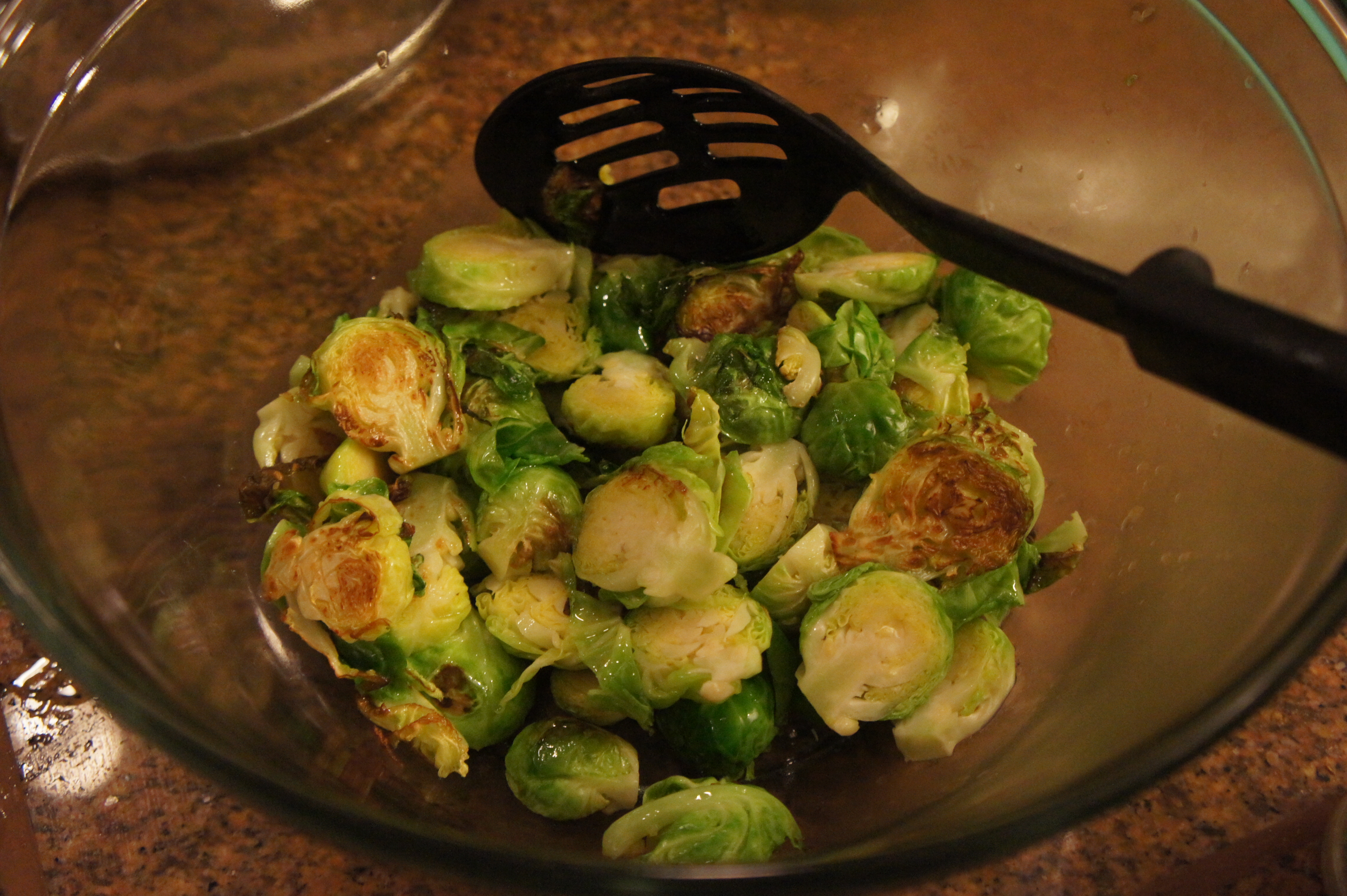
Now that I am a so-called “adult,” I have only become slightly more receptive to these small green balls of vegetable. However, this recipe from Plenty by Yotam Ottolenghi has me almost craving them.  The best part about it is the way they are fried: with lots of oil and salt, face down on hight heat for a couple of minutes.  One side gets black and crispy, one side is still green.

Also, with the addition of tofu, this recipe makes a meal in one bowl!

Brussels Sprouts and Tofu

Ingredients

2 Tbs sweet chile sauce (the most common brand is Mae Ploy, we had a bottle in the fridge that was “borrowed” from our cafeteria back in college)
1 1/2 Tbs soy sauce
3 Tbs toasted sesame oil (don’t skip this! It makes the dish)
1 tsp rice vinegar
1 Tbs maple syrup
5 oz firm tofu
1 lb Brussels sprouts
about 3/4 cup canola oil
salt
1 cup sliced green onions
1/2 small fresh red chile, deseeded and minced (we used a jalapeño, so it was green.  Whoops.)
1 1/2 cups shiitake mushrooms, halved or quarted
1 cup cilantro leaves
1 Tbs toasted sesame seeds (optional, for garnish)

Rice for serving

Instructions

Find a medium bowl and in it, whisk together the sweet chile and soy sauces, 2 Tbs of the sesame oil, the vinegar and maple syrup. Cut the tofu into 3/8-inch-thick slices and then each slice into two squarish pieces.  Stir the tofu into the marinade and set aside.

Trim the bottoms off the Brussels sprouts and cut each into three slices from the top down.  Find a large frying pan, add 4 Tbs of canola oil, and heat up well.  Throw in half the Brussels spouts, or less than depending on the size of your pan (when I did this the oil spit like crazy, so watch out!).  You want most the sprouts in the pan to have at least one side touching the pan, so no sprouts are stacked on top of one another.  Sprinkle some salt on them and cook on high heat for about 2 minutes.  Don’t stir to much, but shake it around if necessary.  You want the sprouts to be almost burnt on one side. Remove to a bowl and add the rest of the sprouts to the pan with more canola oil.  Add more salt, and 2 minutes later, transfer the rest to the bowl as well.

Add 2 more Tbs of canola oil to the pan and sauté the green onions, minced chili, and mushrooms for 1-2 minutes.  Transfer to the bowl that the sprouts are in.

Leave the pan on high heat and use tongs to lift half of the tofu pieces from the marinade to the pan (again, oil spits!) (don’t throw away marinade!). Space them apart and leave in one layer so that they can fry properly.  Reduce to medium heat and cook for 2 minutes on each side.  Transfer to the sprouts bowl and repeat with the rest of the tofu.

Remove the pan from the heat and return all the cooked ingredients from the spouts bowl back to the pan.  Add the leftover tofu marinade and half of the cilantro leaves.  Toss everything together, and let the pan cool down a bit.  Then taste and add salt if needed.  Stir in the remaining Tbs of sesame oil and serve warm, garnished with sesame seeds and/or the rest of the cilantro.  Eat with rice or by itself.

Chewy Gingersnaps, Perfect for the Holidays

Gingersnaps

Gingersnaps
Gingersnaps

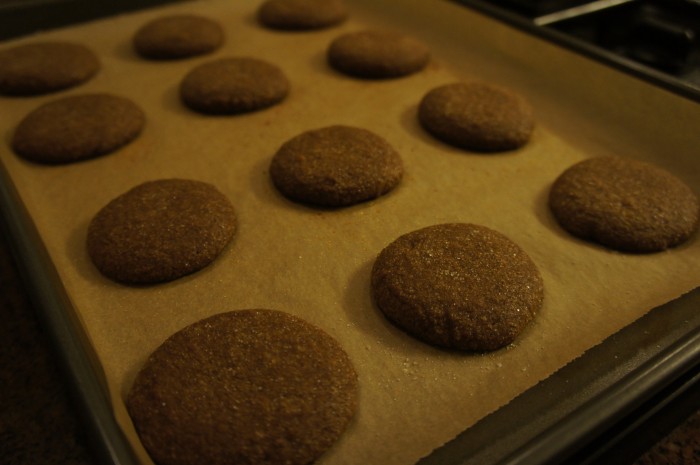
These are possibly the best gingersnaps I’ve ever had. Or maybe they should be called Gingerchews, because they don’t snap. Instead, these cookies are perfectly chewy in the center and crispy on the edges.

For my birthday, my co-workers – who know me incredibly well – bought me this Real Simple magazine/cookbook thing. It looks like a magazine, but is just full of fall and winter recipes. Jonah and I have enjoyed more than a few of the recipes from it, but it being gingersnap season and all, I wanted to share this one with you sooner rather than later.

Chewy Gingersnaps

Ingredients

2 cups flour
2 tsp ground ginger
1 1/2 tsp baking soda
1/2 tsp cinnamon
1/2 tsp salt
1/4 tsp black pepper
1/4 tsp nutmeg
1/8 clove
3/4 cup vegetable shortening
2/3 cup packed (light) brown sugar
1 egg
1/2 cup molasses
1 tsp vanilla extract
1/4 cup granulated sugar, plus some for sprinkling

Instructions

Preheat your oven to 350 degrees. Line a baking sheet with parchment paper (if you have 2 baking sheets, line 2 – these take a little prep time on the pan, so it’s nice to have time to get them ready while there’s a batch in the oven). In a bowl, mix together the flour, ginger, baking soda, cinnamon, salt, pepper, nutmeg, and cloves; put aside.

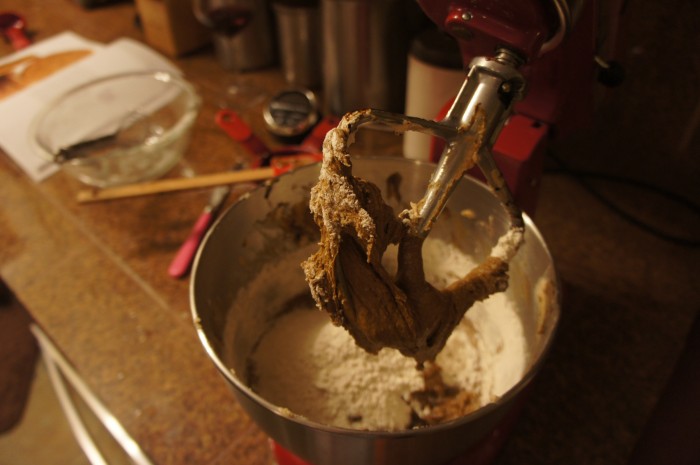
In the bowl of an electric mixer, beat the shortening and brown sugar until fluffy: you’ll want to use at least a medium speed for about 3 minutes. Turn the speed down to low, and mix in the egg, molasses, and vanilla. Slowly add the flour mixture and mix until combined.

Put the granulated sugar on a plate or in a shallow bowl. Take about a heaping tablespoon of dough, roll it into a ball, and roll it in the sugar to coat. Put the balls on the baking sheet at least 2 inches apart, and then, using the bottom of a glass, press the balls till they’re a little less than 1/2 inch thick. Sprinkle them with a tad more sugar and bake for 10-12 minutes, rotating the pan halfway through. Enjoy these gingernsaps by your holiday decorations (tree? menorah?) of choice with a glass of cold milk.

Beer Bread

This recipe is a bit famous in my family. And I wanted to be sure to share it with you while there is still Pumpkin Beer on the shelves because that’s my favorite kind of beer to use. We got this bread recipe from a friend of my sister’s from college, Graham. As soon as Emily introduced me to it, I was hooked. However, it’s not the healthiest (as you will see, you dump a melted stick of butter over the whole thing), so I try not to make it all too often. This specific one I made to take to the first rehearsal of a play I was just cast in. Baked goods always make a good first impression.

Beer Bread

Makes 1 loaf

Ingredients

3 cups of flour
3 tsp baking powder
1 tsp salt
1/4 cup sugar
1 can/bottle of beer (12 oz) – Having made this a few times, here is my take on what beer to use: Nothing too dark or hoppy, it gives the bread kind of a funny aftertaste. Seasonal beers are nice (think pumpkin ale or christmas beers), as are more fruity beers (back when the only beer I liked was apricot hefeweizen, that worked well), and anything on the lighter side. But I would steer clear of IPAs and reds.
1 stick of butter, melted

Instructions

Preheat your oven to 375 degrees. Mix dry ingredients in a bowl. Add beer, stir to combine. Grease a bread pan, and dump the dough into it. Warning: the dough will be sticky. Put the bread pan on a rimmed baking sheet – this is important as you won’t want the butter to seep over and just end up in the bottom of your oven. In a small bowl, melt the stick of butter in the microwave. Pour the melted butter over the dough in the bread pan. Bake for 1 hour, turning halfway through.

Remove the bread from the oven, run a knife around the edge of the pan, and turn out onto a cooling rack to cool. This bread is pretty crumbly, so good luck getting it to stay in one piece when you slice it. But it’s so worth it. Enjoy!